
09 Jan Composite Panel Cladding Pros and Cons Explained
Table of Contents
When you think about using composite panel cladding, you look at the good and bad sides. Many people pick this material because it lasts a long time. It does not need much care. It stands up well to bad weather. It is also light and saves energy. But, it can cost more at first. Some people worry about fire safety. Others ask if it is good for the environment. Composite cladding mixes materials like aluminum and plastic. These panels help protect and make buildings look nice. The table below shows what experts say are the main good and bad points:
Advantages | Disadvantages |
|---|---|
Durability | Impact damage |
Lightweight nature | Need for full panel replacement |
Almost 15% of new building projects use composite panels now. They are used a lot in business buildings. People like them for their design choices and how well they keep heat in.
Key Takeaways
Composite panel cladding is strong and can handle bad weather. It lasts more than 25 years and does not need much care.
The starting price is high, but you save money later. This is because it needs less work and lasts longer.
Pick the best composite cladding for your area’s weather. Also, choose one that looks good to you for best results.
Fire safety is very important. Always pick panels that follow safety rules to keep your building safe.
Composite cladding lets you choose many colors and textures. You can match it to your style easily.
What Is Composite Panel Cladding
Definition
You can see composite panel cladding on new buildings. This system uses panels made from two or more materials. These panels help protect buildings and make them look nice. In building, experts have a clear meaning for composite panels. The table below shows how experts explain them:
Term | Definition |
|---|---|
Composite Panel | Structural parts where two concrete layers work together to stop bending. They need connectors to move side loads. This is not like non-composite panels, where the layers work alone when loads are put on them. |
Composite cladding is special because it mixes strong materials. You get panels that are tough, light, and last longer than panels made from one material.
Types and Materials
There are many types of composite cladding you can pick. Each type uses different materials and has its own good points. Here are the most common types you will see:
Aluminum Composite Panels (ACPs)
Insulated Metal Panels (IMPs)
Fiber-Reinforced Polymer (FRP) Panels
High-Pressure Laminate (HPL) Panels
Wood-Plastic Composite (WPC) Panels
Phenolic Panels
Polycarbonate Panels
Ceramic Panels
Gypsum Composite Panels
The materials in composite panel cladding change how the panels work. The table below shows two popular materials and what they do best:
Material | Properties |
|---|---|
Great at keeping heat in, strong, easy to care for, good for the planet, works well in tough weather. It might fade a little over time. | |
High-Pressure Laminate | Very strong, blocks UV rays, waterproof, does not rust, does not fade or bend, but can be heavy and cost more. Needs edge care in wet places. |
Tip: When you pick composite cladding, think about your weather and style. Some materials work better in hot or rainy places. Others give you more colors or need less work.
Composite panel cladding gives you lots of choices for looks and strength. You can find a type that fits your project, whether you want a modern style or need good weather protection.
Composite Panel Cladding Benefits
 Durability and Weather Resistance
 Durability and Weather Resistance
Composite cladding is strong against bad weather. These panels do not rot, crack, or swell. You do not need to worry about sun damage or fading colors. Tests show PVC panels with Enhanced Barrier Coating keep their color after 1000 hours of UV light. The color change is less than 1.5, so they still look new. Even after 48 hours in boiling water, the panels only grow by 0.08%. You can use composite cladding where there is lots of rain, snow, or humidity. These panels work in temperatures from -30°C to 80°C. They last more than 25 years and need little care.
Here is how composite cladding works in tough weather:
Performance Aspect | Description |
|---|---|
Warping and Cracking | WPC cladding does not warp or crack, so it keeps its shape and strength in hot or cold weather. |
UV Resistance | UV coatings stop sun damage and keep colors bright. |
Moisture-Proof Design | Composite panels do not soak up water, so you do not get mold, rot, or decay. |
Thermal Stability | The panels do not change size much, so they fit well even in very hot or cold weather. |
Dimensional Stability | WPC panels stay strong and do not break down in wet places. |
Note: Composite cladding gives your building a tough shield that lasts a long time. You can trust it to protect your home or business in any weather.
Low Maintenance
Composite cladding is easier to care for than wood or metal. Wood cladding can get ruined by water, germs, and mold if you do not take care of it. You have to seal, stain, or paint wood often. You also need to check for damage and fix it. Composite cladding does not need all this work. You just clean it every 3 to 6 months and keep it free from dirt and mildew. This saves you time and effort.
Clean composite cladding every few months.
You do not need to paint, stain, or seal it.
Wood cladding needs sealing, painting, and repairs often.
Composite cladding stays strong and lasts long with little care.
Cost-Effectiveness Over Time
Composite panel cladding costs more at first. But you save money later because it lasts longer and needs less work. The yearly cost to care for WPC cladding is about $0.50 per square meter. PVC cladding costs about $1.00 per square meter each year. These costs are lower than many other materials.
Cost Factor | WPC Cladding | PVC Cladding | Industry Average | Notes |
|---|---|---|---|---|
Annual Maintenance | $0.50 | $1.00 | $0.75 | Per sq.m |
Studies show aluminum composite panels save you money over time. They need little care and last longer than many other cladding types. Some parallel cladding products even have a lifetime warranty for the material and a 20-year warranty for the finish. This means you do not have to replace panels often.
Material Type | Warranty Duration | Maintenance Requirements | Durability |
|---|---|---|---|
ACM Panels | 5 years | Moderate | Moderate |
Parallel Cladding | Lifetime for material, 20 years for solid finishes | Minimal | High |
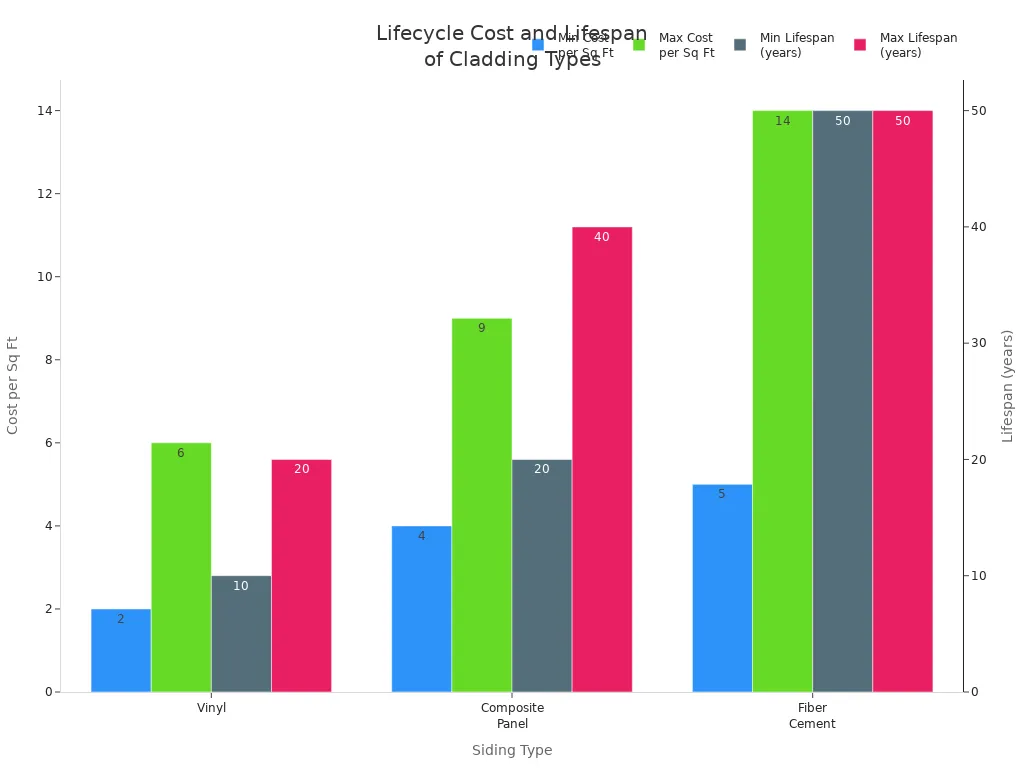
When you look at the cost and how long different cladding lasts, composite panels are a good deal. Vinyl siding costs less at first but does not last as long. Fiber cement lasts longer but costs more. Composite panel cladding gives you a good mix of price and how long it lasts.
Siding Type | Cost per Square Foot | Lifespan |
|---|---|---|
Vinyl | $2 – $6 | 10 to 20 years |
Composite Panel | $4 – $9 | 20 to 40 years |
Fiber Cement | $5 – $14 | 50 years |
Tip: Composite cladding may cost more at first, but it lasts a long time and needs little care, so you spend less on repairs.
Design Flexibility
Composite cladding gives you lots of design choices. You can pick from many colors, textures, and finishes. Some panels look like wood, stone, or metal. Others have bright, modern colors. You can use composite panels for a classic or modern look. The panels come in many shapes and sizes, so you can fit them to any building style. This makes composite cladding a great choice for design. You can match your building to your taste or brand.
Pick from many colors and finishes.
Make patterns or mix textures for a special look.
Use panels for walls or as accents.
Easy Installation
You do not need special skills to put up composite cladding. Most panels use simple tools you may already have. Here are some tools you might use:
Measuring tape and level
Saw (circular saw or jigsaw)
Drill and drill bits
Caulking gun and utility knife
Rubber mallet
Safety gear (gloves, goggles, dust mask)
Joists or battens
Stainless steel screws or clips
Fascia boards or trims
Composite cladding panels are light and easy to move. You can cut and fit them without much trouble. This makes putting them up faster and cheaper. You save time and money, which is another good thing about composite cladding.
Callout: If you want something strong, long lasting, and easy to care for, composite panel cladding is a great choice. You get good protection, easy care, and many design options.
Composite Cladding Drawbacks
Initial Cost
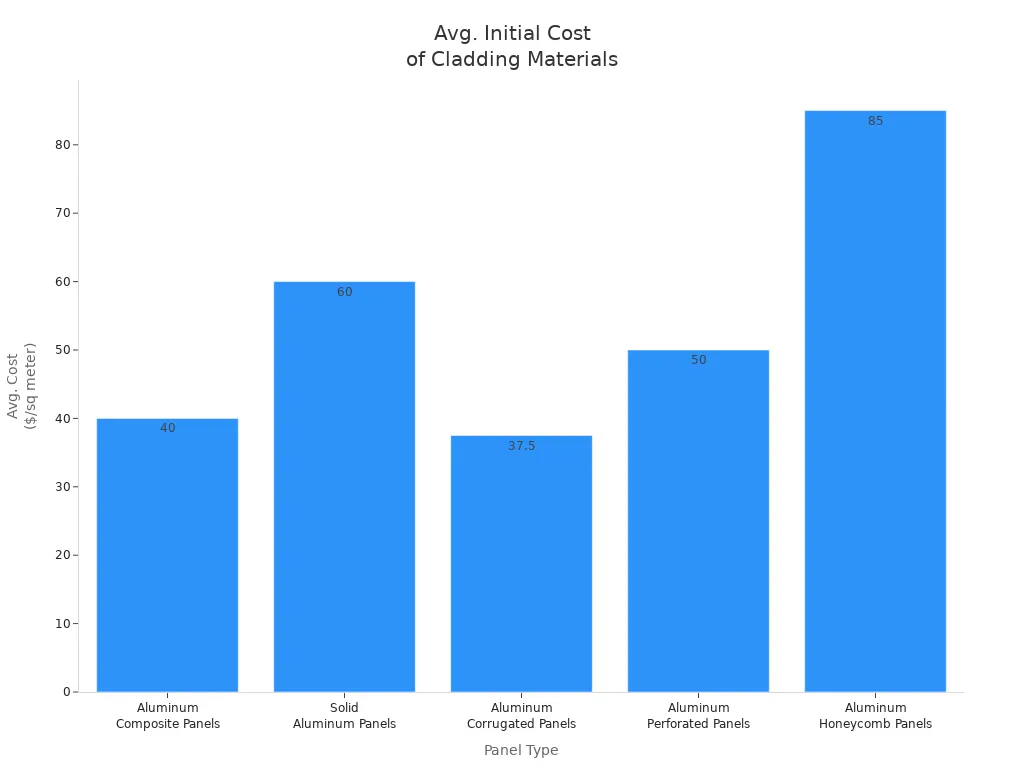
Composite cladding usually costs more at first. The price changes based on what materials are used. How the panels are made also affects the price. Panels with a fire resistant core cost extra. Thicker aluminum sheets and better resins make the price go up. The cost of aluminum and polyethylene can change the price too.
Panel Type | Cost Range (per square meter) |
|---|---|
Aluminum Composite Panels | |
Solid Aluminum Panels | $40 – $80 |
Aluminum Corrugated Panels | $25 – $50 |
Aluminum Perforated Panels | $30 – $70 |
Aluminum Honeycomb Panels | $50 – $120 |
Tip: You pay more at first, but you might save money later because composite cladding lasts longer and needs less work.
Fire Safety Concerns
Fire safety is very important with composite panel cladding. Some panels have a polyethylene core that can catch fire easily. Panels with a fire resistant core cost more. Many places now have strict fire safety rules for cladding. Tall buildings need panels that do not burn easily. In North America, you must follow codes like IBC and NFPA. These codes want panels with an A2 rating. In Europe, EN 13501-1 A1 and A2 ratings matter.
Source | Key Points |
|---|---|
North America A2 Fire Rated Composite Panel Market | Building codes need A2 rating for safety, especially for tall and public buildings. |
Non-combustible panels market expands | Many countries do not allow panels that burn for tall buildings. A1 and A2 ratings are needed. |
Some fires show why picking the right cladding matters. Here are some examples:
Year | Incident Location | Description | Casualties |
|---|---|---|---|
2017 | Grenfell Tower, London | Fire spread fast because the cladding panels had a flammable core. | |
2018 | Kemerovo, Russia | Fire spread quickly because there were no fire barriers in the panels. | 64 deaths, many injuries |
2020 | Ajman, UAE | Panels that were not fire resistant let fire move up the building. | Significant damage |
2021 | Icheon, South Korea | Fire caused a lot of damage; a firefighter died from toxic gases. | 1 firefighter fatality |
Note: Always make sure your composite cladding meets fire safety rules before you put it up.
Environmental Impact
You might wonder if composite cladding is good for the earth. Many types use recycled plastics and wood fibers. This helps cut down on trash and lowers pollution. Composite cladding does not cause deforestation like some wood cladding. When you take it down, you can recycle many composite panels.
Composite panels use recycled plastics and wood fibers.
This helps lower trash and pollution.
You can recycle composite cladding when you remove it.
You get the look of wood without hurting forests.
Some products have eco-labels to show they are better for the planet. For example:
Certification | What It Means |
|---|---|
Checks how the panel affects the earth and its carbon footprint. | |
Global GreenTag | Shows the product meets tough health, safety, and environmental rules. |
Callout: If you want to help the planet, pick composite cladding with these certifications.
Denting and Surface Wear
Composite cladding is tough, but it can still get dents or scratches. This happens more in places where people or things hit the panels. Heavy stuff, hail, or bad installation can cause damage. Over time, you might see wear in busy spots.
Common causes of damage are:
Not putting up the panels the right way
Very hot or cold weather or too much water
Hits from hail, falling things, or accidents
The panels getting bigger or smaller with temperature changes
Tip: You can stop damage by installing panels the right way and checking them often.
Repair and Replacement
If your composite cladding gets damaged, you have ways to fix it. For small scratches, use a repair compound or filler. For bigger problems, you may need to replace the whole panel. Sometimes, you need a pro to make sure repairs follow safety rules.
Repair Procedure | Description |
|---|---|
Cosmetic Repairs | Use repair compound or filler for small scratches. Smooth it out for a clean look. |
Panel Replacement | Take out the damaged panel and put in a new one if the damage is big. |
Professional Help | Call skilled workers for tough repairs. They follow rules and keep your panels safe. |
You can also try these quick fixes:
Polish small scratches with abrasive paste.
Use a repair pen or paint for medium scratches.
Fill deep scratches with wax strips or nail polish.
Replacing a damaged aluminum composite panel usually costs $20 to $60 per square meter. The good news is composite cladding keeps its color and texture well. This makes it easier to match new panels with old ones. Wood can fade and be hard to match.
Note: Repairs can be easy, but replacing full panels costs more. Always check your panels for damage and fix problems early.
Disadvantages at a Glance
Here is a quick list of the main drawbacks of composite cladding:
Costs more at first than some other materials
Fire safety worries if you do not use fire resistant panels
Impact on the earth depends on materials and recycling
Can dent or scratch in busy or open areas
Repairs may mean replacing a whole panel
Remember: Think about these drawbacks and the good sides before you pick composite panel cladding for your project.
Cladding Applications
Commercial Buildings
 Commercial Buildings
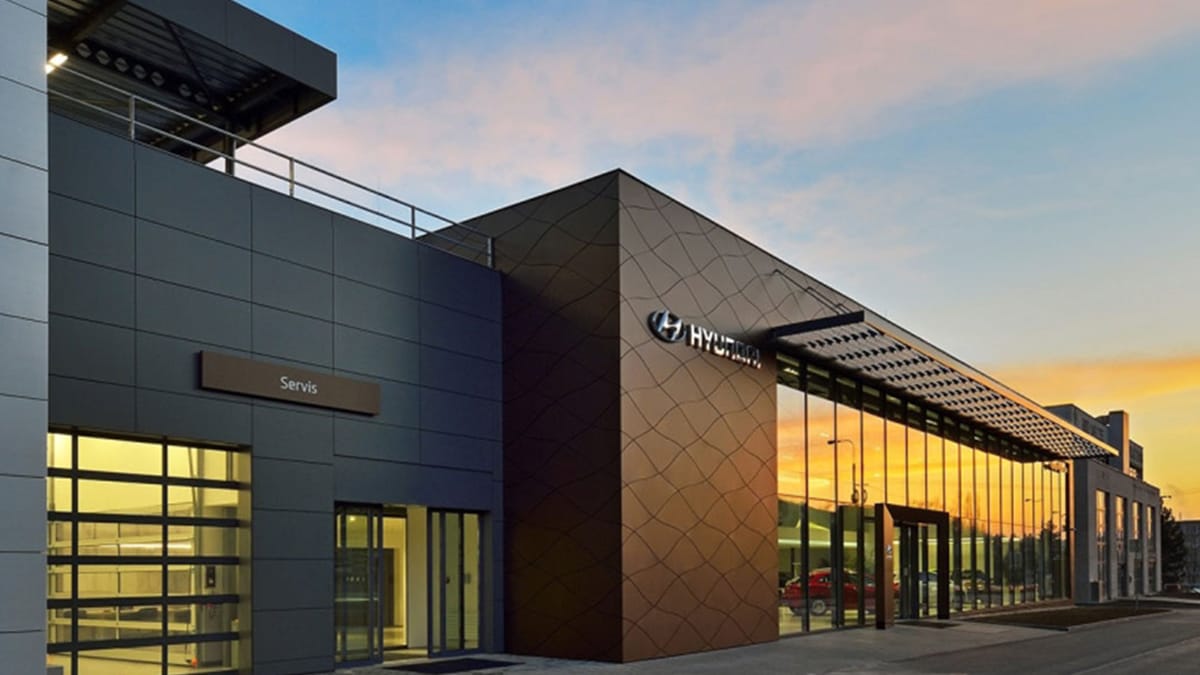
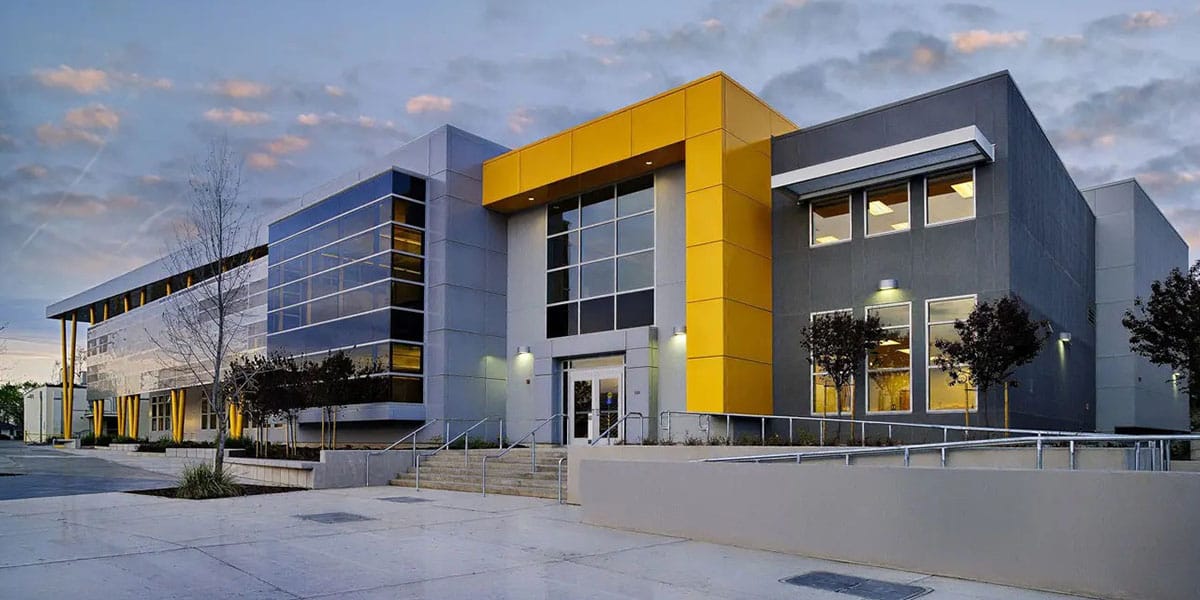
Many commercial buildings use cladding. Offices, malls, and hospitals use composite panel cladding. It protects walls and gives a modern look. You can pick panels that match your brand colors or style. Architects like composite cladding because it is easy to change for looks. The panels are strong and resist bad weather and damage. They also help keep buildings warm or cool, which saves energy. You can put up cladding fast, so projects finish on time.
Residential Projects
Homeowners pick cladding for their houses. You may want something that lasts and looks nice. Composite panel cladding has many good points:
You do not need to clean or fix panels often.
Eco-friendly panels use recycled stuff, so you help the earth.
You can pick panels that look like wood or stone.
Strong panels stand up to rain, bugs, and sun.
Nice-looking panels make your house look better.
Good insulation keeps your house warm in winter and cool in summer.
Easy installation lets you put panels over old walls.
You can use composite cladding on new homes or when you fix up old ones. You get a new look and strong protection.
Interior and Exterior Uses
You can use cladding inside and outside buildings. Inside panels make walls smooth and stylish. Outside panels protect from rain, wind, and sun. You pick different panels for each use. Inside panels are thinner and need more care. Outside panels are thicker and last longer.
Feature | Interior ACP Sheets | |
|---|---|---|
Thickness | 3mm | 4mm or more |
Coating | Polyester or acrylic | PVDF fluorocarbon |
Durability | Needs more maintenance | Lower maintenance |
You can use cladding for walls, ceilings, and signs. Composite panel cladding works well in schools, stores, and homes. You can find panels that fit your needs and style.
Tip: When you plan your project, think about where you want cladding. Pick panels that work for your building and weather.
You have seen that composite panel cladding offers strong protection, easy care, and many design options. You should also think about the higher cost, fire safety, and repair needs. To choose the best cladding for your project, follow these steps:
Look at both how it looks and how long it lasts.
Check insulation, safety, and style.
Talk with an expert before you decide.
For complex projects, always get advice from a professional.
FAQ
What is the main purpose of composite panel cladding?
You use composite panel cladding to protect buildings from weather and damage. It also gives your building a modern look. Many people choose it because it lasts a long time and needs little care.
Can you install cladding on old buildings?
Yes, you can add cladding to old buildings. It covers worn surfaces and improves insulation. You get a fresh look without removing the old walls.
How do you clean composite panels?
You clean composite panels with water and mild soap. Use a soft brush or cloth. Avoid harsh chemicals. Regular cleaning keeps panels looking new and prevents dirt buildup.
Is composite cladding safe for homes?
Composite cladding is safe if you pick panels that meet fire safety rules. Always check for certifications before you buy. This helps keep your home safe.