
What Is an Aluminium Composite Panel?

Get All The Details About Aluminum Composite Panels

An aluminium composite panel (ACP) consists of two thin aluminium skins bonded to a core.

The core, aluminium skin thickness, surface coating and overall panel construction influence its performance. ACP panels are used for architectural finishes, signage and other applications where a flat, lightweight panel is required.

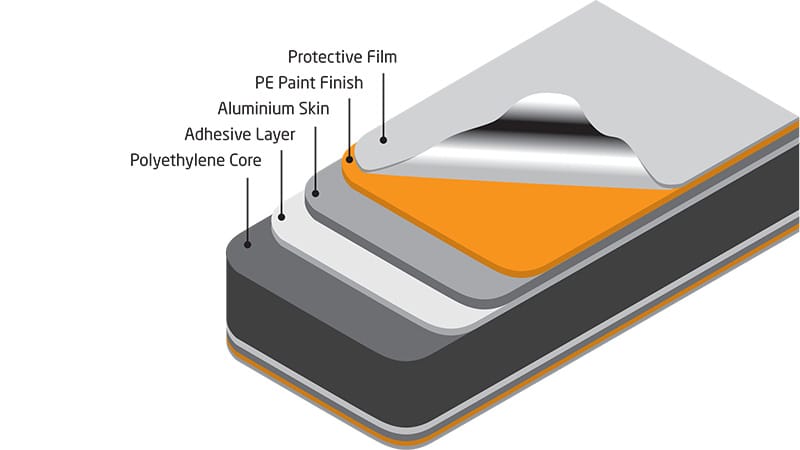
How an ACP Panel Is Constructed

Layered structure of an aluminium composite panel
Illustrative layer arrangement. Core composition and coating vary by product; the illustrated PE core is not used in every ACP panel.
  1. Protective film

    Temporary protection during handling and fabrication; follow the product instructions for removal.

  2. Surface coating

    The visible finish and coating system are selected for the intended exposure and appearance.

  3. Front aluminium skin

    A metal facing bonded to the core. Skin thickness is specified separately from total panel thickness.

  4. Bonding layers and core

    The layers are bonded together. Core formulations differ between standard and fire-rated products.

  5. Rear aluminium skin and back coating

    The rear facing completes the panel build-up; its finish depends on the product specification.

Core Type and Surface Coating Are Different Choices

Do not treat coating names as fire classifications. In particular, PE may refer to a polyester coating or to a polyethylene core; specify which you mean.

SpecificationWhat it describesWhat to check
Polyethylene (PE) coreA polymer core used in some ACP products.Do not assume fire-rated performance; check the relevant product evidence and intended use.
Mineral-filled coreA core formulation used in certain fire-rated ACP products.Confirm the complete panel, test standard and reported classification.
Polyester (PE) or PVDF coatingThe coating on the aluminium surface.Confirm intended exposure, finish and the applicable coating specification.
Decorative or functional finishA wood, stone, metallic or other specified surface finish.Check compatibility with the required core, panel construction and application.

A2 and B1 labels must be read with the applicable standard and product report. A core-only test is not automatically a classification for the finished panel or installed wall system.

Explore Fire-Rated Panel Options →

Which Specifications Should You Compare?

ParameterMeaningBuyer check
Overall panel thicknessTotal thickness of the composite panel.Do not use this value alone to judge strength, suitability or fire performance.
Aluminium skin thicknessThickness of each aluminium facing.Confirm separately from total panel thickness.
Sheet dimensionsWidth and length of the supplied sheet.1220 × 2440 mm is a common nominal format; confirm available sizes for your selected product.
Core and coatingSeparate choices within the panel build-up.Specify the application, exposure and required supporting documents.
Finish and fabricationColour, appearance and any cutting or machining.Confirm references, drawings and tolerances before production.

Available dimensions and thicknesses vary by product. Obtain the current specification for the panel being quoted rather than treating this guide as a universal supply schedule.

Benefits and Selection Limits

Why ACP is used

  • A flat surface suited to architectural finishes and graphics
  • A composite construction that can offer useful stiffness at relatively low weight
  • A choice of coatings, colours and decorative finishes
  • Options for drawing-based cutting, routing and grooving

What still needs checking

  • Fire performance depends on the tested product and relevant system requirements
  • Exterior suitability depends on coating, exposure and specification
  • Wind-load design also depends on panel geometry, support and fixing details
  • Cleaning, handling and fabrication must suit the chosen finish

Where Are ACP Panels Used?

Architectural Finishes

Facade and ceiling applications require the appropriate panel specification and system design.

View Application →

Signage & Display

Review surface finish, graphic method, flatness and machining requirements.

View Application →

Controlled Interiors

Anti-static applications require defined resistance criteria, test conditions and panel construction.

View Application →

Your specification checklist

Prepare a Panel Specification

Use these five points to organise the requirements for your panel enquiry.

Compare ALCADEX Product Series
  1. Application & Exposure

    Define the intended use and indoor or outdoor exposure.

  2. Fire Requirements

    State the required fire standard and supporting documentation.

  3. Panel Construction

    Confirm overall thickness, aluminium skins, core and coating.

  4. Finish & Drawings

    Choose the finish and provide dimensions or processing drawings.

  5. Quantity & Delivery

    Specify quantities, packing requirements and destination.

ACP Basics: Frequently Asked Questions

What does ACP stand for?

ACP stands for aluminium composite panel. Both aluminium and aluminum spellings refer to the same metal.

Are ACP and ACM the same thing?

ACP names the finished panel; ACM stands for aluminium composite material. The terms are often used for the same panel category, but compare actual product specifications rather than names alone.

How is ACP different from solid aluminium sheet?

ACP has aluminium skins bonded to a non-aluminium core. Solid aluminium sheet is metal throughout. Equal overall thickness does not mean equal weight, stiffness or fabrication behaviour.

Are all ACP panels fire-resistant?

No. Core formulations and tested performance vary. Ask for the report and classification that correspond to the selected panel, and confirm suitability for the intended use.

Does a thicker panel always mean better performance?

No. Overall thickness is only one factor. Aluminium skin thickness, core, bonding, panel dimensions and support arrangements also matter.

Can ACP be cut or grooved?

Suitable products can be cut, routed, grooved or drilled according to approved fabrication requirements. Confirm tooling, dimensions and tolerances for the chosen panel.

How should ACP panels be cleaned?

Follow the coating supplier’s or panel manufacturer’s care instructions. Check cleaner compatibility and avoid damaging the finish with unsuitable abrasives or chemicals.

Can ACP panels be recycled?

Recovery depends on the panel composition and available separation and recycling facilities. Confirm local acceptance rather than assuming every composite panel can enter ordinary metal recycling.

Talk to the ALCADEX team

Let’s Plan Your ACP Order

Send your panel specifications, quantity and destination. Include drawings if factory processing is required.

Request a Quote