


16 Sep Is Acp Cladding Safe During a Fire
Table of Contents
You may wonder if ACP cladding keeps buildings safe during a fire. Not all panels offer the same protection. The core material and type decide how well they resist flames. Fire-rated panels work better, but only when installed correctly. Local rules also play a big role in safety. Always check that panels meet fire standards before choosing them.
Key Takeaways
Pick fire-rated ACP cladding with mineral-filled cores for better safety. These panels stop flames longer than regular ones.
Always check the fire rating and certifications before you install ACP cladding. Look for ratings like A2 or B1 to make sure it is safe.
Proper installation is very important. Follow steps like planning the panel layout, cutting, and sealing. This helps stop gaps that let fire spread.
Talk to fire safety experts to check how much the cladding can burn and how much smoke it makes. Their advice can help you choose safer materials.
Check and inspect your building’s cladding often to make sure it follows fire safety rules. Doing this can stop expensive repairs and legal problems.
ACP Cladding Fire Safety
Types of ACP Cladding
There are many kinds of cladding panels in buildings. Each kind has different features and fire safety levels. Here are some types you might find:
Solid Aluminum Panels
Aluminum Honeycomb Panels
Perforated Aluminum Cladding
Expanded Metal Cladding
ACP cladding comes in two main groups for fire safety:
Non-fire-rated ACP Sheets: These have a polymer core between two aluminum layers. They do not stop fire well and can be risky in a fire.
Fire-rated ACP Sheets: These use special core materials that can handle fire for up to two hours. They give better protection and are safer for buildings.
Tip: Always check the kind of ACP cladding before you pick one. Fire-rated panels are safer, especially for tall or public buildings.
Core Materials and Fire Risk
The core inside ACP cladding is important for fire safety. You need to know how each core reacts to heat and flames. The table below shows the main core types and how they do in a fire:
Core Type | Composition | Fire Performance |
|---|---|---|
PE Core | 100% Polyethylene | Highly Flammable |
FR Core | Mineral Mix + Polyethylene | Fire Resistant |
A core made from 100% polyethylene (PE) burns fast and can spread fire quickly. This kind of core is very flammable and can make a building unsafe. A fire-retardant (FR) core has minerals like aluminum hydroxide. When heated, these minerals soak up heat and let out water vapor. This helps put out flames and slows the fire down.
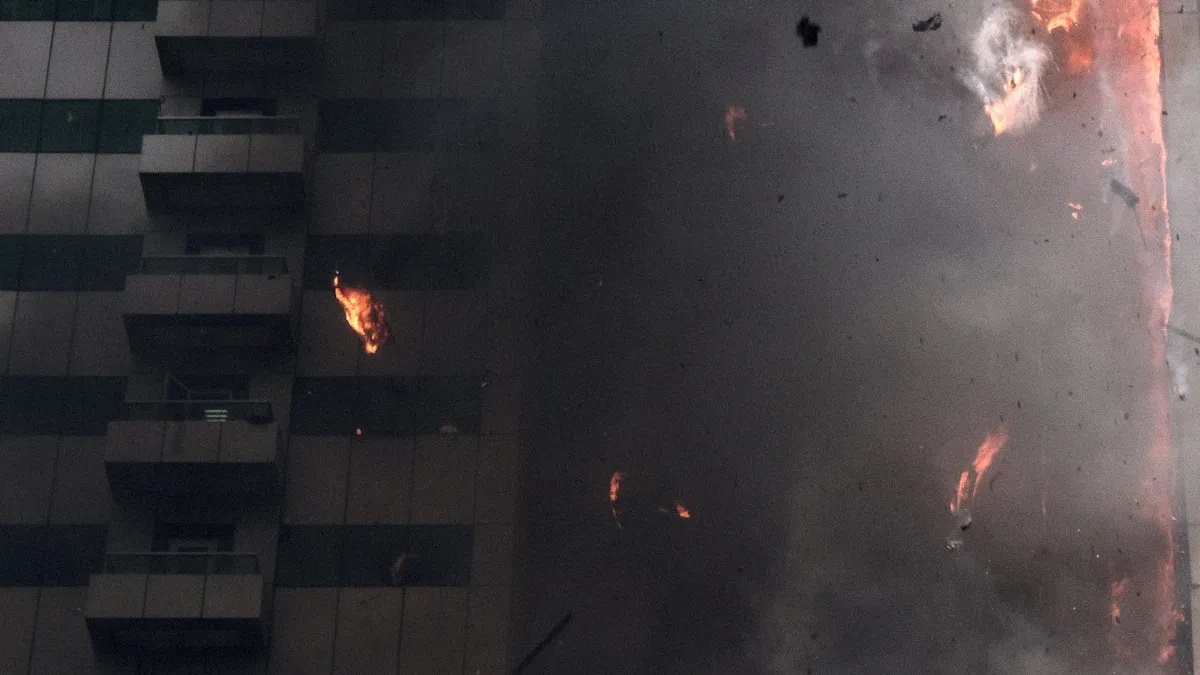
The amount of polymer in the core also matters in a fire. More polymer means more heat and faster burning. This happened in big fires, like the Grenfell Tower fire in London. That event showed how dangerous flammable cladding can be. Many experts now say using the wrong ACP cladding can cause disasters.
Note: Insurance companies may raise costs or refuse coverage for buildings with flammable cladding. They know these panels can make fires spread fast and make it harder to fight fires.
When you pick ACP cladding, always check the core material. Choose fire-rated panels with mineral-filled cores for better safety. This easy step can help keep people and property safe.
Identifying Fire-Rated ACP Cladding
Fire Ratings and Standards
You need to know how to spot fire-rated ACP cladding. The main difference comes from the core material. Fire-rated panels use mineral-filled cores. Non-fire-rated panels use polyethylene (PE) cores, which burn easily and spread fire fast. When you look for safe panels, check their fire rating. The most common ratings are A2 and B1. These ratings show how well the panel resists fire.
Here is a table that explains the fire ratings and standards:
Fire Rating | Description | Corresponding Standards |
|---|---|---|
A2 | Non-combustible materials | EU standard A2, ASTM E84 Class A |
B1 | Flame-retardant materials | EU standard B or C, ASTM E84 Class A or C |
Panels with an A2 rating use mineral cores and do not burn easily. B1 panels slow down flames but may still burn under strong heat. You should always check the fire rating before you buy or install panels. Look for labels or documents that show the rating.
Tip: If you see a panel with only a PE core and no fire rating, do not use it for high-rise or public buildings.
Certifications and Compliance
You must check certifications to make sure ACP cladding meets fire safety rules. Many organizations test and certify panels. These groups use strict standards to judge fire performance. Here is a table of some organizations and their certification standards:
Organization | Certification Standards |
|---|---|
UL | NFPA 285 |
EN | EN standards |
ASTM | ASTM standards |
Viva | NFPA 285, EN 13501, ASTM D1929, ASTM E-84, FR Class B, FR Class A2, FR Class A2+ |
QAI | QAI Listing Mark |
You should ask for test reports and certificates from the supplier. These documents prove the panels passed fire tests. You also need to check local fire safety codes. Each city or country has its own rules. For example, in England, Approved Document B lists fire safety rules for cladding. Fire performance test reports show how panels behave in a fire. Local codes tell you what ratings and certifications you need.
Here are steps you can follow to check compliance:
Review fire performance test reports for the panels.
Consult with fire safety experts to make sure you follow local rules.
Read the parts of Approved Document B that talk about cladding.
If you use panels that do not meet fire safety rules, you face big risks. Insurance companies may raise your premiums or refuse coverage. After a fire, owners saw insurance costs jump from $29,000 to $134,000. The excess went up from $1,000 to $100,000. Councils may order safety work that costs hundreds of thousands of dollars. You may need to replace unsafe cladding, which can cost millions. Legal action can follow if you do not comply.
Note: Always choose panels with the right fire rating and certification. Check all documents and follow local fire safety codes. This keeps people safe and protects you from legal and financial trouble.
Installation and System Integration
Importance of Proper Installation
You need to make sure that trained professionals install your panels. Proper installation keeps your building safe and helps the panels work as designed. If you skip steps or use the wrong materials, you increase the risk of fire spreading. Here are the key steps for installing fire-rated panels:
Panel Layout: Lay out the panels based on your design. Measure and mark each spot to keep everything lined up.
Cutting and Fabrication: Cut the panels to the right size using the correct tools. Clean cuts help the panels fit together well.
Attachment: Fasten the panels to the wall using the right fasteners or adhesives. Make sure each fastener sits flat so the panels stay even.
Joint Sealing: Seal the edges and joints with silicone. This keeps water out and stops moisture from getting behind the panels.
Finishing Touches: Check the panels for gaps or mistakes. Fix any problems so the panels look good and work well.
Tip: If you do not follow these steps, you may leave gaps or use flammable materials. This can let fire move quickly through the building. Panels with a polyethylene core can melt and drip, spreading flames to lower floors.
Integration with Fire Safety Systems
You can boost fire safety by combining fire-rated panels with other building systems. Sprinkler systems work inside, but fires can start or spread on the outside of buildings. Fire-rated ACP cladding slows down the fire, giving sprinklers and firefighters more time to act. You can also add smart fire detectors to the outside of your building. These detectors spot fires early and help people respond faster.
Smoke control systems play a big role in keeping people safe. These systems move smoke away from exits and hallways. They use pressurized spaces and exhaust fans to keep smoke from spreading. This helps people leave the building safely and lowers the risk of smoke inhalation.
Note: When you use trained installers and connect your panels with fire safety systems, you make your building much safer for everyone.
Choosing Safe ACP Cladding
 Image Source: pexels
Practical Checklist
You want your building to be safe if there is a fire. Make a checklist before picking ACP cladding. This helps you avoid mistakes and keeps your project safe.
Checklist Item | Description |
|---|---|
Do not use cladding with polyethylene cores. These can catch fire quickly and spread flames. | |
Assess fire resistance | Pick materials with high fire resistance, such as mineral-filled ACP cladding or steel. |
Document specifications | Keep records of all cladding details and fire safety features for future checks. |
Compliance with building regulations | Make sure your cladding meets rules for tall buildings. Combustible materials are banned above 18 meters. |
Regular audits and inspections | Check your building often to find and fix unsafe cladding. |
Tip: Always ask for certifications and test reports. These papers show the panels passed fire safety tests like EN13501-1 or NFPA 285.
Documentation Type | Description |
|---|---|
Certifications | Proof that panels passed fire tests and meet local codes. |
Test Reports | Show that ACP cladding is safe and strong. |
Compliance Standards | EN13501-1, NFPA 285, ASTM E136 for fire resistance and combustibility. |
Mistakes can happen if you use the wrong tool to measure. Sometimes people forget to check the panel thickness in many spots. Some leave the protective film on, which changes the size. Others press too hard and bend the panel. These mistakes can make the installation unsafe.
Consulting Experts
You should talk to fire safety experts before making your final choice. Experts help you check how the cladding burns and spreads flames. They also look at how much smoke and toxic gas it makes. This is important for people inside the building.
Ask experts to test combustibility, flame spread, and burning droplets.
Make sure they check smoke and toxicity levels for safety.
Plan fire safety early, especially for busy buildings.
Confirm that your cladding meets local rules for fire resistance.
Choose high-quality materials that lower risks.
Use panels that passed strict fire tests.
Consider sealants that resist fire if needed.
Check that your ACP cladding meets standards like NFPA 285, BS 8414-1, or EN 13501-1.
🛡️ If you follow these steps and talk to experts, you keep your building and everyone inside safe. Always pick panels that meet strict standards for tall and public buildings.
When you pick fire-rated ACP cladding and install it right, you help keep your building and everyone inside safe. Fire-rated panels slow down fires and make less smoke. Non-fire-rated panels have led to big disasters, like the Grenfell Tower fire.
Type of ACP Cladding | Fire Safety Outcome | Additional Notes |
|---|---|---|
Fire-rated | Slows fire, less smoke | Must pass tough tests like NFPA 285 and EN 13501-1. Safer than non-fire-rated panels. |
Non-fire-rated | Catches fire easily, linked to big fires | Linked to major fires, like Grenfell Tower and Toh Guan Road. |
Always check the fire rating, certifications, and local rules. New laws in Europe and North America need strict testing and safer materials.
Fire-rated cladding makes buildings safer and can lower insurance bills.
You save money by having less fire damage and fewer repairs.
New rules tell builders to use non-combustible panels for tall buildings.
🛡️ Put safety first. Talk to experts before picking ACP cladding for your building.
FAQ
What does “fire-rated” mean for ACP cladding?
Fire-rated ACP cladding uses special core materials that slow down fire. You can trust these panels to resist flames longer than regular panels. Always look for fire ratings like A2 or B1 on the product label.
Can you use non-fire-rated ACP cladding on tall buildings?
You should not use non-fire-rated ACP cladding on tall buildings. These panels burn quickly and can spread fire fast. Many building codes ban them for high-rise or public spaces.
How do you check if ACP cladding is safe?
Ask your supplier for fire test reports and certifications. Look for labels like EN13501-1 or NFPA 285. You can also talk to a fire safety expert for advice.
Does fire-rated ACP cladding stop all fires?
Fire-rated ACP cladding slows down fire but does not stop it completely. You still need other fire safety systems, like sprinklers and alarms, for full protection.
What happens if you use unsafe ACP cladding?
You risk faster fire spread and higher insurance costs. Unsafe cladding can lead to legal trouble and expensive repairs. Always choose panels that meet fire safety standards.