

17 May Understanding the Fire Performance of Modern Aluminum Composite Cladding
Fire safety is crucial in all buildings. Aluminum composite material cladding fire resistant options are increasingly used in modern construction. However, fire safety concerns have emerged in recent years.
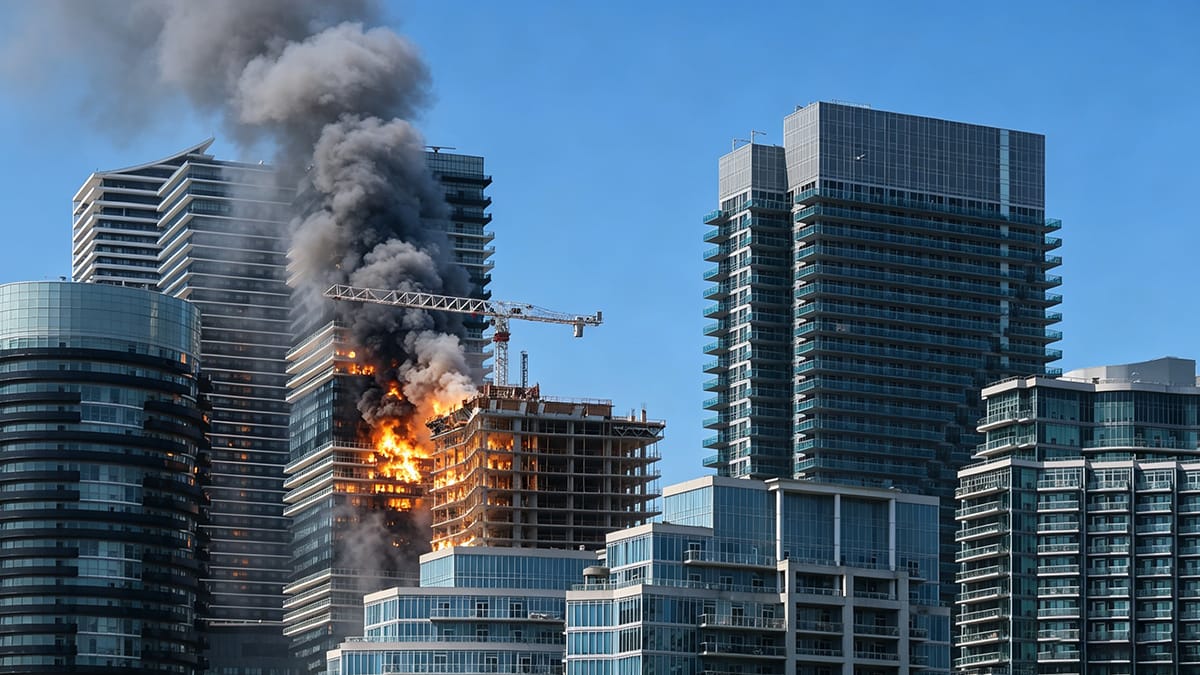
The Grenfell Tower fire in London in 2017 tragically resulted in 72 deaths, highlighting that aluminum composite material cladding can pose serious risks if not fire resistant.
Australia and the UK have updated their regulations, now prohibiting combustible cladding on tall buildings to address these dangers.
Fires in Dubai, China, France, and Australia demonstrate that this issue is a global concern.
Recent research shows that aluminum composite material cladding fire resistant solutions, such as intumescent coatings and solid aluminum panels, are effective. These methods help prevent melting and limit the spread of flames, making buildings safer. When assessing fire risks in buildings, it is important to consider both scientific advancements and regulatory requirements.
Key Takeaways
Fire safety is very important in buildings. Pick aluminum composite cladding that can resist fire. This helps protect people and property.
Do not use panels with polyethylene cores. These panels can catch fire fast. They can also spread flames quickly. This makes fires more dangerous.
Choose cladding with mineral-filled or fire-retardant cores. These materials stop fire better. They help keep buildings safer.
Check and fix cladding often. Look for any damage. Make sure it follows fire safety rules. This helps stop dangers before they happen.
Learn about new fire safety tools and rules. Knowing these things helps you pick safer building materials.
Fire Risks and Safety Standards
Common Fire Hazards in Cladding
Cladding can make buildings less safe during a fire. Some aluminum composite panels have a polyethylene core. This core can catch fire fast and spread flames. The Grenfell Tower fire in 2017 showed these panels are dangerous. Sometimes, the temperature behind the cladding went over 600 °C. Non-combustible cladding kept it under 200 °C. Many countries now have rules to stop using combustible cladding on tall buildings.
Polyethylene cores in panels can make fires worse.
High heat behind façades makes things more risky.
Flammable cladding materials caused new rules for tall buildings.
Key Safety Codes and Testing Methods
Building codes say cladding must pass tough fire tests. These tests show how fire moves on a building’s outside.
Large fire tests show how aluminum composite panels act in real fires. Even panels with fire-retardant cores can fail if the structure is weak. Good testing is needed to keep people safe.
Testing checks how long a panel can stop fire and how much heat it can take. Codes like ASTM E 136 and NFPA 285 in the US, and CAN/ULC S114 and S134 in Canada, give clear rules for fire rated panels.
Aspect | Canadian Standard | |
|---|---|---|
Combustibility Test | ASTM E 136 | CAN/ULC S114 |
Fire Resistance Requirement | NFPA 285 | S134 |
Testing Conditions | Specific heat, time limits | Specific heat, time limits |
Composite Testing | All components must pass | All components must pass |
Evolution of Aluminum Composite Panels
Old panels often used a polyethylene core. These panels burn easily and are only safe in low-risk places. Newer panels use fire-retardant or mineral-filled cores. These new cores make cladding safer for tall and busy buildings.
Core Type | |
|---|---|
PE (Polyethylene) | Burns easily, only for low-risk places. |
FR (Fire-Retardant) | Better fire resistance, good for commercial interiors and short buildings. |
Mineral/A2 Core | Does not burn, best for tall buildings and important places. |
The core inside the panel changes how well it resists fire. Labels and fire test reports help make sure panels are safe. Now, fire safety is very important for building owners and designers.
Advances in Aluminum Composite Material Cladding Fire Resistant Technology
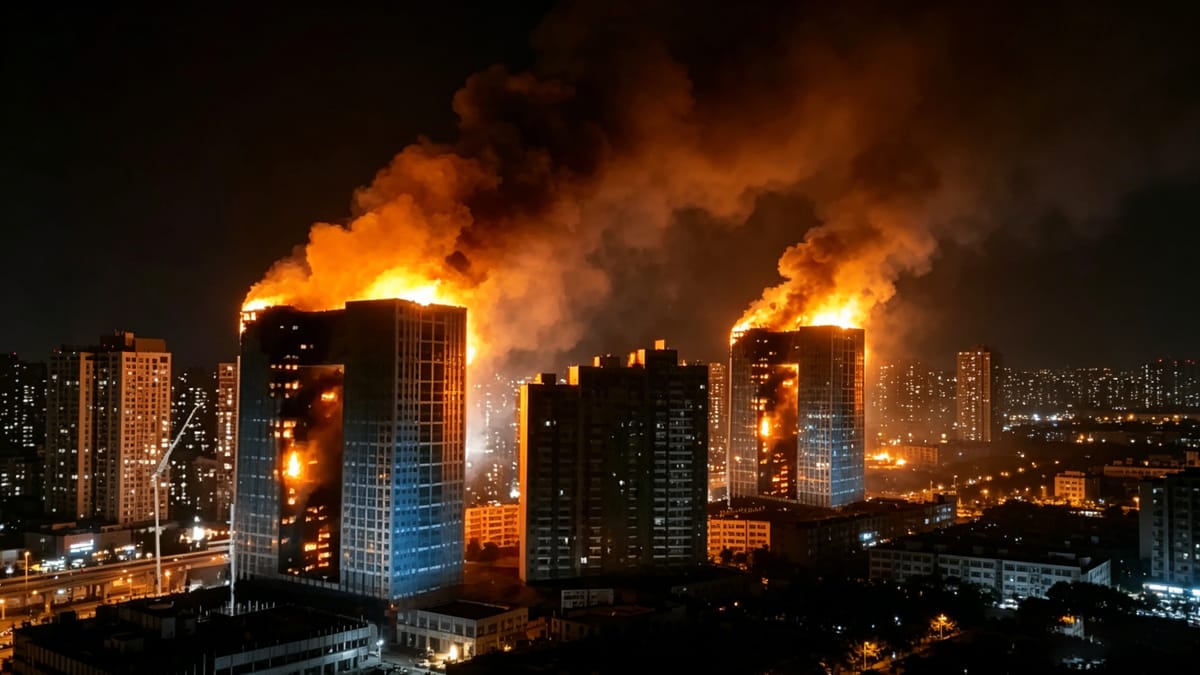
New science has made aluminum composite material cladding safer from fire. These changes help keep buildings safe and still look nice. Some of the best new ideas are fire-retardant cores with minerals, water-based intumescent coatings, solid aluminum panels, and better bonding methods.
Fire-Retardant Cores with Mineral Fillers
A big improvement is using fire-retardant cores filled with minerals. These cores have minerals that soak up heat and slow fire down. Studies show these cores work well. Cores with more minerals take in more energy. This means they resist fire better.
Core Material | Effect on Fire Performance | |
|---|---|---|
NC-ACP-A | 527 | Moderate thermal resistance |
NC-ACP-B | 1211 | High thermal resistance |
The chart below shows how much energy each core can absorb during a fire:
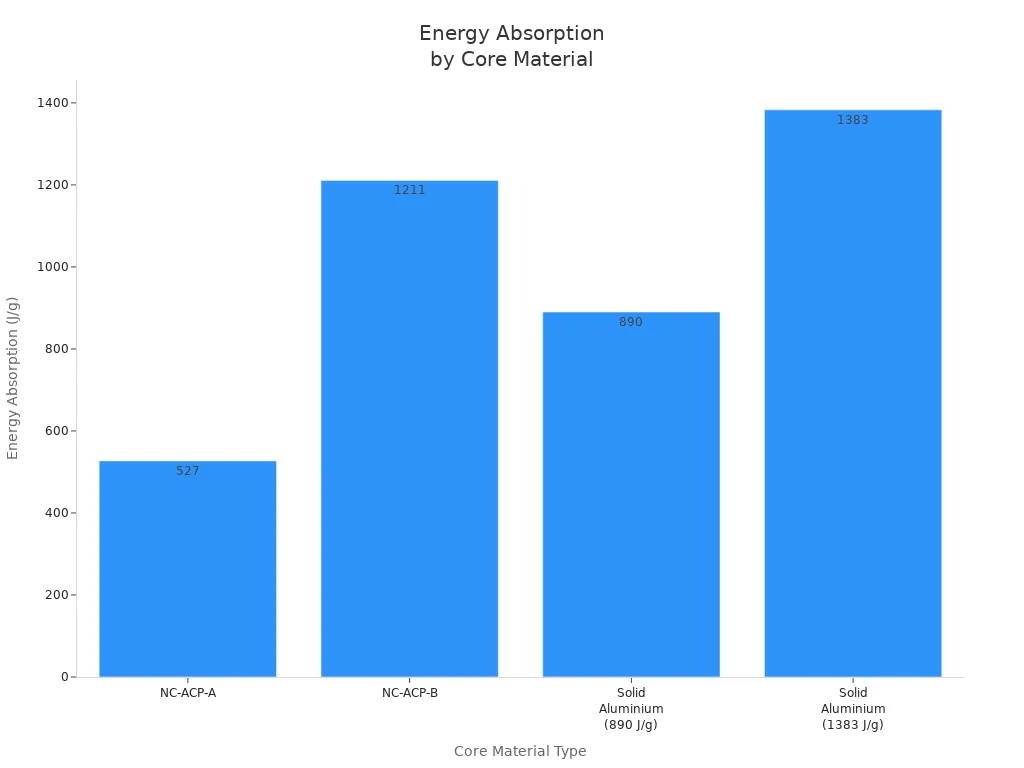
This proof shows mineral-filled cores, especially with more minerals, make cladding much safer from fire. They stop flames from spreading fast and keep heat from moving through, which helps protect buildings.
Water-Based Intumescent Coatings
Another new idea is water-based intumescent coatings. These coatings get bigger when heated and make a layer that protects what is underneath. Coating-B is a good example and works well in lab tests. It slows down burning and keeps flames from spreading, especially on aluminum panels.
Intumescent coatings are good for the environment and easy to use. They add extra fire protection, which is helpful for old buildings where you cannot change the panels. When these coatings expand, they make cladding systems safer from fire.
Solid Aluminum Panels and Non-Combustibility
Solid aluminum panels are a step toward using materials that do not burn. Unlike old panels with polyethylene cores, solid aluminum panels have nothing that can catch fire. This makes them safer because aluminum does not burn.
Solid aluminum panels can handle high heat without melting or burning. They are used in tall buildings and important places because they meet strict safety rules. These panels help stop fire from spreading in a building.
Advanced Bonding Technology
Better bonding technology also makes aluminum composite cladding safer. New glues and ways to make panels create stronger bonds between the layers. This stops the layers from coming apart during a fire.
Some new glues can take high heat and still hold the panels together. These better bonds mean the cladding stays strong even in a fire. This keeps the building safer and stops fire from spreading.
Performance Data and Case Studies
Laboratory Testing of Aluminum Composite Panels
Lab tests help experts learn about fire safety. They use big, medium, and small tests to see how panels act in fire. These tests show that core delamination can make flame-retardant cores burn more easily. The table below lists key results from new tests:
Aspect | Findings |
|---|---|
Ignition Thresholds | A2-grade panels started burning above 35 kW/m²; B-grade above 25 kW/m². |
Heat Release Rate | Higher than wood and PVC. |
Structural Failures | Core peel-off, bending, softening, and cracking make fires worse. |
Flame Propagation | Combustible panels let flames reach the third floor in 10-12 minutes. |
Non-combustible Panels | Flames only spread to the first floor or less. |
Firestop Efficiency | Good firestops slowed or stopped fire from moving up. |
Real-World Fire Events and Lessons
Fires in real life show lab tests do not tell the whole story. In real fires, panels get heat from many sides. Weak spots at joints and seals can make buildings less safe. The Grenfell Tower fire in 2017 showed how risky aluminum composite cladding with a PE core is. The fire spread fast because the building did not have enough fire safety features. Fires in Dubai and China also made new rules for safer cladding. The NFPA 285 test now says wall assemblies must stop fire from spreading. Panels with PE cores did not pass this test.
Many cities now make people take off unsafe cladding and use non-combustible materials after fires.
Effectiveness of New Fire-Resistant Solutions
New studies show that fire-resistant cladding works well. Flame-retardant cores help stop fire from spreading and keep buildings safer. The NFPA 285 test proves these panels can stop flames from going up the building. Modern systems, like the XtraMetal Click System, give non-combustible choices for homes and tall buildings. These solutions meet world safety rules and help protect people and property.
Practical Implications and Future Trends
 Best Practices for Selection and Installation
 Best Practices for Selection and Installation
Picking the right aluminum composite cladding helps protect buildings from fire. The table below lists important steps for choosing fire-resistant panels:
Best Practice | Description |
|---|---|
Core Material | Choose mineral-filled or honeycomb cores for strong fire resistance. |
Fire Ratings | Pick panels with Class A2 and NFPA 285 ratings for tall buildings. |
Certification | Look for clear labels and test reports to prove fire safety. |
Brand Reliability | Use panels from trusted brands with a good safety history. |
Documentation | Keep all paperwork ready for building checks. |
Weather Resistance | Make sure panels last through sun, rain, and wear. |
How you install the panels is also very important for fire safety. The cassette method covers the edges and keeps panels attached during a fire. This lowers the chance of flames spreading and panels falling off. Installers should not use the direct stick method. This way can let fire get inside the panel and spread faster. Teams need to work together to stop mistakes like weak bonds or damaged coatings.
Maintenance for Fire Safety
Taking care of aluminum composite cladding helps keep it safe from fire. Building owners and managers should do these things:
Check the cladding often for damage or gaps.
Make sure the system meets fire safety rules like EN 13501-1 and NFPA 285.
Fix problems right away to keep the building safe.
Write down all checks and repairs.
Tip: Checking often and fixing problems quickly stops small issues from becoming big fire dangers.
Emerging Research and Innovations
 The future of aluminum composite cladding will bring better fire safety and smarter materials. The table below shows new trends:
Aspect | Details |
|---|---|
Market Growth | More people want safer buildings, so the market is growing fast. |
Key Segments | Homes, offices, and factories all need better fire protection. |
Geographical Focus | Asia-Pacific uses more fire-resistant cladding because of many new buildings. |
Scientists are making new panels with mineral cores that do not burn. These panels follow strict fire rules and help stop fires from spreading. Some new panels can clean themselves or kill germs, so buildings stay safer and cleaner. Experts are also finding ways to make panels stronger and easier to put in. After big fires like Grenfell Tower, the rules are now much tougher. New laws do not allow panels that can burn on tall buildings. The National Fire Protection Association says building fires cause over $13 billion in damage every year. This shows why fire-resistant cladding is very important for safety.
Note: People who work with buildings should learn about new fire tests, materials, and rules to keep everyone safe.
New science has made aluminum composite cladding safer from fire. These improvements help protect buildings and the people inside. Owners and workers should follow these steps to keep buildings safe:
Description | |
|---|---|
Avoid combustible cladding | Do not use cladding with polyethylene cores. These can catch fire fast and spread flames. |
Assess fire resistance | Pick materials that resist fire well, like mineral-filled ACP cladding or steel. |
Document specifications | Keep records of all cladding details and fire safety features for later checks. |
Compliance with building regulations | Make sure your cladding follows rules for tall buildings. Combustible materials are not allowed above 18 meters. |
Regular audits and inspections | Check your building often to find and fix unsafe cladding. |
People in the industry should also know about new rules:
It is important to understand building codes for aluminum composite cladding.
Choosing the right core type, like fire-retardant or mineral-filled, is very important for tall buildings.
You must collect test reports for fire, weather, and structure to follow the rules.
You need to prepare paperwork for approval, like stamped drawings and engineering calculations.
More research and strong rules will help keep buildings safe from fire in the future.
FAQ
What is aluminum composite cladding used for in a building?
Aluminum composite cladding goes on the outside walls. It keeps the building safe from rain and wind. It also makes buildings look new and stylish. Builders use it for offices, schools, and hospitals.
How does fire-resistant cladding help a building?
Fire-resistant cladding slows down heat and stops flames. This helps people stay safe inside the building. It also gives firefighters more time to put out the fire.
Why do building codes require special cladding?
Building codes are rules that keep people safe. They say buildings need special cladding to stop fire from spreading fast. These rules protect all buildings, especially tall ones.
How often should a building owner check cladding for safety?
Building owners should check cladding at least once each year. Checking often helps find damage early. This keeps the building safe and strong.
Can old buildings get new cladding for better safety?
Yes, old buildings can get new cladding. Using safer materials helps protect the building and everyone inside.