

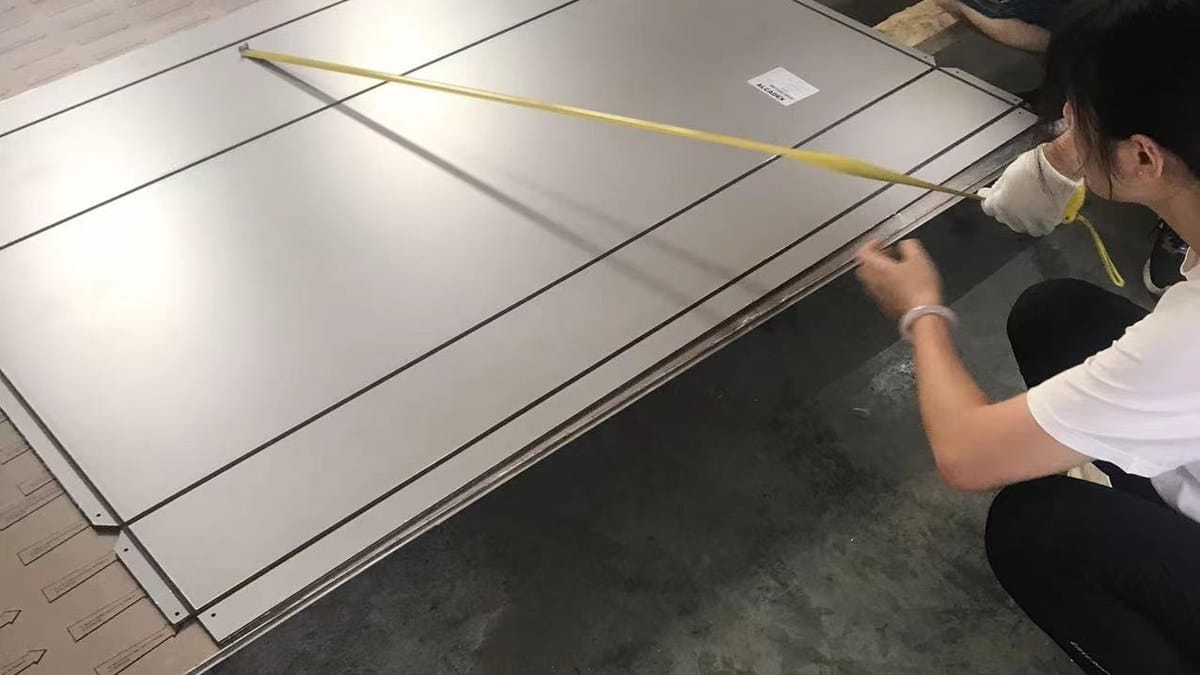
01 Aug ACP V-Grooving: Depth, Fold Quality and Inspection
ACP V-grooving is the controlled removal of core material along a fold line so an aluminum composite panel can form a precise return while the exterior aluminum skin remains continuous. Good fold quality depends on the actual panel build-up, cutter geometry, residual material, tool condition and a verified first-off sample—not on one universal depth setting.
The purchasing implication is important: total panel thickness alone does not define how a sheet will fold. Aluminum skin thickness, core composition, coating face, required inside radius and return dimension must be confirmed before production. Alcadex treats V-grooving as a controlled fabrication operation tied to the approved drawing and production batch.
What a V-groove must accomplish
The groove should remove enough core to allow a repeatable bend without cutting or severely stressing the visible outer skin. A shallow groove leaves too much core and can produce a large radius, spring-back or an inaccurate return. A deep groove can damage the bond line or skin, create a visible witness line and reduce corner integrity.
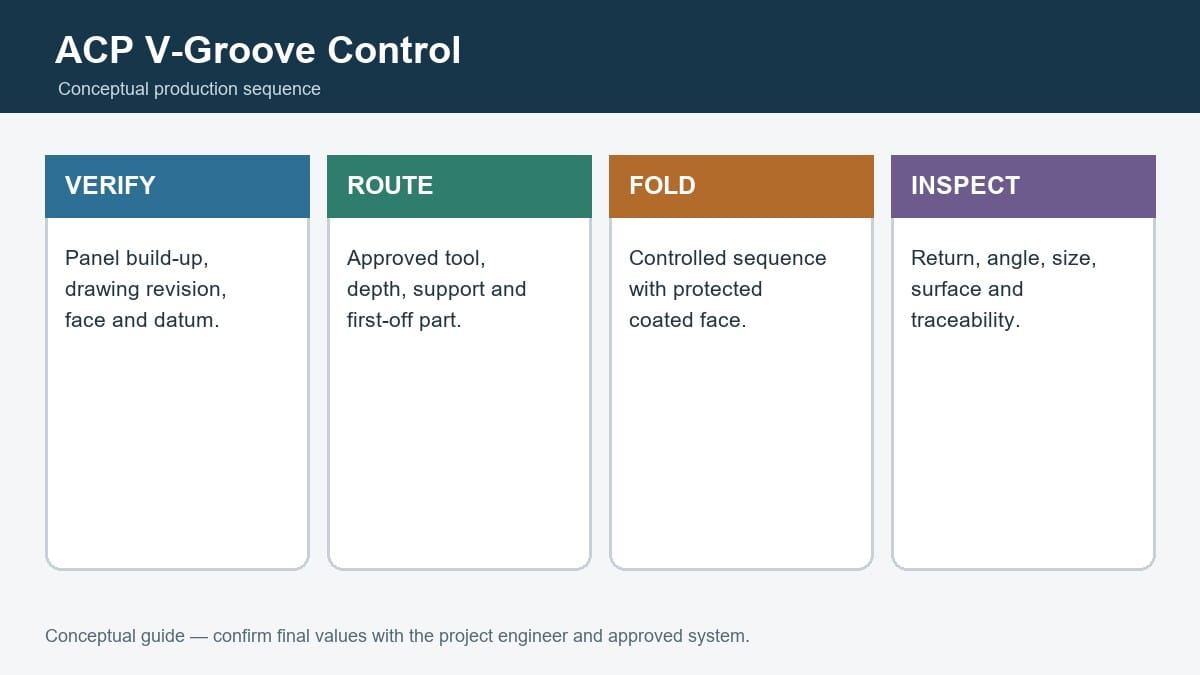
| Variable | If poorly controlled | Practical control |
|---|---|---|
| Total and skin thickness | The copied setting leaves too much or too little material | Verify the production batch and construction before setup |
| Cutter angle and tip | Inside radius and fold line change | Use the approved tool and monitor wear |
| Residual material | Fold becomes stiff, weak or visibly marked | Validate by trial fold and section check where agreed |
| Datum and groove position | Return depth and cassette size drift | Route and measure from the drawing datum |
| Support and hold-down | Depth varies across the sheet | Keep the table clean, flat and consistently secured |
Step 1: verify the drawing and production sheet
Confirm the part number, revision, face side, finish direction, fold lines, return depths, corner notches and inspection dimensions. Then match the sheet to the order: thickness, skin gauge, core, coating, color, gloss, batch and protective film. A machine program should not be released while any of these inputs remain ambiguous.
Step 2: set the tool and route a first-off part
The operator confirms the correct cutter, tool condition, programmed path, face orientation, support and extraction. The first-off part uses the actual production material. Chips must not remain beneath the panel because they can create dents or change support height. The routed groove is cleaned before inspection.
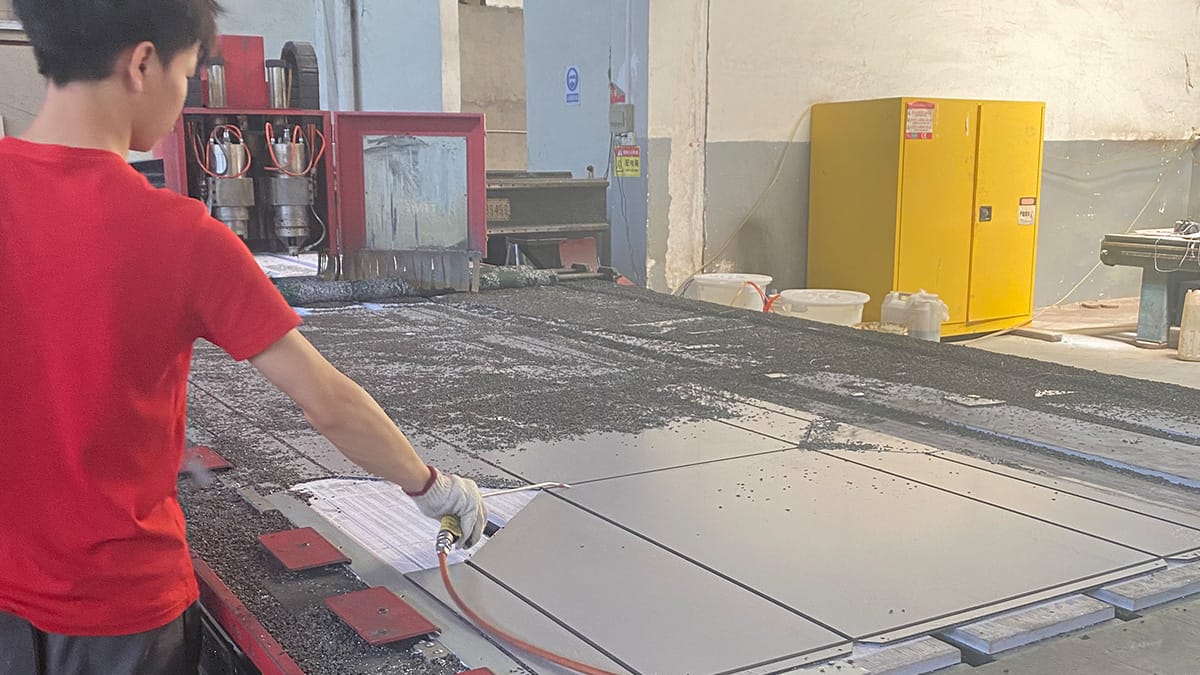
Step 3: inspect the groove before folding
Check groove position from the same datum used in the drawing, continuity through corners, remaining core, tool marks and any contact with the outside skin. The goal is not a visually perfect channel by itself; it is a groove that produces the specified finished geometry without surface damage.
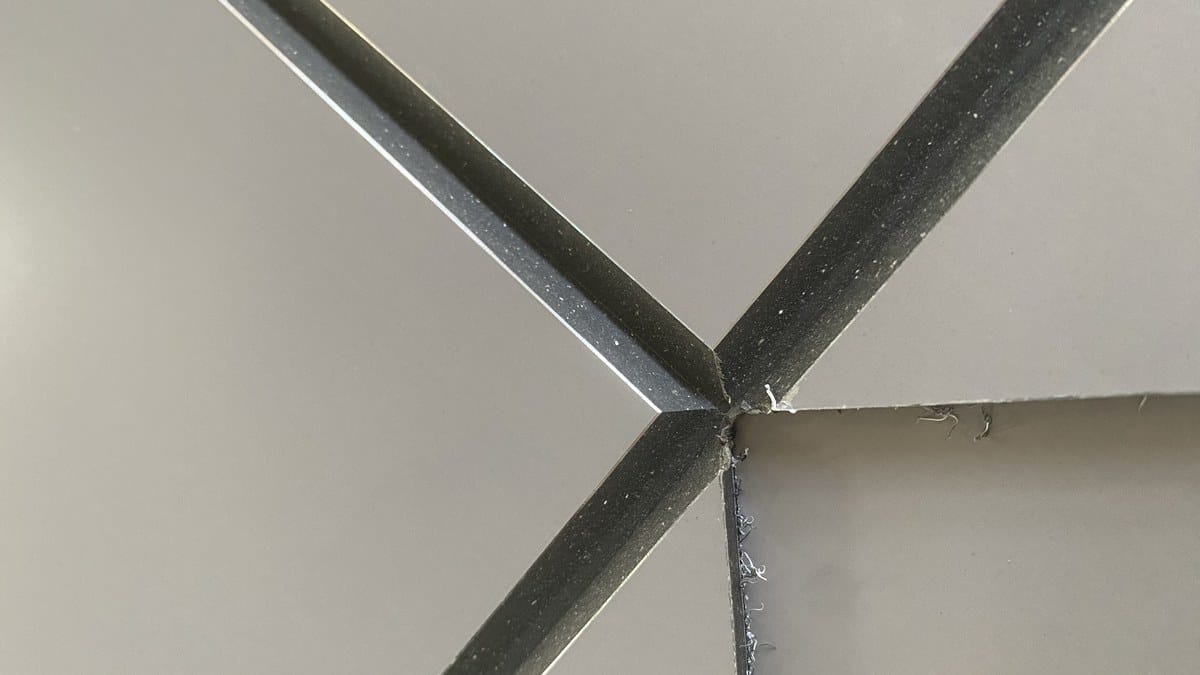
Step 4: fold and measure the finished part
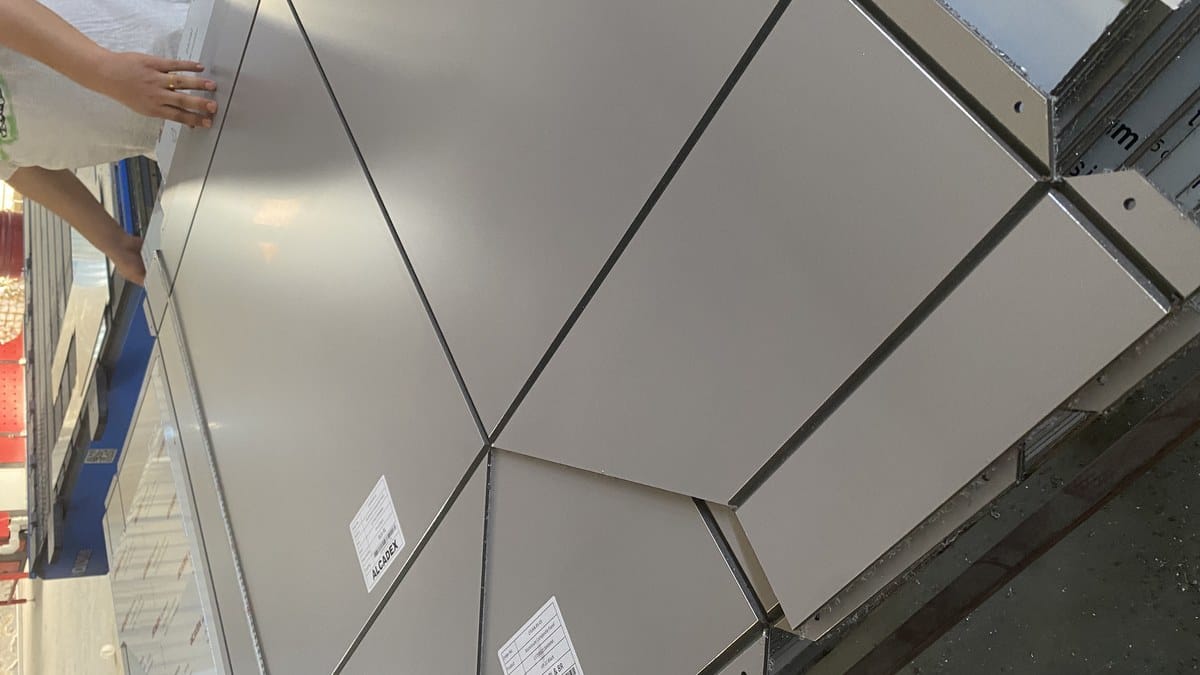
Fold in the planned sequence with the coated face protected and the return evenly supported. Inspect the exterior corner under useful lighting. Measure overall size, return depth, squareness, corner angle, bow and twist after forming. Approval must be based on the finished cassette because spring-back and fold sequence can change the final result.
How Alcadex controls repeat production
Once the first-off sample is accepted, the approved program, tool, material batch and inspection points are retained. Operators periodically recheck critical dimensions and surface condition. Tool wear, table contamination, sheet movement or a material change can justify a new first-off check. Parts remain identified through forming and packing so a result can be traced to its drawing and batch.
Buyer checklist for V-grooved ACP
- Provide controlled fabrication drawings, not only elevation dimensions.
- State total thickness, aluminum skin thickness, core and coating.
- Identify face side and directional finish on every part.
- Agree which finished dimensions are critical.
- Request first-off approval for repeated cassette modules.
- Confirm inspection frequency and traceability records.
- Protect folds, corners and coated faces during packing.
Common defects and decisions
| Observation | Likely contributor | Decision |
|---|---|---|
| Fold is rounded or springs open | Excess residual core, tool geometry or sequence | Stop and revalidate the groove setting |
| Visible line on the coated face | Over-deep routing or excessive forming stress | Segregate parts and assess appearance and integrity |
| Return depth varies | Groove position, support or folding inconsistency | Check datum, table and forming fixture |
| Corner skin cracks | Skin damage, unsuitable radius or handling | Do not conceal; investigate material and process |
Specify the result, not a borrowed machine number
A buyer should define the panel construction, final geometry, visible quality and inspection method. The fabricator then establishes a validated machine setting for the actual material. This avoids the false precision of copying a groove depth from a different panel and makes the finished part—not an isolated setup value—the basis of acceptance.
Groove design at corners and intersections
Cassette corners combine straight grooves, notches and overlapping returns. If the tool path stops too early, excess core can prevent a corner from closing. If it extends too far, the cut may become visible or create a weak point outside the intended fold. The drawing should distinguish the visible corner, the concealed closure and any reinforcement. Corner geometry is best approved on a real first-off part because a two-dimensional drawing does not show every forming interaction.
Intersecting grooves also change the folding sequence. A return folded first may block access or force the next fold. The fabricator should establish the sequence before production nesting, especially for narrow trays, deep returns and components with multiple cut-outs.
How to inspect a V-groove without damaging the part
Routine inspection begins with visual continuity, position and cleanliness. Dimensional checks are taken from a controlled datum rather than from a rough cut edge. Where residual material must be verified directly, the project and factory should agree a suitable method, such as a sacrificial setup coupon or sectioned first-off sample. Cutting a production part merely to check the groove should not be improvised after the batch is complete.
The trial fold provides critical evidence. Inspect the outside coating under normal and oblique light, then measure the inside geometry and finished return. A good record identifies the material batch, machine program, tool, date, operator and measured result. That record makes later troubleshooting far more reliable than photographs alone.
Frequently asked questions
Can the same groove setting be used for PE and PVDF panels?
Not automatically. Coating is only one difference; skin thickness, alloy, core and panel supplier guidance can also vary. Validate the full construction.
Should the protective film be removed before routing?
Normally the film remains to protect the face, provided it is clean, intact and compatible with the handling process. Film must not hide damage during final inspection.
Can site workers correct a shallow groove by hand?
Uncontrolled site reworking can damage the skin, shift the fold and remove traceability. Any correction should follow an approved method and be reinspected.
Does a sharper external corner always mean better quality?
No. The corner must meet the approved appearance and structural detail without overstressing the skin. An unrealistically sharp target can increase risk.