
17 Aug Mirror ACP Panels: Uses, Distortion and Care
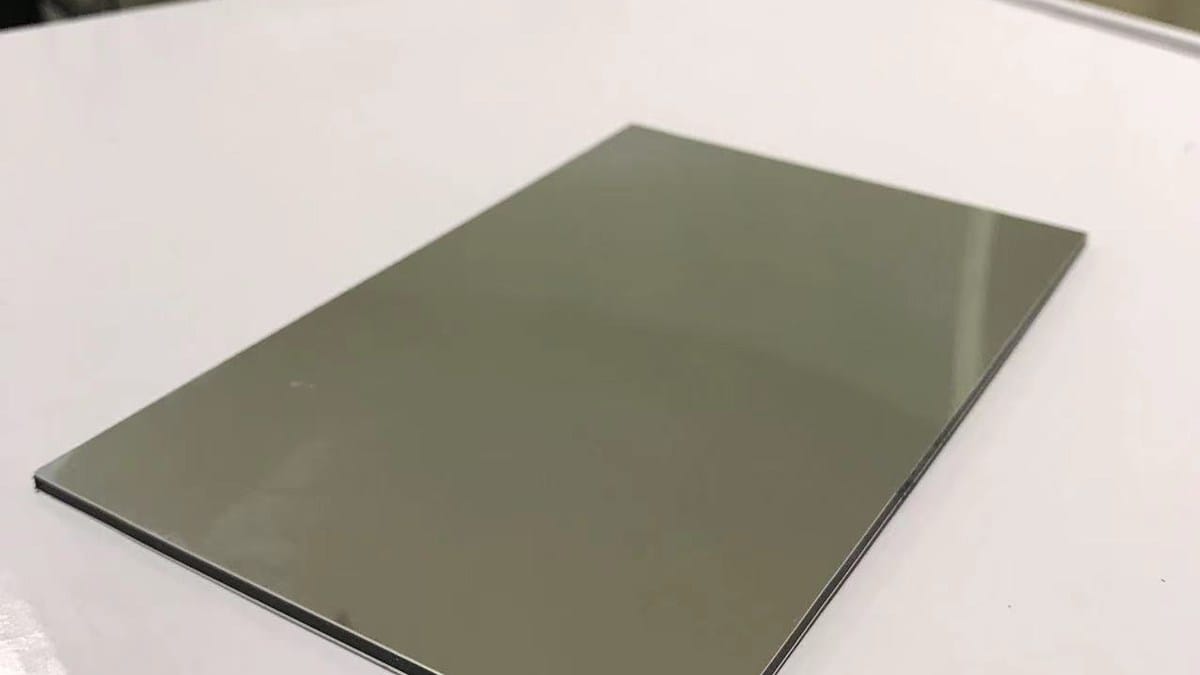
Mirror ACP is a lightweight aluminum composite panel with a highly reflective decorative face intended to create a mirror-like visual effect. It is not automatically equivalent to glass mirror or polished solid metal: reflection clarity depends on the surface construction, panel flatness, substrate, module size, handling and viewing distance.
For most projects, mirror ACP is selected for decorative interiors, displays, ceilings, column features and signage accents. Exterior use requires specific written confirmation of the proposed product and environment.
Mirror ACP, glass mirror and polished metal compared
| Material | Weight and fabrication | Reflection | Main limitation |
|---|---|---|---|
| Mirror ACP | Lightweight; can be cut and fabricated as ACP | Decorative, sensitive to panel plane | May show optical distortion and surface marking |
| Glass mirror | Heavier and brittle; specialized edge/handling needs | Typically clearer image | Breakage, weight and attachment requirements |
| Polished stainless steel | Heavier, harder to fabricate and finish | Durable metallic reflection | Cost, mass and fabrication complexity |
Reflection makes flatness visible
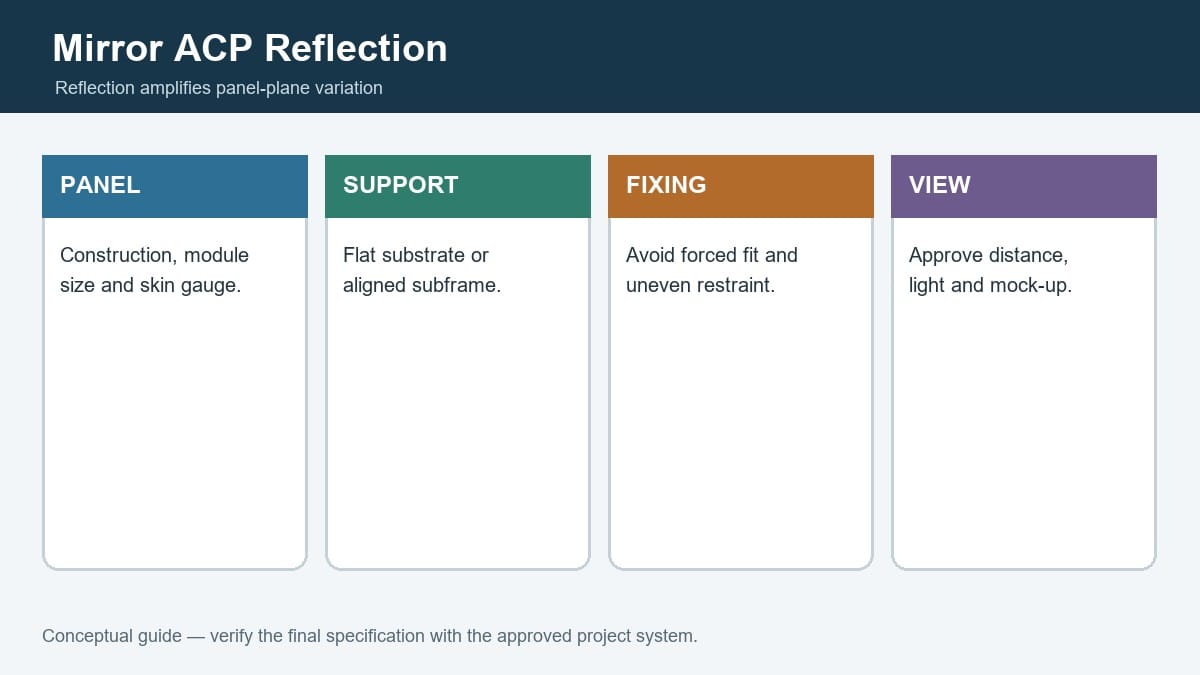
A panel can be structurally serviceable yet show waviness under grazing light. Large modules, thin skins, uneven support, forced installation and temperature gradients can increase visible distortion. The project should approve a representative mock-up at the intended viewing distance and lighting, not judge performance from a small hand sample alone.
Real sample approval
Record the sample code, panel construction, batch, tone and protective film. Some “silver mirror” products have a warmer or darker tone than glass. Adjacent materials and lighting can make this more noticeable. A signed sample establishes a realistic reference.
Substrate and support
The support plane must be surveyed and aligned. Pulling a panel onto a twisted frame transfers distortion to the face. Adhesive-bonded interior applications require compatible substrates, preparation and cure; mechanically fixed cassettes require engineered returns and attachments. The complete installation method should be agreed before ordering.
Handling and protection
Reflective surfaces reveal fingerprints, chips and fine scratches readily. Keep protective film in place through fabrication and clean installation where allowed, but remove it within the supplier’s specified period. Use clean gloves, soft separators and full support. Do not slide sheets across each other or place tools on the face.
Cleaning and maintenance
| Issue | Safe approach | Avoid |
|---|---|---|
| Dust | Clean air or a clean soft cloth following supplier guidance | Dry abrasive wiping with contaminated cloths |
| Fingerprints | Approved mild cleaner tested on a retained sample | Strong solvent without compatibility confirmation |
| Adhesive residue | Escalate to the surface-system supplier | Metal scraper or aggressive rubbing |
| Fine scratch | Assess visibility and replacement option | Local polishing that changes gloss and reflection |
Buying checklist
- Actual mirror surface construction and intended exposure.
- Total thickness, skin gauge, core and fire requirement.
- Maximum module size and support arrangement.
- Approved physical sample and mock-up viewing criteria.
- Protective film, fabrication and handling rules.
- Cleaning instructions and replacement stock.
- Written confirmation for any exterior use.
Mirror ACP is most successful when selected as a decorative reflective panel with controlled expectations, not as an automatic substitute for every type of mirror.
Joint layout and optical continuity
Joints interrupt reflections and can help manage module size and installation tolerance. They also create strong visual lines, so their width, color and alignment should be reviewed in the mock-up. A large “seamless mirror wall” expectation may conflict with practical fabrication, movement and support requirements.
At corners, the reflection changes abruptly. Folded corners, separate trims and mitred arrangements create different results and risks. The design should show how the finish terminates at openings, bases, ceilings and service penetrations. Cut edges that remain visible may need an approved trim or return.
Inspection and acceptance
Inspect the protected sheet for obvious transit damage, then assess the exposed face under clean, representative lighting. Record the observation distance and direction. A handheld sample can establish finish tone and obvious defects, while a full-size mock-up establishes acceptable reflection character and system flatness.
Do not use distorted reflections from temporary film wrinkles as the sole basis for rejection. Conversely, film should not remain as a reason to postpone all surface inspection until after installation. Agree when and how representative panels are peeled and accepted.
Frequently asked questions
Can mirror ACP be used as a safety mirror?
Do not assume so. Safety, optical and regulatory requirements must be confirmed for the intended use; decorative ACP is not automatically a certified mirror product.
Will thicker panels eliminate reflection distortion?
Greater stiffness may help, but skin gauge, module size, support plane, fixation and temperature remain important.
Can mirror ACP be installed with adhesive?
Some interior systems use adhesive, but substrate compatibility, preparation, cure, load and fire requirements must be engineered and approved.
When should the protective film be removed?
Follow the product guidance and project sequence. Delayed removal can leave residue; early removal increases damage risk.