
04 Aug ACP Protective Film: Storage, Removal and Residue
ACP protective film is a temporary, low-tack layer applied to the finished face to reduce scratching and contamination during transport, fabrication and installation. It is not a permanent weathering layer, and it should not be left outdoors indefinitely. Good film control means checking it at receipt, storing panels in suitable conditions, protecting it during processing, and removing it within the supplier’s recommended window.
The film can help protect a coating, but it cannot prevent dents, deep cuts, heat damage, standing water, chemical attack, or pressure marks from poor stacking. If it becomes aged, baked by sunlight, contaminated, or exposed beyond its intended period, removal may become difficult and adhesive residue may remain.
What protective film can and cannot do
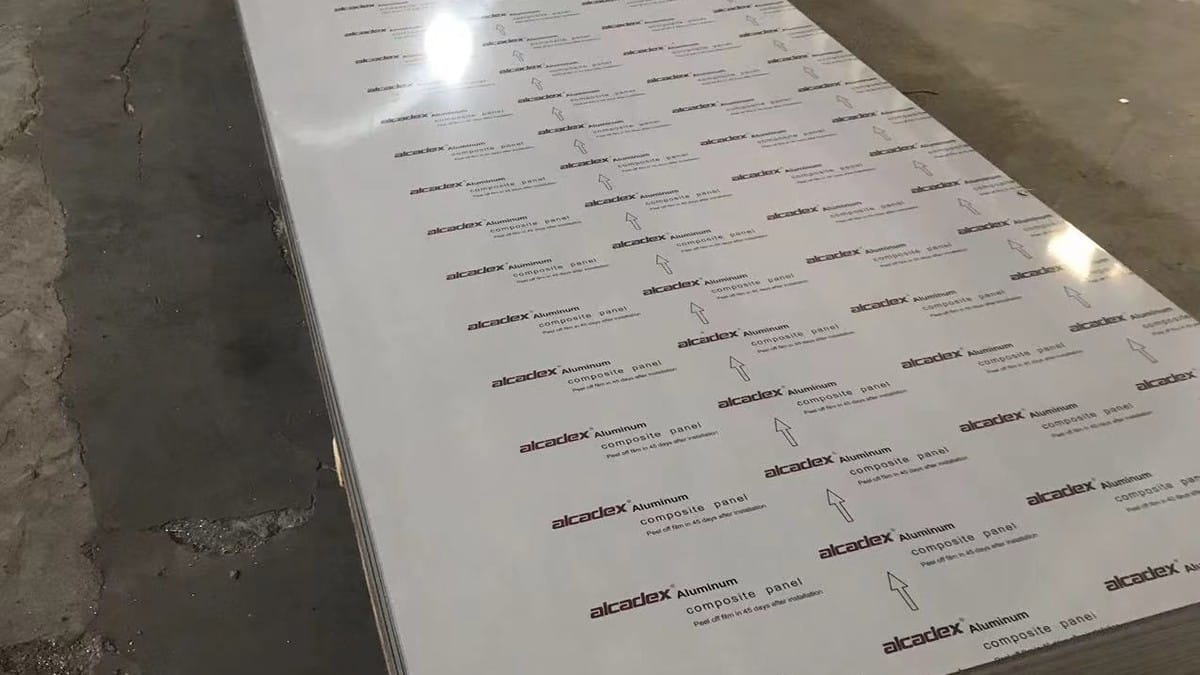
Protective film reduces routine surface contact during a controlled production and construction sequence. Printed arrows may also indicate coating or grain direction, helping fabricators and installers keep panels aligned. The film should remain clean and intact enough to perform these functions without hiding labels, damage, or defects that require inspection.
| Film helps protect against | Film does not reliably protect against |
|---|---|
| Light handling scratches and dust | Impact dents, bending damage or crushed corners |
| Brief contact during cutting and folding | Hot chips embedded by poor fabrication practice |
| Short-term construction contamination | Extended UV exposure, standing water or harsh chemicals |
| Identification of face and direction | Incorrect batch allocation or reversed parts without process control |
Storage conditions that reduce residue risk
Store panels dry, shaded, stable and protected from high heat. Follow the supplier’s rules for horizontal or vertical storage, maximum stack height, support spacing and package opening. Avoid leaving partially opened packs exposed to water or dust. Condensation can form even when rain does not directly reach the panels, so the storage area should allow suitable ventilation and temperature control.
Sunlight and heat can accelerate aging of the film and adhesive. A package left beside a hot façade, under a transparent cover, or in a container after arrival may experience far more heat than expected. First-in, first-out control and visible receipt dates make it easier to manage the removal window.
A protective-film control timeline
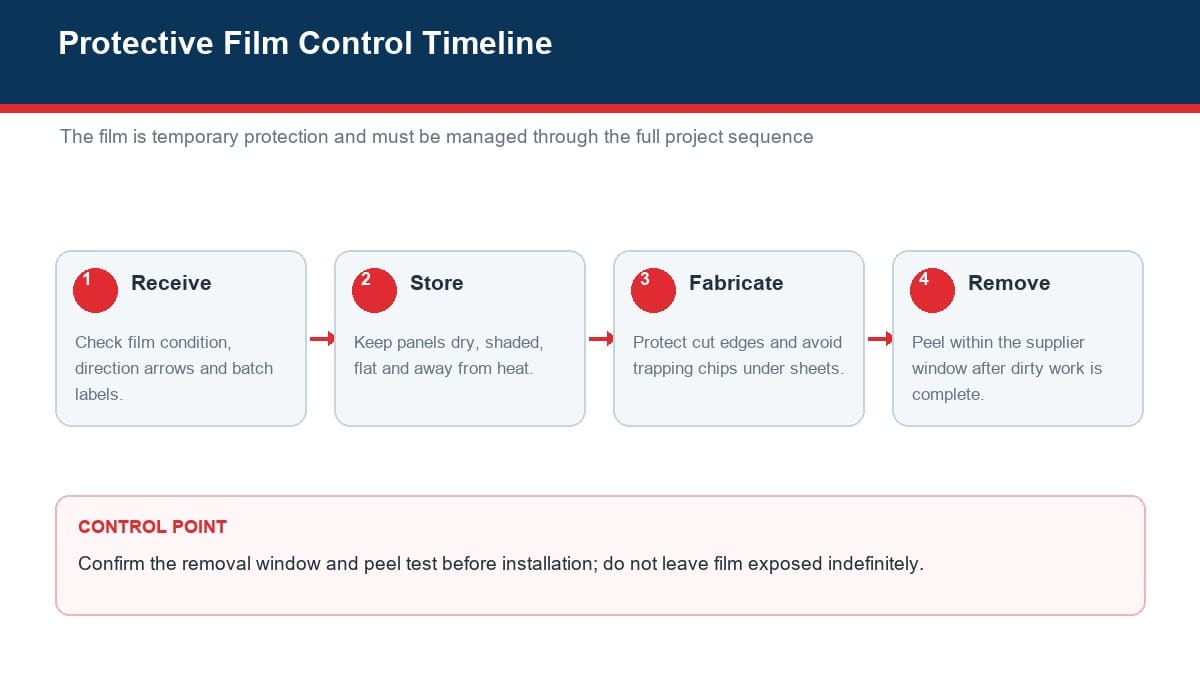
1. Inspect at receipt
Before moving the package into storage, photograph the crate and package ID. Check for punctures, water, torn film, crushed edges, pressure marks and signs that sheets have shifted. Compare product labels, color code, batch and quantity with the purchase order. Record exceptions before the panels are cut.
2. Keep film clean during fabrication
Clean the table and supports before placing the finish face down. Aluminum or core chips trapped under a sheet can press through the film. Use suitable vacuum and extraction, remove chips before stacking, and separate completed parts. Do not write with hard-point pens or place sharp templates directly on the face.
3. Test before installation
If material has been stored for a long period or exposed to unusual heat, make a small peel test in a non-critical area or on a retained sample. Confirm that the film removes evenly without unacceptable residue or coating disturbance. Escalate concerns before installing a large quantity.
4. Remove at the correct stage
Removal timing must balance protection and aging risk. Dirty work, sealant application, drilling and adjacent trades should be sufficiently complete, but the film should not remain beyond the supplier’s window. Peel steadily at a low angle unless the supplier specifies otherwise. Large installed areas should be removed in a planned sequence so each panel can be inspected immediately.
Why protective film becomes difficult to remove
| Condition | Possible effect | Prevention |
|---|---|---|
| Extended sunlight or heat | Brittle film, stronger adhesion or residue | Shade panels and respect the specified exposure limit |
| Long storage time | Adhesive aging and uneven peel | Track receipt dates and use first-in, first-out control |
| Water or chemical contamination | Staining, edge residue or coating interaction | Keep packs dry and isolate construction chemicals |
| Incorrect film for coating | Excessive adhesion or surface imprint | Use the supplier-qualified film/coating combination |
| High pressure in stacking | Pattern transfer or surface marking | Use correct separators, stack limits and supports |
What to do if adhesive residue remains
Do not begin with an aggressive solvent. First stop removal in the affected area, document the panel and batch, and ask the panel or coating supplier for an approved cleaning method. Test any cleaner on a spare piece or concealed location. Use clean, soft materials and avoid abrasive pads that change gloss.
Work on a small area and compare it under normal lighting after it dries. Cleaning should not create a larger appearance difference than the residue. Never mix chemicals without safety information, and protect joints, sealants, adjacent finishes, landscaping and drainage from the cleaning process.
Site checklist
| Stage | Check | Evidence |
|---|---|---|
| Delivery | Film intact, arrows consistent, labels and batch recorded | Package and sheet photographs |
| Storage | Dry, shaded, stable supports and receipt date visible | Storage log |
| Fabrication | Clean table, chip control and protected stacking | First-off inspection |
| Pre-installation | Film peel acceptable on retained sample | Signed sample check |
| Removal | Completed within supplier window and surface inspected | Area release record |
Frequently asked questions
Should film be removed immediately after delivery?
Usually no; it is intended to protect the finish through controlled handling. However, the supplier’s storage and removal instructions govern. Damaged or aged film should be assessed before further processing.
Can panels be installed with film still on?
Often the film remains during part of installation, but joints, fixings and sealant zones may require local removal. The final removal should be planned so film is not trapped or left exposed too long.
Do direction arrows always mean a metallic finish?
No. Arrows can identify production direction on several finishes. Treat every directional marking as a control requirement unless the supplier confirms otherwise.
Final takeaway
Protective film works only as part of a managed timeline. Inspect it, store panels away from heat and moisture, keep fabrication surfaces clean, retain batch identity, test aged material, and remove the film within the agreed window. These simple controls prevent avoidable residue, scratches, reversed panels and late site disputes.
For film guidance tied to a specific coating or order, contact Alcadex with the panel label, storage history and project conditions.