
16 Aug Brushed ACP Panels: Uses, Direction and Buying Specs
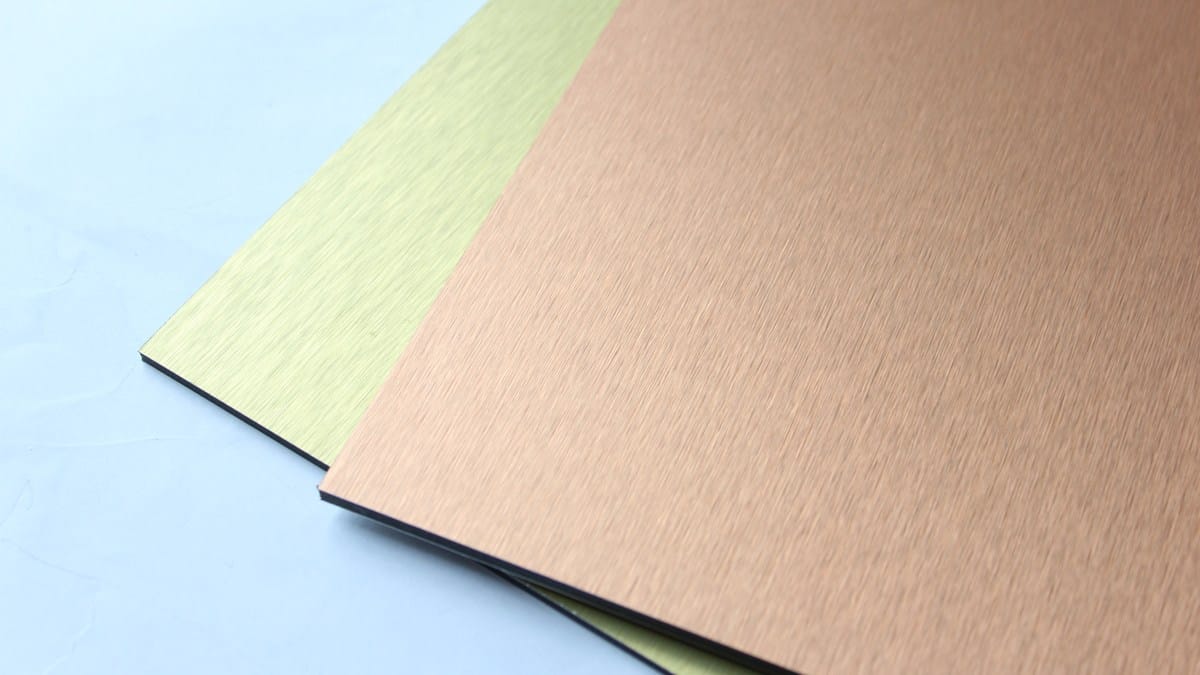
Brushed ACP panels use a directional linear surface effect to create the appearance of brushed metal while retaining the light weight and fabrication advantages of aluminum composite panel. The direction is a design variable: rotating one panel can change how it reflects light and make a consistent batch appear mismatched.
Alcadex buyers should specify more than “brushed silver” or “brushed copper.” Pattern direction, color reference, gloss, coating system, panel construction, protective film and approved sample all need to match the intended application.
Where brushed ACP works well
Common uses include retail interiors, reception areas, column covers, display systems, signage backgrounds, elevator surrounds and selected façade accents. It offers a controlled metallic character without the mass and fabrication constraints of solid decorative metal. Suitability still depends on fire requirements, exposure, impact risk, cleaning regime and complete-system design.
Direction controls visual consistency
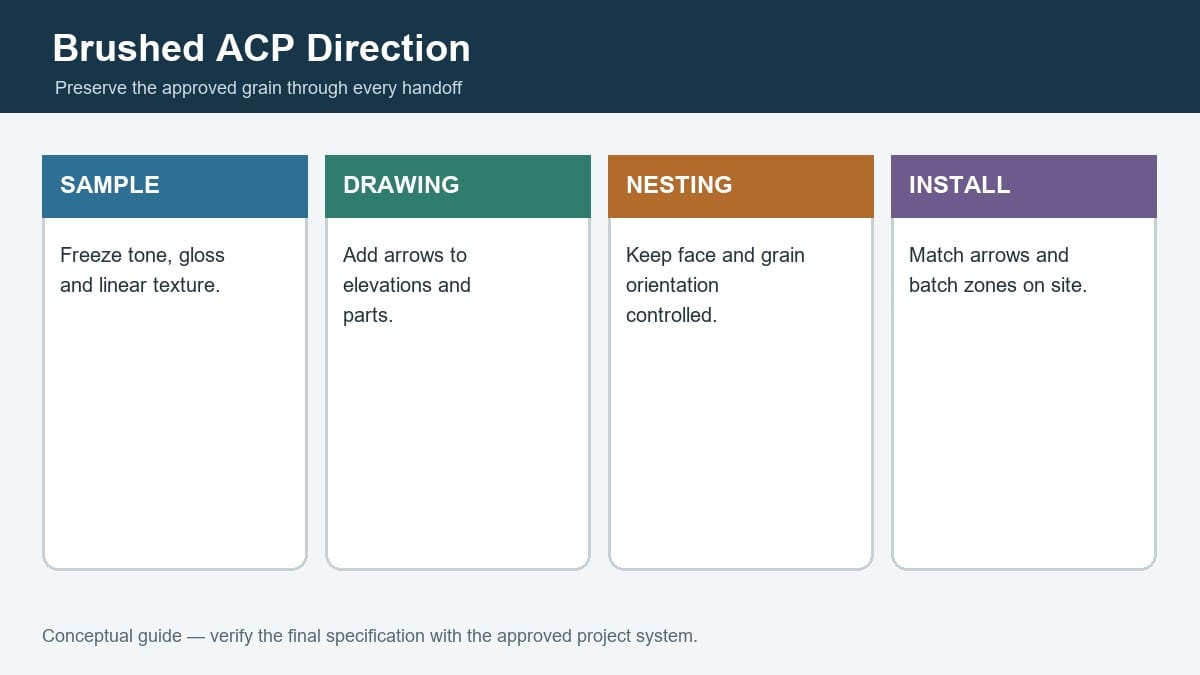
The approved elevation should show grain arrows. Factory labels, protective-film arrows, nesting maps and panel codes should preserve that direction. On complex cassettes, the fabrication drawing must identify the visible face and orientation so a correctly sized part is not installed with reversed grain.
| Control | Risk if omitted | Recommended evidence |
|---|---|---|
| Master sample | Color and texture are judged from different references | Signed physical sample with code and date |
| Direction arrows | Adjacent panels reflect light differently | Elevation, nesting map and film arrows |
| Batch allocation | Natural production variation becomes visible | Batch record and elevation zoning |
| Lighting review | Sample looks different under project illumination | Mock-up under representative light |
| Cleaning approval | Abrasive cleaning changes the linear appearance | Coating supplier cleaning method |
Brushed, metallic and solid finishes compared
| Finish | Visual character | Direction sensitivity | Buyer focus |
|---|---|---|---|
| Brushed | Visible linear texture | High | Grain, tone, gloss and orientation |
| Metallic coated | Flake-based light response | Moderate to high | Spray/coil direction, batch and viewing angle |
| Solid color | More uniform color field | Usually lower | Color, gloss, coating and batch |
| Mirror | Highly reflective image | Reflection reveals plane and distortion | Flatness, handling and cleaning |
Surface construction and durability
“Brushed” describes appearance, not a complete performance specification. Confirm whether the decorative effect is protected by a coating or film system, and whether it is intended for interior or exterior use. PE-coated interior material should not be silently substituted for an exterior-grade coating. Request written confirmation of the proposed build-up and warranty conditions.
Fabrication, handling and cleaning
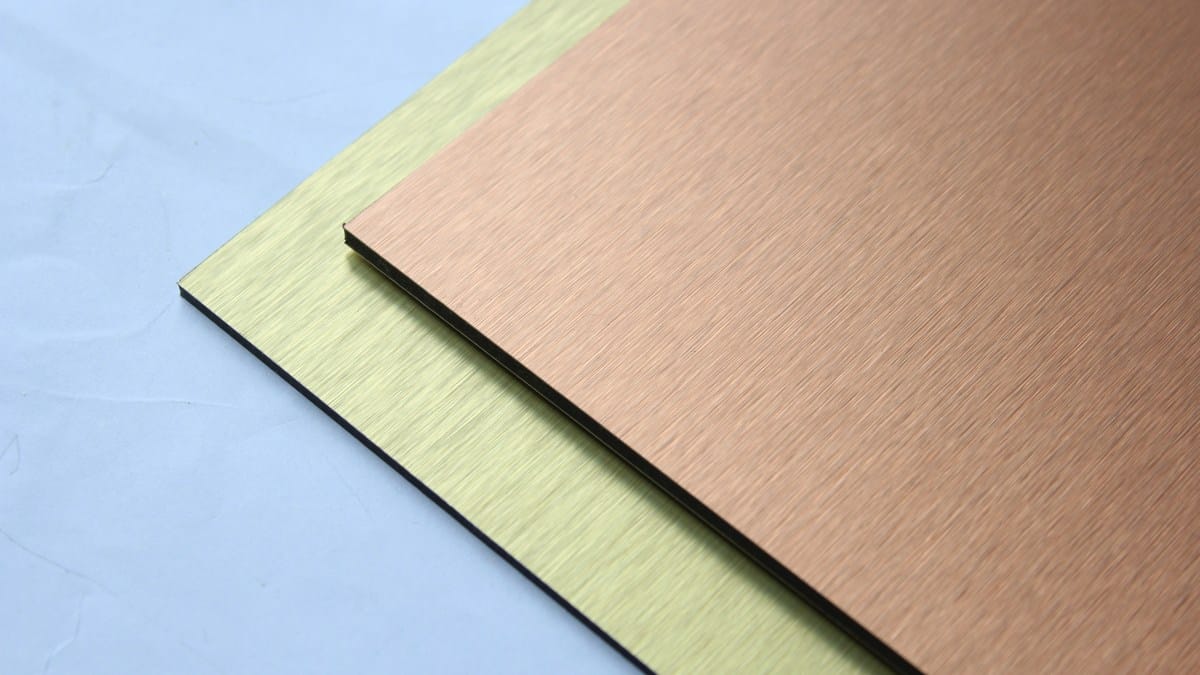
Cut and route with the protected face supported. Chips trapped between sheets can mark the finish. Avoid dragging parts, mixing orientations or writing directly on the face. During cleaning, use approved non-abrasive materials and work with the grain where the supplier recommends it. Test any cleaner on a retained sample before treating a visible elevation.
Buying specification
- Brushed finish name and physical master sample.
- Pattern direction on elevations and part drawings.
- Total thickness, skin gauge, core and coating.
- Interior or exterior exposure and required warranty.
- Color, gloss and acceptable batch allocation.
- Protective-film arrows and part identification.
- Mock-up, cleaning method and replacement stock.
A strong specification turns a subjective finish description into measurable production and installation controls.
Sample size and lighting
A small sample is useful for comparing tone and texture, but it cannot show every effect of a full-size elevation. Long linear highlights can make direction changes more obvious on large panels. Review a larger sample or mock-up under the project’s warm and cool lighting, daylight and likely viewing angles. Record which face and arrow orientation were approved.
Brushed copper, bronze, champagne and silver descriptions vary between suppliers. A color name should never replace a signed sample and product code. If the project will combine brushed ACP with real metal, stone, glass or timber, approve the materials together because surrounding colors alter perception.
Batch planning and replacement panels
Natural production variation can become visible when replacement panels are installed next to aged material. Order reasonable attic stock from the approved batch when long-term replacement is important. Store it flat, dry and protected, with labels and film intact within the supplier’s storage limits. Record which batch was assigned to each elevation or interior zone.
When multiple batches are unavoidable, avoid random mixing. A project may allocate a batch to a complete wall, level or clearly separated area. The mock-up and installation sequence should confirm that this zoning is visually acceptable.
Frequently asked questions
Is brushed ACP made from mechanically brushed bare aluminum?
Products differ. The visual effect may be created and protected through different decorative surface systems. Confirm the actual construction offered by Alcadex for the order.
Can brushed panels be folded?
They can be fabricated when the panel construction and approved method permit it, but fold direction, radius, coating and visible marking require first-off validation.
Can scratches be polished out with the grain?
Local polishing may change gloss, color and texture and create a larger visible patch. Do not attempt it without an approved repair method.
Is brushed ACP suitable behind cooking equipment?
Only after reviewing temperature, fire, cleaning, grease and local code requirements for the complete wall system.