
08 Aug Printed ACP Sheets: Methods, Durability and Applications
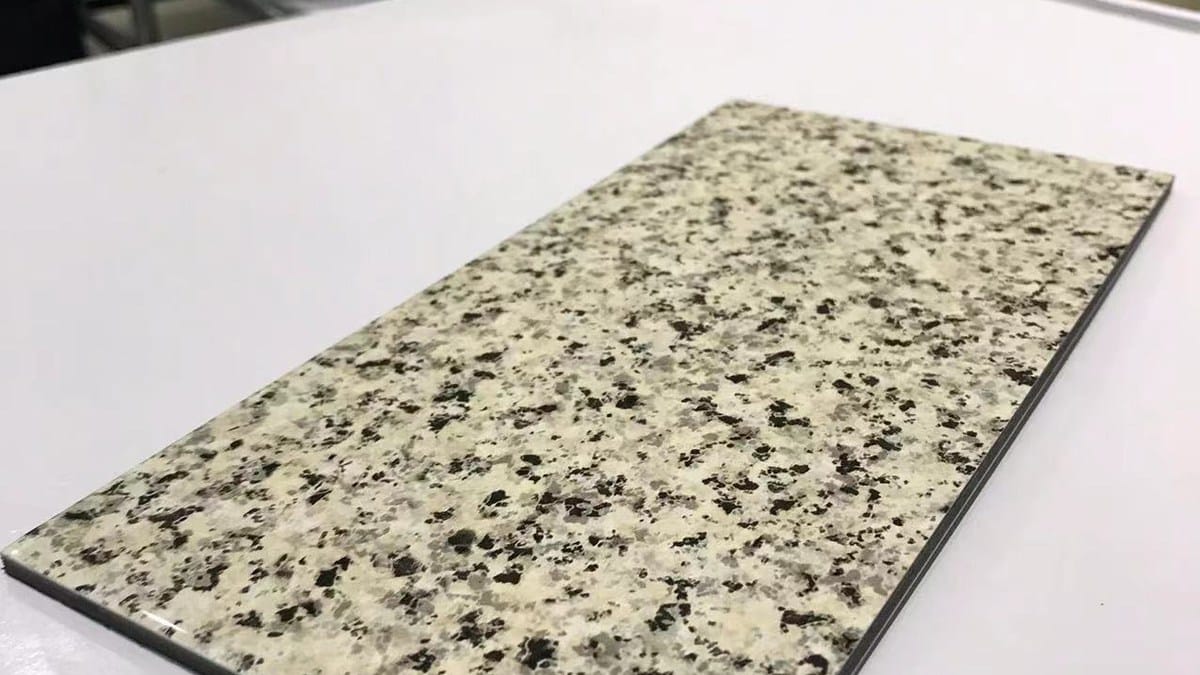
Printed ACP sheets place a decorative image, pattern or graphic on an aluminum composite panel using a controlled print or transfer process, often combined with a protective coating or laminate. Durability depends on the complete surface system, not on print resolution alone.
Buyers should define the artwork, color target, pattern repeat, viewing distance, exposure, protective layer and acceptance sample. Alcadex separates interior decorative requirements from exterior weathering claims and asks for written approval of the actual proposed construction.
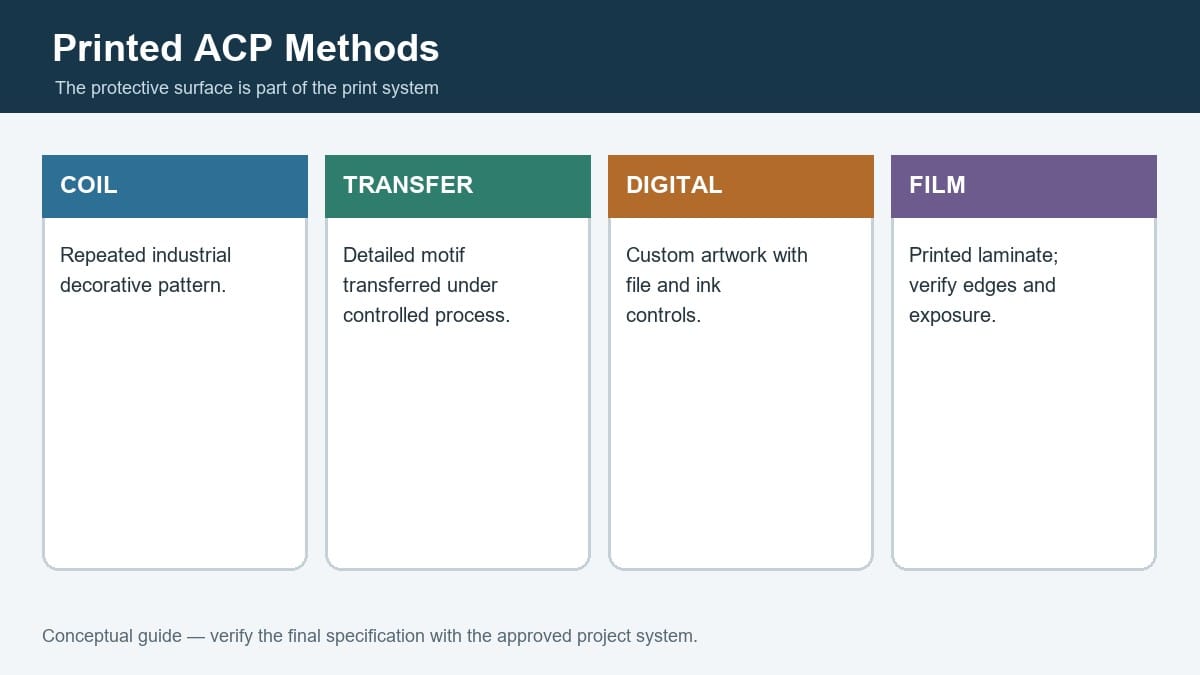
Printed ACP methods compared
| Method | Best suited to | Key advantage | Buyer risk |
|---|---|---|---|
| Coil-applied decorative pattern | Repeated wood, stone or abstract finishes | Consistent industrial production | Pattern repeat and batch color must be approved |
| Transfer process | Decorative textures and repeated motifs | Detailed surface effect | Temperature/process control and protection vary |
| Direct digital print | Custom graphics and shorter runs | Artwork flexibility | Ink adhesion, UV exposure and file quality |
| Printed film or laminate | Interior graphics and branded surfaces | Fast image change and broad design choice | Edge lifting, fire behavior and exterior suitability |
Pattern finishes are still printed products
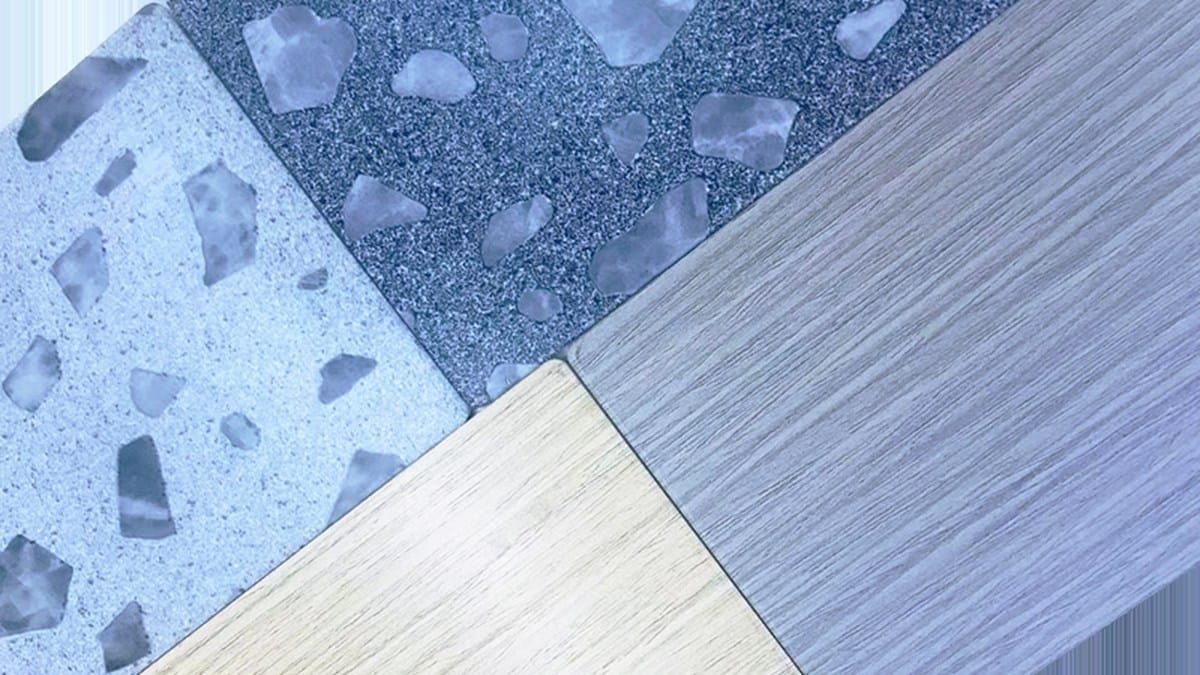
Stone, timber and concrete appearances reproduce a visual reference; they are not natural slabs or boards. Pattern scale, repeat, seam location and panel orientation affect realism. The design should coordinate pattern modules with joints and cassette sizes rather than approve a small sample in isolation.
Interior and exterior durability
Interior applications usually face cleaning, abrasion, impact and artificial light. Exterior products also face UV radiation, heat, moisture, pollution and thermal cycling. A claim such as “UV resistant” should identify the test basis and surface construction. The protective top layer, ink or transfer, substrate preparation and edge detail all contribute to performance.
Artwork and color approval
Digital files can change through color profiles, screens, printers and substrates. A monitor image is not a production standard. Approve a physical strike-off or panel sample under representative lighting. Record the file revision, scale, crop, color target, gloss and viewing distance. For repeat orders, retain the approved reference and record the original batch.
Application selection
| Application | Primary concern | Specification focus |
|---|---|---|
| Retail and exhibition | Brand color and replacement consistency | Artwork control, short-run capability and cleaning |
| Interior feature wall | Pattern repeat and joints | Panel layout, fire requirement and abrasion |
| Signage | Legibility and weather exposure | Print method, overlaminate/topcoat and edge detail |
| Exterior accent | UV, moisture and temperature | Written exterior system approval and warranty |
| Ceiling or soffit | Fire, access and orientation | Complete support system and pattern direction |
Fabrication and cleaning
Routing, folding and drilling can expose or stress decorative layers at edges. Confirm minimum bend behavior and whether graphics cross fold lines. Keep protective layers clean and avoid stacking grit between panels. Clean only with approved non-abrasive products; solvents that do not affect plain coating may still damage print or laminate.
RFQ checklist
- Print/transfer method and protective surface layer.
- Artwork file, revision, scale and physical approval sample.
- Pattern repeat, direction, panel layout and joint strategy.
- Panel thickness, skin gauge, core and fire requirement.
- Interior or exterior exposure and durability evidence.
- Color tolerance, batch control and replacement policy.
- Fabrication, packing and cleaning instructions.
Printed ACP performs best when image approval and material approval are treated as one controlled process.
Panelization and pattern mapping
A continuous mural or large stone pattern must be mapped across panel joints. Each component needs a part code, face orientation and artwork position. The nesting file should not optimize material yield by rotating graphics that have a required direction. For a random stone or timber effect, the designer should still decide whether obvious repeats and adjacent identical panels are acceptable.
Allow for fabrication returns and joint gaps when cropping artwork. Important text, logos and visual features should stay clear of folds, trims, sealant zones and fixing areas. Approving only the flat digital image can lead to missing information after the panel is routed and formed.
Quality-control points
Incoming artwork is checked for revision, scale and usable resolution. The first production sample is compared with the signed reference for color, gloss, pattern position and surface condition. Repeated production should retain batch and file traceability. Inspection lighting and viewing distance should reflect the application: a close-view retail graphic requires different scrutiny from a high façade pattern.
Adhesion and durability evidence should correspond to the actual ink, coating or laminate system. Test reports for plain coated ACP do not automatically prove the weathering of a decorative print added later.
Frequently asked questions
Can any photograph be printed on ACP?
Technically many images can be reproduced, but file resolution, color rights, viewing distance, panel joints and the selected printing system determine the useful result.
Will printed stone ACP match natural stone exactly?
No. It is a controlled decorative representation. Approve tone, scale, gloss and repeat from a physical sample and mock-up.
Can damaged graphics be touched up on site?
Local work may not match the original print and protective layer. Replacement is often more consistent for visible modules.
Does a laminate make printed ACP exterior grade?
Not by itself. The complete laminate, adhesive, edges, panel and exposure must have written exterior approval and suitable evidence.