
22 Aug Wood-Finish ACP Price: Specs and Buying Factors
Wood-finish ACP price depends on the complete panel specification, not the printed grain alone. Total thickness, aluminum skin thickness, core or fire grade, coating system, panel size, finish complexity, order quantity, processing, packaging, and delivery terms all change the quotation. The quickest way to obtain a useful price is to send every supplier the same written specification.
A low unit price may describe a thin interior panel, while a higher quotation may include thicker aluminum skins, an exterior-grade finish, a different core, tighter color control, protective packaging, or fabrication. Until those details match, the figures are not comparable.
What Determines Wood-Finish ACP Price?
The visible wood pattern is only one part of the product. A wood-finish aluminum composite panel normally combines coated aluminum skins, bonding layers, and a core. Each component can be specified at different performance and cost levels. This is why a supplier should not quote from the phrase “wood ACP sheet” alone.
| Price Factor | How It Changes the Product | What the Buyer Should Specify |
|---|---|---|
| Total panel thickness | Influences rigidity, weight, handling, and suitable applications | State the required thickness in millimeters |
| Aluminum skin thickness | Affects fabrication behavior, dent resistance, rigidity, and material cost | Record the thickness of each aluminum skin, not only total panel thickness |
| Core and fire requirement | Different core formulations and documented classifications have different costs and uses | State the required core, test method, classification, and project jurisdiction |
| Finish system | Interior decorative finishes and exterior weather-resistant finishes are not equivalent | Define interior or exterior use, coating system, gloss, texture, and warranty requirement |
| Wood pattern | Standard designs are easier to schedule; custom matching can require sampling and minimum quantities | Provide a product code, approved sample, or high-quality physical reference |
| Panel size | Nonstandard width or length can affect production, yield, packaging, and transport | Give exact width, length, quantity, and cutting layout |
| Processing | Cutting, grooving, routing, bending, punching, and kit labeling add operations | Submit drawings and state tolerances, edge details, and part identification |
| Quantity and logistics | Batch size, packing method, Incoterm, destination, and container use affect landed cost | State sheet count or area, destination, Incoterm, and required delivery date |
Interior and Exterior Wood Finishes Are Different
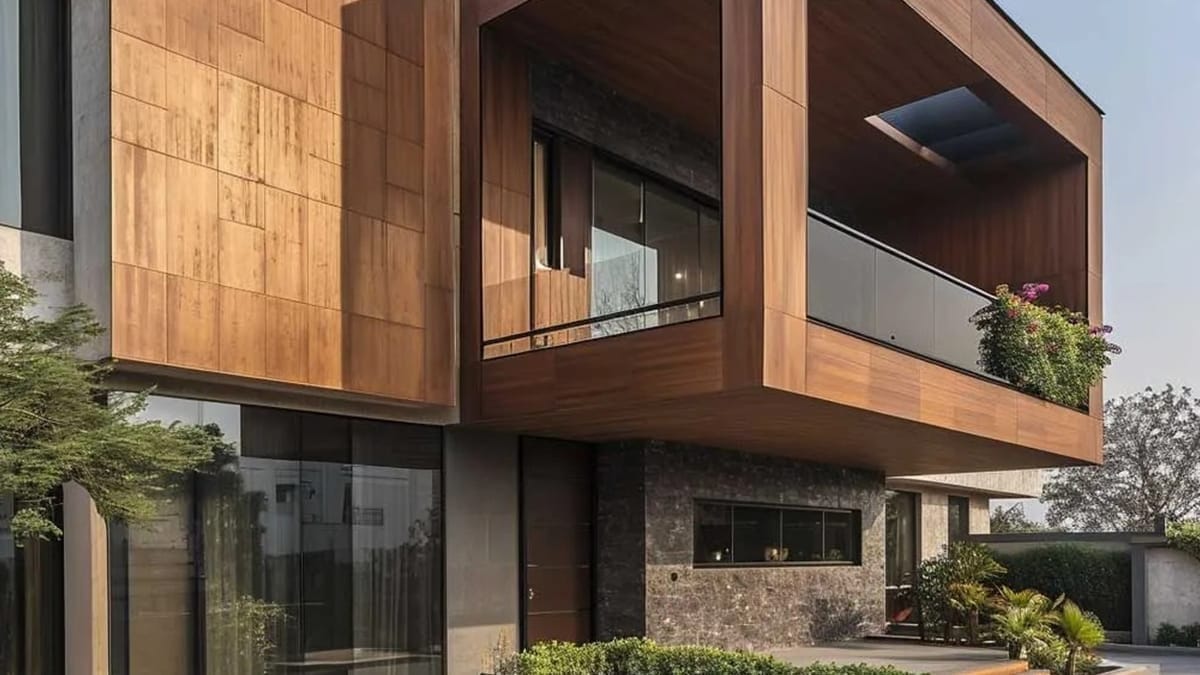
The service environment should be decided before the finish is selected. Interior panels usually avoid continuous rain, strong ultraviolet exposure, large temperature cycles, and wind pressure. Exterior cladding faces all of those conditions and therefore needs a panel, coating, core, subframe, joints, and fixing system designed for outdoor service.
PE-coated decorative panels are commonly considered for suitable interior uses. Exterior projects generally require a weather-resistant coating specification, often a suitable PVDF system, together with appropriate aluminum skins and project engineering. The exact construction must be confirmed for the project rather than inferred from the appearance of a sample.
| Decision | Typical Interior Priority | Typical Exterior Priority |
|---|---|---|
| Exposure | Cleaning, contact, artificial lighting, and indoor humidity | UV, rain, heat, cold, pollution, wind, and drainage |
| Coating | Decorative appearance and cleanability for the intended room | Weather resistance, color retention, gloss retention, and approved warranty terms |
| Panel construction | Selected for substrate, span, impact risk, and interior regulations | Selected with façade engineering, wind design, fire requirements, and cassette details |
| Wood-grain approval | Review under the actual interior lighting | Review outdoors and from expected viewing distances |
| Maintenance | Fingerprints, abrasion, cleaners, and high-contact zones | Runoff, dust, pollution, access equipment, and cleaning frequency |
Alcadex provides wood-finish ACP sheets in multiple designs and can review custom requirements. Buyers comparing indoor and outdoor products should also read the guide to interior and exterior ACP sheets.
How Thickness and Aluminum Skins Affect Cost
Total thickness and aluminum skin thickness are separate specifications. Two panels can both be described as 4 mm while using different aluminum skins and cores. Their weight, rigidity, impact behavior, routing performance, and price can therefore differ.
Thicker is not automatically better for every use. A shop display bonded to a continuous substrate has different demands from an exterior cassette spanning between supports. The correct specification depends on panel dimensions, support spacing, fabrication, wind or impact loads, fixing method, and local requirements.
Why Wood Pattern and Color Control Matter
Wood finishes contain directional grain, color variation, and repeated pattern information. A digital photo can help shortlist an appearance, but it is not a reliable production approval standard. Screens, cameras, lighting, and image compression alter color. Final approval should use a labeled physical sample that records the product code, gloss, coating, texture, and approved viewing direction.
Panel direction also affects yield and installation. If every panel must run vertically, the cutting layout may produce more offcuts than a layout that permits rotation. Connected elevations should use a controlled batch where practical. Installers should keep protective-film arrows and grain direction consistent so adjacent panels do not appear mismatched.
Custom grain matching may involve sample development, color adjustment, special production planning, and a minimum order quantity. Include that requirement at the start of the enquiry. A late color change can affect schedule as well as price.
Processing, Packing, and Freight Can Change the Real Cost
Sheet price is only one part of the landed project cost. Factory cutting or CNC routing may reduce site labor and waste, but it adds controlled processing and inspection. Finished parts need drawings, tolerances, orientation marks, edge requirements, and a packing sequence. Large sheets or long panels may improve the elevation layout while reducing container efficiency or increasing handling risk.
Protective film, interleaving, corner protection, pallets, wooden cases, moisture protection, and export labels should be defined. Lightweight panels can still be damaged by fork contact, strap pressure, sliding, or unsupported lifting. Cheap packaging that allows surface damage is not a saving.
Calculate Landed Cost, Not Only Sheet Cost
A purchasing decision should use the cost of usable panels at the project, not only the supplier’s initial unit rate. Begin with the quoted sheet value, then add processing, packing, inland transport, export charges, freight, insurance, import costs, local delivery, handling, storage, cutting loss, installation waste, and a reasonable allowance for replacement stock. Applicable taxes and duties depend on the destination and should be checked by the importer or customs adviser.
Yield is especially important for directional wood finishes. Suppose a wall module requires every grain to run vertically. A sheet that appears efficient by area may produce unusable strips when the modules are nested in the approved direction. Longer custom sheets may reduce horizontal joints but increase freight or handling cost. The lowest-cost layout is the one that balances sheet availability, pattern direction, fabrication, transport, and installation—not simply the one using the largest panel.
Record the currency, quotation validity, payment terms, Incoterm, named place, estimated shipment date, and whether taxes are included. Exchange rates and freight can change while a project is being approved. A clear commercial basis prevents an old budget figure from being mistaken for a current delivered offer.
Samples, Mock-Ups, and Quality Control
A small color chip confirms basic appearance, but a larger panel sample reveals grain scale, repeat, gloss, coating texture, and direction more clearly. For a prominent façade or lobby, consider a mock-up that includes realistic joints, corners, sealants, fasteners, neighboring materials, and project lighting. Review it from the expected viewing distance as well as close up.
The approved control sample should be signed or otherwise identified by the parties and protected from contamination and sunlight. Production inspection can then compare color, gloss, surface defects, dimensions, thickness, skin thickness, protective film, direction marks, labels, and packaging against the agreed requirements. The inspection plan should state the sampling method and acceptance basis rather than relying on “good quality” as an undefined phrase.
For cut-to-size kits, ask for a panel schedule and durable package labels. A label can show project, elevation, level, panel code, finish direction, quantity, and box number. This reduces time spent searching on site and lowers the chance that visually similar panels are installed in the wrong position.
Warranty and Service-Life Questions
Do not compare warranties by the number of years alone. Read what component is covered, which coating and environment qualify, how color change or gloss loss is measured, which maintenance is required, and what exclusions apply. Coastal exposure, industrial pollution, horizontal surfaces, cut edges, fabrication, installation, sealants, cleaning chemicals, storage, and mixed batches may be treated differently.
A panel warranty also does not cover façade engineering or workmanship unless expressly stated. The subframe, fasteners, joints, sealants, drainage, ventilation, and installation remain separate responsibilities. Ask the project team to create a responsibility matrix before ordering so product supply, processing, installation, testing, and maintenance obligations are clear.
How to Compare Wood-Finish ACP Quotations
Create one comparison sheet and copy each supplier’s confirmed values into it. If a line is blank, treat the quotation as incomplete. Compare the same Incoterm and destination, because an ex-works sheet price cannot be compared directly with a delivered price.
| Quotation Item | Supplier A | Supplier B | Must Match? |
|---|---|---|---|
| Exact sheet size | Record width × length | Record width × length | Yes |
| Total panel thickness | Record in mm | Record in mm | Yes |
| Aluminum skin thickness | Record per skin | Record per skin | Yes |
| Core/fire grade | Record type and test basis | Record type and test basis | Yes |
| Coating, wood code, and gloss | Record exact system | Record exact system | Yes |
| Processing | Record operations and tolerances | Record operations and tolerances | Yes |
| Quantity and overage | Record sheets or area | Record sheets or area | Yes |
| Packaging | Record pallet or case details | Record pallet or case details | Yes |
| Incoterm and destination | Record term and named place | Record term and named place | Yes |
| Lead time and quote validity | Record dates | Record dates | Compare |
Common Buying Mistakes
- Comparing only price per square meter. The panel, coating, core, skin, size, processing, and delivery basis may be different.
- Approving from a phone image. Use an identified physical sample and confirm gloss and direction.
- Ordering an interior finish for outdoor exposure. Define the environment before requesting a price.
- Ignoring directional yield. Grain direction can affect cutting waste and installed consistency.
- Leaving fire requirements until late. The project’s required classification and evidence can change the product choice.
- Forgetting processing and packing. These items affect both the usable result and landed cost.
- Ordering the exact net area. Allow for cutting, damage replacement, pattern direction, and future maintenance stock.
Wood-Finish ACP RFQ Checklist
A clear request for quotation should include the application, interior or exterior exposure, project location, exact sheet size, total thickness, aluminum skin thickness, core or fire requirement, coating, wood code or sample, gloss, grain direction, quantity, drawings, processing, tolerances, packing, Incoterm, destination, and required delivery date.
For a wider review of available panel families, visit the Alcadex aluminum composite panel range. If the project is at an early stage, send drawings and exposure details so the supplier can identify missing specifications before quoting.
Frequently Asked Questions
What is the price of a wood-finish ACP sheet?
There is no reliable universal price without a specification and delivery basis. The quotation depends on size, total thickness, aluminum skins, core, coating, finish, quantity, processing, packaging, Incoterm, and destination.
Is wood-finish ACP more expensive than solid-color ACP?
It can be, especially when the finish is custom, the batch is small, or additional sampling and control are required. Standard products with otherwise equal specifications must still be compared by a current supplier quotation.
Can wood ACP be used outdoors?
Yes, when the complete panel, weather-resistant coating, core, skins, fabrication, fixing system, and wall design are suitable for the exterior environment and project requirements.
Which thickness should I buy?
Select thickness from the application, panel dimensions, support, fabrication, loads, impact risk, and local requirements. Do not select it from appearance or price alone.
Can the grain be customized?
Custom matching may be possible subject to technical review, sample approval, coating process, quantity, and schedule. Provide a physical reference whenever accurate matching is important.
Request a Comparable Wood ACP Quotation
Send Alcadex one complete specification and ask for every item to be confirmed in writing. This produces a quotation that can be compared fairly and reduces the risk of receiving a panel that looks right in a photo but does not match the application.
Contact Alcadex to request wood-finish ACP samples, specification review, and a project quotation.