
16 Mar ACP Panels Exterior Compared to Other Cladding Materials
ACP panels exterior are different from other cladding materials. They are light, very strong, and have many design choices. The world market for aluminum cladding panels was USD 8.1 billion in 2024. It may grow to USD 12.0 billion by 2030. This means more people are using them. Architects and builders look at some main things when picking acp for buildings:
Description | |
|---|---|
Cost & Budget Considerations | Cost is very important. ACP panels have good prices and need little care. |
Durability and Maintenance | ACP panels last a long time. They can handle bad weather and sun. They do not need much work to keep up. |
Aesthetic Preferences | ACPs let you pick from many colors and finishes. You can make creative designs. |
Environmental Impact | ACPs help the planet because they can be recycled. This cuts down on waste when they are done being used. |
This comparison helps people pick the best cladding material for what they need.
2026 Update: Quick Answer for ACP Panels Exterior Compared to Other Cladding Materials
Reviewed 29 July 2026. The useful answer is not a universal winner. The right option depends on exposure, fire requirements, panel construction, finish, fabrication, support system, maintenance, budget, and the evidence required by the project.
- Compare products against one written project specification.
- Separate total panel thickness from aluminum skin thickness and core type.
- Check coating and finish suitability for the actual exposure.
- Confirm test reports, warranty scope, fabrication, packing, and delivery basis before comparing price.
This update keeps the original topic and search intent while making the decision criteria clear at the start. Project-specific engineering, regulations, test evidence, and supplier documentation remain controlling.
Key Takeaways
ACP panels are light and simple to put up. This helps save both time and money. They come in many colors and finishes. This makes buildings look better. ACP panels cost less than stone or metal cladding. They last a long time and can handle bad weather. They do not need much care. ACP panels are good for the environment. They use materials that can be recycled.
ACP Panels Exterior Overview
 What Are ACP Panels?
 What Are ACP Panels?
ACP panels exterior are often used on buildings. They have two thin aluminum plates stuck to a middle core. The core usually has fire-retardant material for safety. You can pick from many finishes, like painted or wood grain. Aluminium composite panels are easy to cut and shape. Builders use two main ways to fix them. One way is screwing them to a frame for strong support. The other way is jamming them onto a keel for inside use. There is a gap between boards, usually 10-20mm wide. Rubber strips seal the gap. Bolts must be lined up right to look neat. Aluminum composite metal panels and aluminum composite cladding use similar building methods. There are different types of acp panels with different fire safety levels. Some panels are A2, which means they do not burn. B1 panels slow down fire. B2 panels can burn. B3 panels catch fire easily and are not safe.
Material Component | Description / Properties |
|---|---|
Aluminum Plates | Two aluminum plates are glued to a core. They can have different finishes, like painted or wood grain. |
Core Material | New panels use a fire-retardant core. This is safer than the old polyurethane core. |
Fire Safety Classification | Panels can be A2 (do not burn), B1 (slow fire), B2 (can burn), or B3 (catch fire easily, not safe). |
Key Features and Benefits
ACP panels have many good points for builders and architects. They are light, so they are easy to move and carry. This helps save money on work and makes building faster. ACP costs less than many old building materials. The fire-retardant core helps stop fires and keeps people safe. ACP panels exterior do not need much cleaning or care. They look new for a long time. These panels are good for the planet because you can recycle them. ACP comes in many colors and finishes, so buildings can look nice. Aluminum composite panels also help keep out noise and heat. This makes buildings more quiet and comfortable.
Tip: Facade acp sheets can make a building look better and save energy.
Benefit | Description |
|---|---|
Lightweight | Easy to carry and move, so building is faster and cheaper. |
Cost-effective | Cheaper than many other materials, so builders save money. |
Has a fire-retardant core, so it is safer in a fire. | |
Low maintenance | Needs little cleaning, stays looking good for years. |
Eco-friendliness | Made from materials you can recycle, so it is better for the earth. |
Aesthetic appeal | Comes in many colors and finishes, so buildings look nice. |
Insulation properties | Helps keep out noise and heat, so buildings are more comfy. |
Comparison Factors for Cladding Materials
Cost Comparison
Cost is important when picking cladding for buildings. ACP panels exterior usually cost less than other choices. Builders want to compare prices before they decide. The table below shows how much different cladding types cost:
Material Type | Cost per Square Metre | Installation Cost per Square Metre | Total Installed Cost per Square Metre |
|---|---|---|---|
Traditional Stone Veneer | $100 鈥?$130 | $400 鈥?$450 | $500 鈥?$580 |
EcoSmart Stone Cladding | $140 鈥?$160 | $240 鈥?$270 | $380 鈥?$430 |
ACP Sheets | Less than $100 | Lower than traditional options | Generally lower than stone options |
ACP panels exterior cost less to own because they are easy to install. Aluminum composite panels and aluminum composite metal panels help save money over time. Builders pick ACP when they need to save money.
Durability and Lifespan
Durability matters for cladding on buildings. ACP is strong against weather, sun, and bumps. Some acp panels have fire-retardant cores that last longer. Stone and fiber cement can crack or chip after some time. Wood can rot or bend if it gets wet. Aluminum composite cladding stays tough for many years. ACP panels often last longer and keep looking good.
Maintenance Needs
Maintenance changes how much cladding costs in the long run. ACP needs simple care to stay nice. Owners should clean the panels every few months and check them twice a year. Fixing small problems early saves money. Here are common ACP maintenance jobs:
Clean every 3鈥? months to stop damage.
Check panels twice a year to find problems.
Fix small damage quickly to avoid big repairs.
Taking care of aluminum composite panels saves money. Small repairs cost $500 to $1,000. If owners skip maintenance, replacements can cost over $10,000. Other cladding, like wood or stone, may need more work and money. ACP panels exterior help owners spend less time and money on upkeep.
Aesthetic Options
ACP gives many choices for how buildings look. ACP comes in lots of colors, textures, and finishes. Builders can pick color-coated, sparkle, wooden, marble, rustic, high-gloss, metallic, stone, and mirror finishes. The table below shows popular finishes and where they are used:
Finish Type | Description | Applications |
|---|---|---|
Color-coated | Solid colors, embossed graphics, customizable designs | General cladding |
Sparkle Finish | Radiant sheets, enhance visual appeal | Facade installation |
Wooden Finish | Mimics timber, weather-resistant, durable | Various exterior applications |
Marble Finish | Realistic marble look, lightweight, easy to install | High-end projects |
Rustic Series | Low-cost, anti-bacterial, fire-retardant | Facades, signage, elevations |
High-gloss | Reflective, luxurious, shiny shades | Modern designs |
Metallic Finish | Sleek, business-like, popular in industry | Commercial buildings |
Stone Finish | Looks like natural stone, lighter, more affordable | Decorative uses |
Mirror Finish | Highly reflective, striking visual impact | Avant-garde designs |
ACP panels exterior let architects and owners make buildings look special. Stone or wood have fewer color and finish choices. Facade acp sheets help buildings look modern or classic.
ACP panels have more colors and textures than many old cladding materials.
They can be changed to fit what clients want.
Finishes like high-gloss and metallic give a modern look not found in other materials.
Environmental Impact
How cladding affects the planet is important today. ACP uses materials that can be recycled, so it makes less waste. Aluminum composite cladding helps save energy when made. Old materials, like wood, can hurt forests. Stone and concrete are bad for the earth because of mining and high energy use. ACP panels exterior help builders make greener buildings.
ACPs use recycled materials and help save energy.
Wood hurts the environment because it causes deforestation.
Stone is bad for the planet because of mining.
Concrete uses a lot of energy and has other environmental problems.
Installation Ease
How easy cladding is to install changes costs and time. ACP is light, so workers can move and put it up fast. Aluminum composite panels need less heavy equipment than stone or concrete. The chart below shows cost ranges for different aluminum cladding panel types, which also shows how easy they are to use:
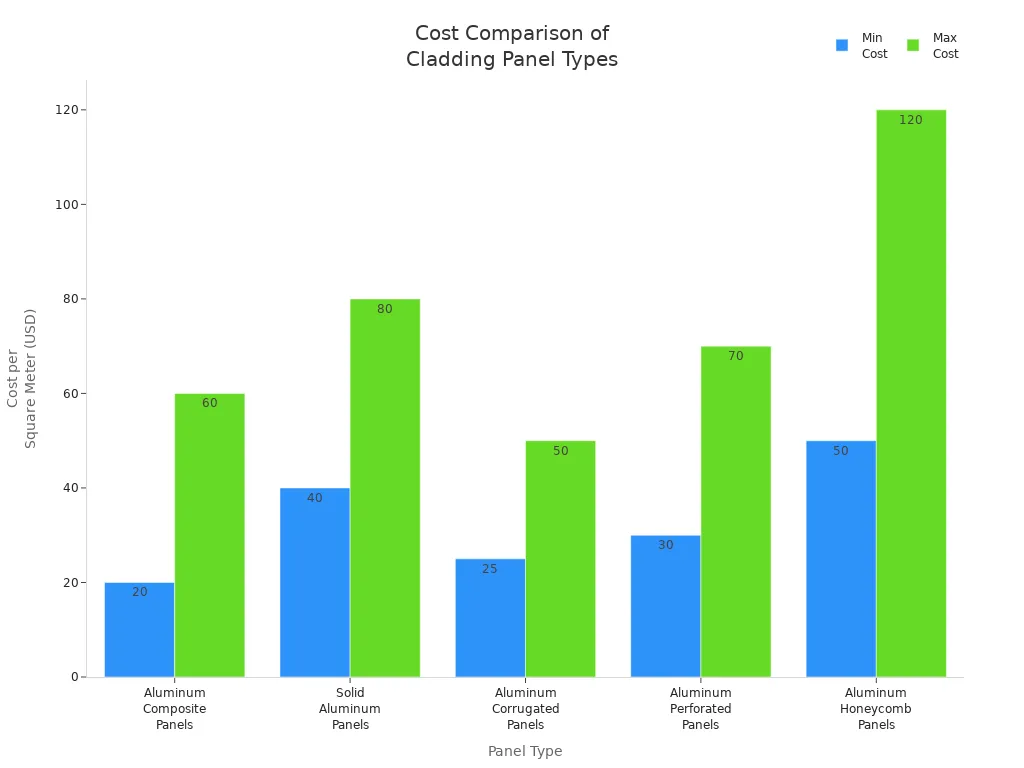
Aluminum composite cladding and aluminum composite metal panels are easier to cut and fit than other materials. This saves time and money. Fast installation means less trouble for building owners. ACP works well for new buildings and for fixing old ones.
Note: Picking cladding depends on many things, but ACP is often best for cost, strength, design, and being good for the planet.
ACP Panels Exterior vs. Wood
Cost Comparison
Builders want to know how acp panels and wood compare. ACP panels usually cost less than wood for big projects. The table below shows the total cost per square meter:
Cladding Type | Estimated Total Cost (AUD$/m2) |
|---|---|
Aluminium Cladding | |
Wood Finish Cladding | $415-490 |
Labor costs change depending on where you build. The type of project also affects the price. If installation is hard, costs go up. Things like scaffolding and storage can make prices higher. ACP panels are often cheaper than wood for most builders.
Durability and Moisture Resistance
Acp panels are tough and resist damage. Aluminum composite panels do not get ruined by water or sun. Their coatings help them last longer outside. Wood cladding can rot or bend if it gets wet. It can also grow mold. Acp panels work well in wet or rainy places. Aluminum composite cladding is a good choice for outdoor walls.
The weather where you live matters when picking cladding. If your area is warm and wet, pick cladding that does not get moldy. Vinyl, fiber cement, or aluminum are good choices.
Maintenance and Longevity
Acp panels are easy to take care of. Owners clean them every few months. They check for damage two times a year. Wood cladding needs more work, like painting and sealing. You also have to treat wood for bugs. Acp panels last longer and look good for years. Facade acp sheets help buildings stay nice with less work. Aluminum composite cladding does not need many repairs, so it saves time and money.
Design and Finish Choices
Acp panels come in many colors and styles. Builders can pick from lots of patterns and textures. Wood cladding has fewer choices and can lose its color. ACP panels give more ways to make creative designs. Aluminum composite panels can look like wood, stone, or metal. This helps architects get the look they want and keep the building strong.
ACP Panels Exterior vs. Stone
 Cost Comparison
 Cost Comparison
Builders want to know how acp panels and stone cladding compare. ACP panels usually cost less than stone. Stone cladding needs more workers and takes longer to put up. This makes the total price higher. ACP panels help cut down on support costs by 30-40%. This is better than using solid materials. ACP is a good choice for projects with small budgets. Aluminum composite cladding saves money on both materials and installation.
Weight and Installation
ACP panels and stone are very different in weight and how fast they go up. ACP panels are much lighter than stone. Workers can carry and install acp panels faster. The table below shows how they compare in weight and speed:
Material Type | Weight (kg/sq ft) | Installation Speed (panels/day) | Installation Crew Size |
|---|---|---|---|
Lightweight Limestone | 1.3 – 2.2 | 25 – 50 | 3 |
Traditional Stone | N/A | 5 – 8 | N/A |
ACP panels need fewer workers and less big equipment. This makes the job safer and quicker. Facade acp sheets also help finish buildings faster.
Note: ACP panels are lighter, so they do not put much stress on the building.
Durability and Weather Resistance
ACP panels are tough and last a long time. They work well in many kinds of weather. ACP panels do not rust and block UV rays. This helps them keep their color and shape for years. The table below shows important features:
Durability Feature | Description |
|---|---|
Corrosion resistance | Works well near the ocean |
UV stability | Keeps color for a long time |
Thermal expansion compatibility | Handles hot and cold without breaking |
Impact resistance | Stays strong against hail and flying objects |
Minimal maintenance requirements | Needs little care over the years |
Stone cladding can break or chip if hit hard. ACP panels need less care, so owners save money. Aluminum composite panels are good for big and small buildings.
ACP panels stay strong in many weather conditions.
They need little care, so they save money.
Visual Appeal
Stone cladding looks classic and natural. Many people like how real stone feels and looks. ACP panels give more choices for design. Builders can pick from lots of colors, patterns, and finishes. Aluminum composite cladding can look like stone too. This lets architects make special designs. ACP panels exterior can make buildings look modern or old-fashioned, depending on what you pick.
Tip: When you compare acp panels and stone, think about how they look and how they affect the planet. ACP panels use recycled materials and are better for the earth.
ACP Panels Exterior vs. Fiber Cement
Cost Comparison
Builders care about cost when picking acp panels or fiber cement. ACP panels cost less for each square meter. They are light, so putting them up is easier and cheaper. Fiber cement boards cost more because they are heavy. They need extra support to stay in place. The table below shows how the costs compare:
Material | Material Cost (per m虏) | Installation Cost (per m虏) | Total Cost (per m虏) |
|---|---|---|---|
ACP Panels | Lower | Lower | Lower |
Fiber Cement | Higher | Higher | Higher |
This helps builders and owners save money on materials and work.
Performance and Lifespan
ACP panels are strong and last a long time. They can handle heat, sun, rain, humidity, and pollution. If installed right, acp panels keep working well for years. Fiber cement boards last about as long as cement particle boards. Both last many years, but acp panels keep their color and shape better in tough weather.
ACP panels do not fade or get damaged by the sun.
Fiber cement cladding can crack or chip in bad weather.
Maintenance and Upkeep
Owners think acp panels are easy to care for. Cleaning once or twice a year with soap and a soft cloth keeps them looking nice. People should check sealants and joints every year for cracks or leaks. Cleaning off bird droppings or tree sap quickly stops damage. ACP panels need gentle care, so do not drill or use pressure washers after putting them up. Protecting panels during nearby work helps too. Fiber cement cladding needs more painting and sealing to stop water problems.
Tip: Clean often and fix problems fast to help acp panels last longer and look good.
Design Flexibility
Architects like acp panels because they have many design choices. ACP panels can be shaped and finished in lots of ways, like wood or metallic looks. They let builders make creative designs, such as wavy fronts and ribbon shapes. Fiber cement cladding does not give as many options. ACP panels have more colors and textures, so buildings stand out.
ACP panels can be made into special shapes and styles.
Fiber cement cladding does not allow as many designs.
ACP panels are better at handling weather and staying strong. They cost less, are easier to care for, and give more design choices. Builders and owners often pick acp panels for projects that need good performance and cool designs. ACP panels also help the planet because they use recyclable materials.
ACP Panels Exterior vs. Metal Cladding
Cost Comparison
 Cost Comparison
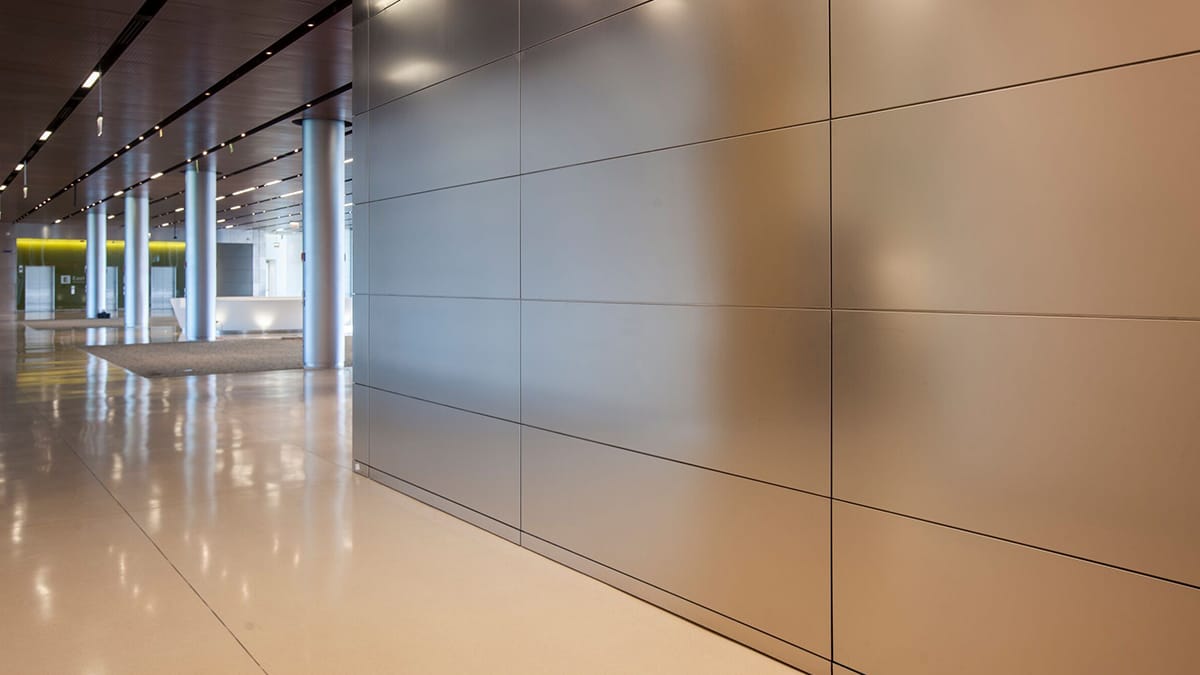
Builders look at acp panels and other metal cladding. These include solid aluminum, steel, zinc, and copper. ACP panels cost less than solid metal sheets. The core inside acp panels uses less metal. This makes them cheaper. Aluminum composite metal panels are lighter. They are easier to put up. This saves money on labor. ACP panels are a good choice for big jobs. They help builders stick to their budget. Metal panels vs. phenolic panels is another topic. ACP panels usually win when it comes to price.
Weight and Handling
Weight is important for installing cladding. ACP panels are much lighter than solid metal sheets. This makes them easy to carry and install. The table below shows how acp panels compare to other metal panels:
Panel Type | Weight (lbs/ft虏) | Core Material | Handling Ease |
|---|---|---|---|
ACP | 2.5 | Polyethylene | Easier to handle |
ACM | Heavier | Mineral-filled | Slightly harder |
Workers can move acp panels fast. This saves time and money. Solid aluminum or steel panels are heavy. They are harder to lift and install. ACP panels help finish jobs quickly.
Durability and Corrosion Resistance
Durability is important for buildings. ACP panels last from 15 to 50 years. They do not need much care. Owners do not have to paint or seal them often. Solid aluminum cladding lasts 40 to 50 years. It does not rust, even in wet places. ACP panels can corrode at the edges if not put up right. Aluminum composite metal panels resist corrosion a bit. Solid aluminum cladding resists corrosion very well. It works great in tough weather. Some builders compare metal panels vs. phenolic panels for strength. Phenolic panels do not last as long as acp or solid aluminum.
Material Type | Lifespan | Maintenance Needs | Corrosion Resistance |
|---|---|---|---|
ACP Panels | 15-50 years | Low | Moderate |
Aluminum Cladding | 40-50 years | Minimal | High |
ACP panels can corrode at the edges if not installed right.
Solid aluminum cladding does not rust, even near the ocean.
Maintenance and Appearance
ACP panels need cleaning and checks to look nice. Owners should use soft cloths and gentle cleaners. In cities, clean more often because of pollution. Regular care stops dirt and damage. This helps acp panels keep their color and shine. Solid metal cladding needs cleaning too. It does not need painting as much. Phenolic panels need different care. Phenolic wall cladding can fade or stain over time. ACP panels stay looking good with simple cleaning. This makes them a smart pick for many projects.
Tip: Cleaning often helps acp panels and metal cladding last longer and look better.
Some builders compare metal panels vs. phenolic panels for looks. ACP panels have more color and finish choices than phenolic panels. Phenolic panels work well inside. ACP panels work better outside.
ACP Sheets vs. Alternatives: HPL and PVC
Cost Comparison
Builders want to know which material costs less. ACP sheets are cheaper than most metal cladding and phenolic panels. HPL sheets cost more because they have a solid core. PVC cladding is usually the cheapest, but it does not last long. ACP is light, so it saves money when installing. The table below shows how much each material costs for buying and putting up:
Material | Material Cost | Installation Cost | Total Cost |
|---|---|---|---|
ACP Sheets | Low | Low | Low |
HPL | Medium | Medium | Medium |
PVC | Low | Low | Low |
Tip: ACP helps builders save money on big jobs.
Durability and Weather Resistance
It is important to pick cladding that lasts. ACP sheets, HPL, and PVC handle weather in different ways. ACP does well with water and sunlight. HPL does not scratch easily and resists chemicals. But HPL does not do well in strong sun. PVC cladding keeps out water and moisture. It can crack if it gets too cold. Here are some key points:
HPL sheets do not scratch or get damaged by chemicals.
ACP sheets are light and work in tough weather.
PVC cladding keeps out water and moisture.
The table below shows how long each material lasts and how it handles weather:
Material | Durability | Weather Resistance |
|---|---|---|
HPL | 10-18 years | Not good in strong sunlight |
ACP | 5-7 years | Great with water and sunlight |
PVC | 15-25 years | Waterproof and moisture-proof |
Maintenance and Longevity
How much care a material needs changes how long it lasts. ACP sheets need less cleaning than phenolic panels and PVC. Owners clean ACP panels a few times each year. HPL lasts over 15 years but needs more cleaning. PVC cladding lasts 15鈥?5 years with simple care. ACP panels can last 40鈥?0 years if you take care of them. The chart below shows how long each material lasts:
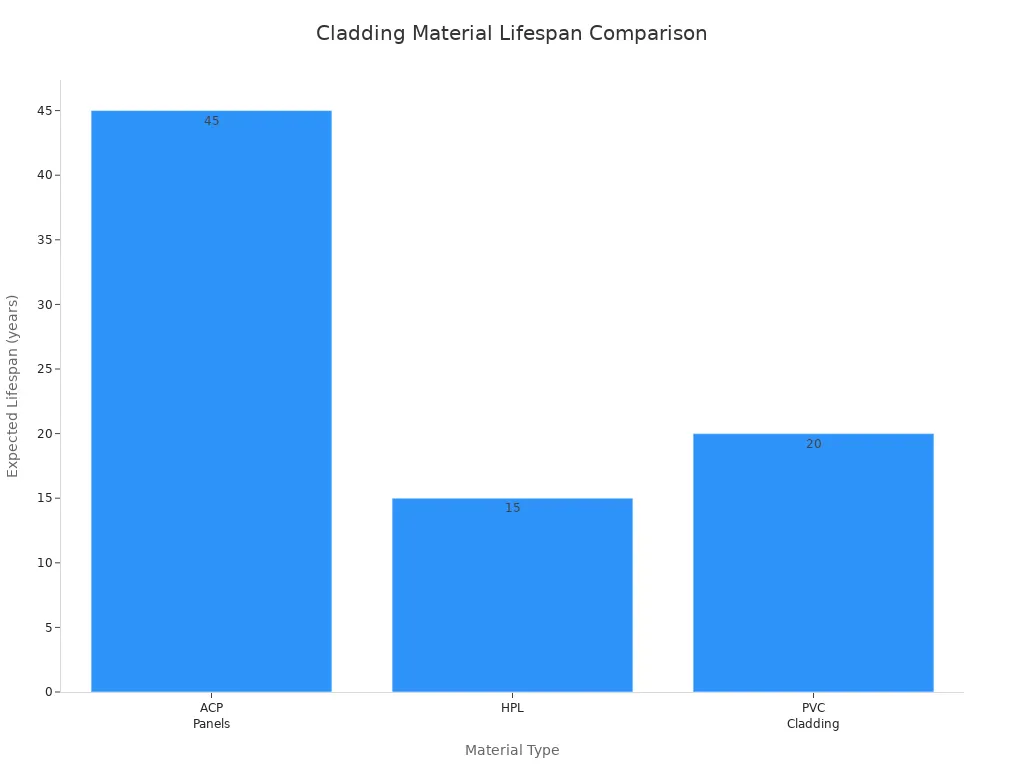
The table below shows how much work each material needs and how long it lasts:
Feature | ACP Panels | HPL | PVC Cladding |
|---|---|---|---|
Lifespan | 40鈥?0 years | 15+ years | 15鈥?5 years |
Upkeep | Low | Medium | Medium |
Cleaning often helps ACP panels and phenolic panels last longer.
Design and Color Range
Design choices make buildings look special. ACP sheets, HPL, and PVC offer different options. ACP has the most colors and finishes, like smooth, shiny, and wood-like. HPL has fewer colors and basic designs. PVC cladding has simple styles and some color choices. The table below shows how many design and color options each material has:
Material | Design Options | Color Options |
|---|---|---|
ACP | Many choices | Lots of colors |
HPL | Some choices | Not many colors |
PVC | Few choices | Some colors |
Architects use ACP to make creative buildings. Phenolic panels are good inside, but ACP sheets work well outside. Phenolic wall cladding looks solid, but ACP gives more ways to design.
ACP sheets help builders make buildings that look bright and different.
Suitability for Applications
Commercial Buildings
 Commercial Buildings
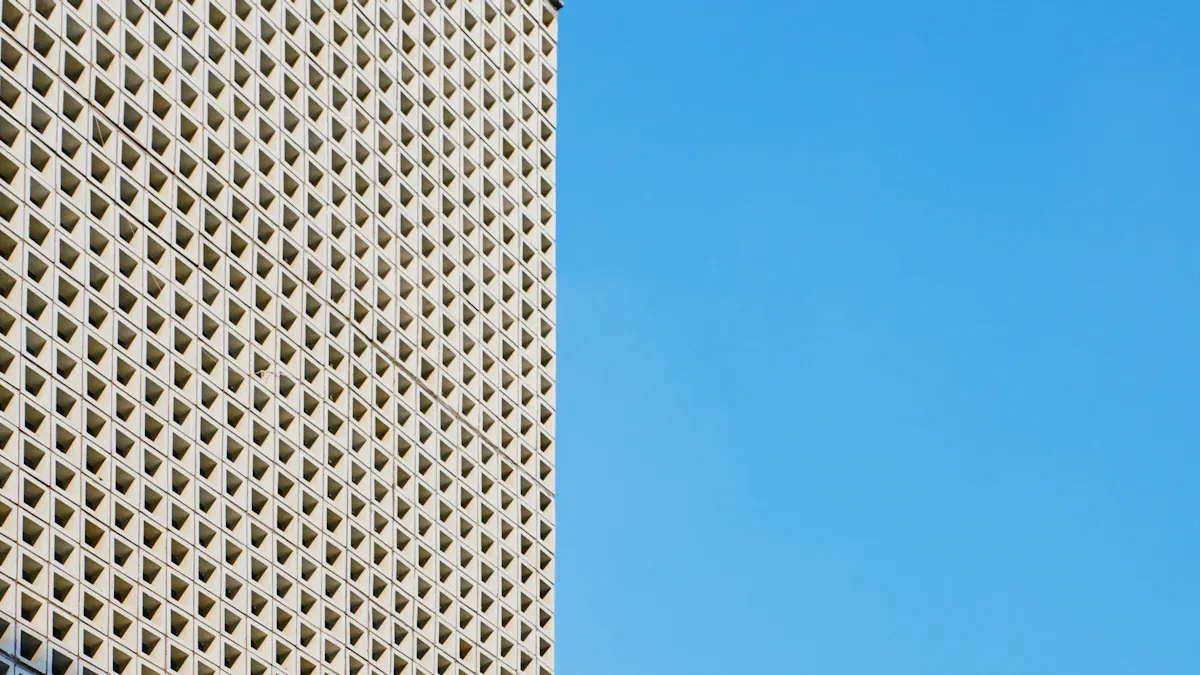
Architects pick acp for many business buildings. ACP is used in offices, malls, and hospitals. These panels protect buildings from bad weather and dirt. ACP makes buildings look new and stylish. Designers use acp to make cool building fronts. ACP does not need much cleaning or fixing, so it saves money. Phenolic panels are sometimes used in stores, but acp has more colors and lasts longer. Metal cladding is also used in big buildings, but acp is lighter and easier to use.
Tip: ACP helps business buildings look special and stay strong for a long time.
Residential Projects
People use acp for houses and apartments. ACP panels keep homes safe from rain, sun, and wind. You can use acp on balconies, outside walls, and fences. ACP gives homes a nice look with many styles. Phenolic panels are used in kitchens and bathrooms, but acp is better for outside. ACP does not fade and lasts longer. Phenolic wall cladding is good inside, but acp works best outside. ACP also costs less than many other wall panels.
Application Area | ACP | Phenolic Panels |
|---|---|---|
Exterior Walls | 鉁?/p> | 鉂?/p> |
Balconies | 鉁?/p> | 鉂?/p> |
Kitchens | 鉂?/p> | 鉁?/p> |
Bathrooms | 鉂?/p> | 鉁?/p> |
Renovations and Retrofits
Builders use acp to fix up old buildings. ACP panels cover broken walls and help keep heat in. ACP goes up fast and does not make buildings heavy. Phenolic panels are sometimes used, but acp lets you pick more designs. ACP helps owners spend less on repairs and energy. Phenolic panels are good inside, but acp is better for outside changes. ACP fits many building styles, so it is a great pick for fixing buildings.
Note: ACP panels make fixing old buildings quicker and cheaper.
Comprehensive Comparison Table
A big comparison helps builders and owners see how acp is different from other cladding materials. The table below shows the main differences between acp, wood, stone, fiber cement, metal cladding, hpl, pvc, and phenolic panels. Each material has good and bad points. This table helps people pick the best one for their project.
Feature / Material | ACP Panels | Wood | Stone | Fiber Cement | Metal Cladding | HPL | PVC | Phenolic Panels |
|---|---|---|---|---|---|---|---|---|
Cost | Low | Medium-High | High | Medium | Medium-High | Medium | Low | Medium |
Weight | Very Light | Medium | Very Heavy | Heavy | Medium-Heavy | Medium | Very Light | Medium |
Durability | High | Low-Medium | Very High | High | Very High | High | Medium | High |
Maintenance | Low | High | Medium | Medium | Low | Medium | Low | Medium |
Aesthetic Options | Many | Few | Few | Some | Some | Some | Few | Some |
Weather Resistance | Excellent | Poor | Excellent | Good | Excellent | Good | Good | Good |
Fire Resistance | Good (A2/B1) | Poor | Excellent | Good | Excellent | Good | Good | Excellent |
Eco-Friendliness | Recyclable | Renewable | Not Eco-Friendly | Not Eco-Friendly | Recyclable | Recyclable | Recyclable | Recyclable |
Installation Ease | Easy | Medium | Difficult | Medium | Medium | Medium | Easy | Medium |
Design Flexibility | High | Low | Low | Medium | Medium | Medium | Low | Medium |
Lifespan | 40鈥?0 years | 10鈥?0 years | 50+ years | 25鈥?0 years | 40鈥?0 years | 15+ years | 15鈥?5 years | 30鈥?0 years |
Note: ACP panels have low cost, last a long time, and come in many styles. They are lighter than stone or metal cladding. ACP needs less care than wood or fiber cement.
Key Takeaways from the Table
ACP is very light. Workers can put it up fast and safely.
ACP costs less than stone, metal cladding, and phenolic panels. This helps on big jobs.
ACP gives more colors and finishes than wood, stone, or phenolic wall cladding.
Phenolic panels work well inside and have good fire resistance. ACP is better for outside walls.
Phenolic wall cladding is strong but does not have as many style choices as acp.
ACP panels last up to 50 years with easy care. Phenolic panels last about 30 to 40 years.
ACP is recyclable, so it helps keep buildings green and cuts down on waste.
How to Use This Comparison
Builders can use this table to find the best material for their job.
Owners can see which choice saves money and time.
Architects can pick materials that match their design ideas and help the planet.
Tip: Always check local building rules before picking cladding. Some places need better fire safety or special weather protection.
Key Factors in Material Choice
Picking cladding for a building depends on a few main things. Every project is different and has its own needs. Builders and owners should think about these points before they choose.
Budget and Project Type
The budget tells you how much you can spend. ACP is cheaper than stone or solid metal. Big projects use acp to save money. Small jobs also like its low price. Schools, offices, and homes all use acp for their own reasons. The kind of project helps you know if acp is right.
Climate and Location
The weather changes how long cladding lasts. ACP works in hot, cold, or wet places. It stands up to rain, sun, and wind. In cities near the ocean, acp does not rust much. In dry places, acp keeps its color and shape. Where you build matters when you pick cladding.
Desired Aesthetic
Designers want buildings to look nice. ACP comes in many colors and finishes. Some panels look like wood or stone. Others are bright or shiny. Owners can pick acp to match any style. This makes acp great for creative looks.
Maintenance Expectations
Some people want cladding that is easy to care for. ACP only needs cleaning a few times each year. You do not have to paint or seal it. This saves time and money. People who want simple upkeep often pick acp.
Sustainability Goals
Many builders care about the planet. ACP uses recycled aluminum. This helps cut down on waste. Some jobs need green materials to follow rules. ACP helps with these goals. Picking acp can help protect the earth.
Tip: Always think about these key points before you start a project. This helps you avoid mistakes and save money.
Factor | Why It Matters for ACP |
|---|---|
Budget | ACP is affordable |
Climate | ACP works in all weather |
Aesthetic | ACP offers many designs |
Maintenance | ACP needs little care |
Sustainability | ACP supports green goals |
Builders and architects like to use acp for many jobs. ACP panels are light and last a long time. There are lots of ways to make them look nice. ACP does not cost as much as stone or wood. It is easy to take care of and works in many kinds of weather. Owners save money and time with acp. When picking cladding, people should think about what the project needs, how much money they have, and what style they want. ACP works well for stores, houses, and fixing old buildings.
ACP is easy to put up, lasts a long time, and is good for the earth. People should look at other materials too before they choose acp.
FAQ
What makes acp panels different from other cladding materials?
Acp panels are light and very strong. They come in many styles and colors. Builders like them because they go up fast. They are easy to keep clean. Other cladding can be heavier or need more work.
Can acp panels be used in wet or coastal areas?
Acp panels do not get ruined by water. They do not rust near the ocean. Their coating keeps them safe from damage. Many architects pick acp for buildings by the sea.
How long do acp panels last on exterior walls?
Acp panels can last as long as 50 years. Owners should wash them a few times each year. Checking them often helps them stay strong and bright. This makes acp a good pick for outside walls.
Are acp panels safe for fire protection?
Acp panels have special cores that slow fires. Some have A2 or B1 ratings for fire safety. These ratings mean they help stop fire from spreading. Builders use acp when they want safer buildings.
What design options are available with acp panels?
Acp panels come in lots of colors and finishes. Architects use them for modern or old-fashioned looks. The table below shows some popular finishes:
Finish Type | Appearance |
|---|---|
Wooden | Natural timber |
Metallic | Sleek metal |
Marble | Stone-like |
High-gloss | Shiny surface |
Tip: Acp panels help buildings look special and different.