
21 Aug Black vs White ACP Sheets: Heat, Maintenance and Uses
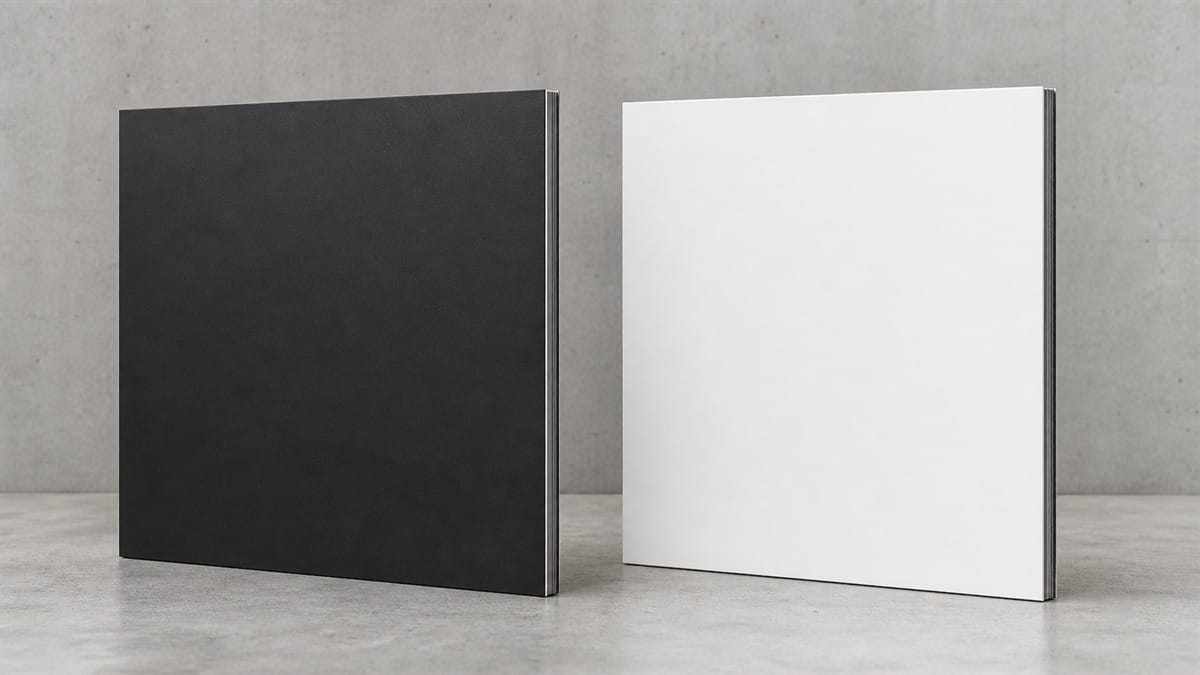
Black ACP sheets create a bold, high-contrast appearance, while white ACP sheets create a brighter, cleaner, and more expansive look. For panels with the same thickness, aluminum skins, core, and coating system, color does not change the basic panel structure. The practical differences are mainly visual impact, solar heat behavior, how dirt and surface marks appear, and how the finish fits the surrounding design.
For exterior projects, do not choose between black and white by appearance alone. Ask for the coating system, gloss level, approved color sample, solar reflectance data when heat is important, and the exact panel specification required by the project.
Black vs White ACP Sheets at a Glance
| Comparison | Black ACP Sheet | White ACP Sheet | Buyer Check |
|---|---|---|---|
| Visual effect | Bold, dramatic, premium, and high contrast | Bright, clean, open, and visually lightweight | Review a physical sample under project lighting |
| Solar heat tendency | Conventional black finishes generally absorb more sunlight | White finishes generally reflect more sunlight | Request measured solar reflectance instead of judging color alone |
| Marks commonly noticed | Dust, mineral water spots, fingerprints, fine scratches, and chalking can be conspicuous | Dark dirt, pollution streaks, algae, sealant marks, and adhesive residue can be conspicuous | Assess the local pollution, rainfall, touch, and cleaning conditions |
| Glare and brightness | Usually creates less visual brightness but may make a space feel darker | Can improve perceived brightness but may create glare at high gloss | Specify gloss range and review panel orientation |
| Typical design role | Accent zones, entrances, signage, retail fronts, and contemporary façades | Large façades, clean interiors, ceilings, healthcare, retail, and minimalist designs | Coordinate with glass, sealant, frames, stone, and surrounding colors |
| Color consistency | Both require an approved sample, controlled production batch, defined gloss, and consistent panel direction | Order connected elevation areas from the same approved batch where practical | |
| Fire performance | Color does not establish the fire classification; the core, complete product, test method, and wall assembly determine compliance | Request the exact fire-rated product and supporting documentation | |
The table shows tendencies rather than universal outcomes. A matte black panel and a gloss black panel can behave differently in appearance and maintenance. A conventional white coating and a high-performance white coating can also differ in weathering, gloss retention, stain resistance, and cleanability.
Appearance and Architectural Impact
When black ACP works best
Black ACP is effective when a project needs a strong outline, a sophisticated neutral background, or a sharp contrast with glass, timber, stone, lighting, or corporate graphics. It can make frames, entrances, canopies, fascia bands, and signage appear more defined. Matte and low-gloss black finishes are often chosen for contemporary retail and commercial design because they reduce mirror-like reflections and create visual depth.
Large uninterrupted black elevations need careful detailing. Surface waviness, inconsistent panel direction, sealant variation, oil marks, and water spots may be easier to notice under raking sunlight. The design team should review full-size samples in vertical and horizontal orientations before approving a large area.
When white ACP works best
White ACP can make façades and interiors appear cleaner, brighter, and larger. It works well for broad wall areas, soffits, ceilings, medical and retail interiors, exhibition spaces, and minimalist architectural schemes. White also provides a neutral background for signage and other colors.
Pure white, warm white, ivory, and cool white are not interchangeable. Adjacent glass, sealants, lighting, painted steel, and natural stone can make the same white panel look warmer or cooler. The approved sample should therefore be reviewed next to the actual neighboring materials rather than on its own.
Solar Heat: Is White ACP Always Cooler?
Under the same sunlight, a conventional black surface usually absorbs more solar energy than a conventional white surface. This can make the black panel surface warmer. However, visible color is not a complete performance specification. Pigment chemistry, near-infrared reflectance, coating construction, gloss, aging, dirt, orientation, ventilation, insulation, and local climate all influence the result.
Research on cool surfaces shows that darker products can use special pigments that reflect more near-infrared energy. This means a dark “cool-color” coating may perform better than a conventional dark coating, although it should not be assumed to equal a specific white finish. When façade temperature or cooling performance matters, request a measured solar reflectance or solar reflectance index for the exact finish. The Berkeley Lab Heat Island Group explains why color alone is not enough to predict solar behavior.
Panel color also does not replace façade engineering. The wall build-up, air cavity, insulation, thermal bridges, fixing system, joints, and glazing often have a greater influence on building performance than the face color by itself.
Maintenance: Which Color Is Easier to Keep Clean?
Neither color is maintenance-free. The easier option depends on which contaminants occur at the project location and how the finish is touched, washed, and viewed.
Marks that may be more visible on black
- Light-colored dust and construction residue
- Mineral deposits from hard water
- Fingerprints and oily handling marks
- Fine scratches that expose a lighter line
- Chalking or uneven loss of gloss
- Dried rain spots under strong side lighting
Marks that may be more visible on white
- Dark airborne pollution and road dirt
- Rust-colored runoff from nearby components
- Algae or organic growth in persistently damp areas
- Black sealant smears and adhesive residue
- Dirty handprints in high-contact interiors
- Streaks below joints, ledges, and drainage points
A project beside a dusty road may present a different maintenance problem from a coastal project, a shopping center entrance, or a clean interior ceiling. Ask the supplier for the cleaning instructions for the exact coating. Test any cleaner on a hidden area first, and avoid abrasive pads or aggressive chemicals that can change the gloss or damage the coating.
How Coating Quality Changes the Result
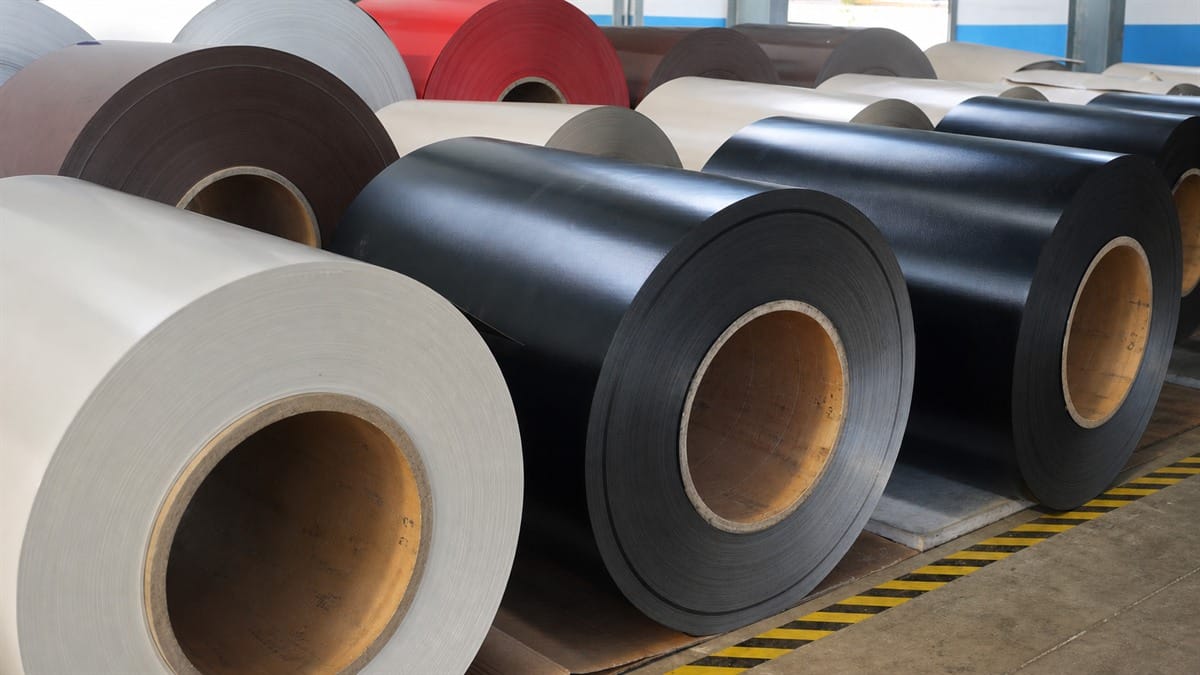
Color is only one line in an ACP specification. For interior applications, PE-coated panels are commonly considered where the exposure and performance requirements allow. Exterior projects generally require a coating system designed for long-term weather exposure, such as a suitable PVDF system, together with the correct aluminum skin, core, fabrication, and installation design.
Alcadex offers a broad range of colors, finishes, and textures and can match RAL, PANTONE, or physical samples subject to project review. See the Alcadex aluminum composite panel range for available product families and customization options.
Before choosing a black or white finish, define these coating details:
- Interior or exterior application
- Coating type and coating construction
- Exact color reference or approved physical sample
- Gloss range and surface texture
- Expected UV, humidity, salt, pollution, and temperature exposure
- Color tolerance and gloss tolerance
- Batch-control requirements for connected elevations
- Cleaning method and maintenance access
- Required warranty and exclusions
For outdoor cladding, consider an appropriately specified 4 mm exterior ACP panel. For interior walls, displays, and decorative elements, a 3 mm interior ACP panel may be appropriate when it meets the project requirements.
Do Black and White ACP Sheets Fade Differently?
All organic coatings change gradually under weather exposure, but visible color change is affected by more than the original color. Resin chemistry, pigment stability, coating thickness, pretreatment, adhesion, UV exposure, moisture, pollution, cleaning, gloss, and viewing angle all matter.
Black may show chalking, gloss loss, or uneven weathering as a grayish change. White may show yellowing, dirt pickup, gloss variation, or pollution staining. These are possible appearance modes, not guaranteed outcomes. A high-quality coating correctly selected for the environment can perform better than an unsuitable coating of either color.
For a large project, use an approved control sample and record the color code, gloss, coating, batch, production direction, and tolerance. Do not approve connected elevations from small digital images because screens, camera settings, and lighting can distort both black and white.
Does Color Affect ACP Fire Safety or Strength?
No. Black and white face colors do not determine ACP fire safety, rigidity, impact resistance, or structural suitability. Those properties depend on the complete product and system, including total panel thickness, aluminum skin thickness and alloy, core composition, bonding, coating, cassette geometry, supports, fasteners, joints, and wall assembly.
A white PE-core panel is not automatically safer than a black PE-core panel. A black fire-rated panel is not automatically suitable for every building. The project must specify the required classification, test standard, core, panel construction, and wall-system compliance. Always review local codes and project documents before ordering.
Black or White ACP by Application
Building façades
Use black for accent bands, frames, entrances, and high-contrast zones. Use white for broad elevations, bright architectural volumes, and areas where higher solar reflectance is desired. For either color, check full-size samples, gloss, coating, panel direction, thermal movement, and cleaning access.
Retail and corporate signage
Black creates a strong background for illuminated or light-colored lettering. White provides a neutral base for printed graphics and dark lettering. Confirm the printing, bonding, routing, and illumination method before selecting the finish.
Interior walls and partitions
Black can define feature walls, display areas, and luxury retail zones, but large areas may reduce perceived brightness. White can support bright, clean interiors and distribute light, but high-contact zones may need a cleaning plan. Matte finishes can control glare, while higher-gloss finishes can emphasize reflections and surface marks.
Ceilings and soffits
White is commonly selected to increase perceived brightness and maintain a clean overhead plane. Black ceilings can conceal services visually and create a dramatic retail or hospitality atmosphere. The panel, suspension or fixing system, fire requirement, and maintenance method must be specified separately from color.
Specification Checklist for Black and White ACP
| Specification Item | What to State | Why It Matters |
|---|---|---|
| Application | Interior, exterior, signage, façade, ceiling, or other use | Sets the exposure and performance requirements |
| Panel size and thickness | Exact width, length, and total thickness | Affects layout, stiffness, weight, and fabrication |
| Aluminum skins | Required thickness per skin and alloy if specified | Influences rigidity, fabrication, impact performance, and price |
| Core and fire requirement | Core type, classification, test standard, and documentation | Color does not determine fire compliance |
| Coating | PE, PVDF, or project-specific system | Must match the service environment and durability requirement |
| Color | Color code plus approved physical sample | Digital references are not reliable approval standards |
| Gloss and texture | Target range and finish description | Changes glare, perceived color, and visibility of surface marks |
| Solar performance | Measured solar reflectance or SRI when required | Visible color alone does not define solar heat behavior |
| Quantity and batch | Sheet count or area and connected-elevation requirements | Supports batch planning and color consistency |
| Processing and delivery | Cutting, routing, bending, packaging, Incoterm, and destination | Required for a comparable project quotation |
Frequently Asked Questions
Is black ACP more expensive than white ACP?
Not necessarily. Standard solid colors may have similar pricing when the complete specification and quantity are the same. A special black, special white, custom gloss, small batch, premium coating, cool pigment, or tighter color tolerance can change the quotation.
Which color shows scratches more?
Fine light-colored scratches can be more visible on black, while dark contamination and certain marks can be more visible on white. Scratch visibility also depends on gloss, texture, lighting, depth, and the color beneath the coating.
Can black ACP be used on exterior façades?
Yes, when the complete ACP, coating, core, aluminum skins, fixing system, and project design are suitable for exterior use. If surface heat is important, request measured solar data for the exact black finish.
Is white ACP easier to maintain?
It depends on the site. White may hide light dust but show dark pollution streaks. Black may hide some dark dirt but show pale dust, mineral spots, and fingerprints. Select the finish after reviewing the actual exposure and cleaning plan.
Can Alcadex match a specific black or white?
Alcadex offers color customization based on RAL, PANTONE, or physical samples, subject to technical review, quantity, coating, and production requirements. A physical approval sample should be confirmed before mass production.
Request Black or White ACP Samples
The best color is the one that fits the design, exposure, cleaning plan, coating system, panel specification, and project documentation. Send Alcadex your application, panel size, thickness, aluminum skin, core or fire requirement, coating, gloss, quantity, and destination. Include a color code or physical sample when possible.
Contact Alcadex to request black and white ACP samples and a specification-based quotation.