


07 Dec Everything You Need to Know About Composite Panel Cladding
Composite panel cladding helps protect your building from bad weather. It is strong and easy to take care of. It also keeps out water and makes buildings look new. Here are some facts:
The world market for cladding panels was $254.6 billion in 2023.
The market is growing quickly at 6.3% each year.
Cladding Material | Market Share (%) | Usage in Commercial Buildings (%) |
|---|---|---|
Composite panel cladding | 15% | Almost 50% |
Aluminum Cladding | 20% | Used a lot in tall buildings |
Many people and builders pick composite cladding for wall projects. You should follow the cladding system rules for the best results.
2026 Update: Quick Answer for Everything You Need to Know About Composite Panel Cladding
Reviewed 29 July 2026. The key is to treat ACP as a specified multi-layer panel, not a generic sheet. Its performance depends on the aluminum skins, core, bonding, coating, dimensions, fabrication, support, joints, exposure, and evidence required for the project.
- Define the application and service environment first.
- Specify the complete construction instead of relying on a product name.
- Review samples, technical data, applicable test evidence, and warranty scope.
- Coordinate fabrication, installation, inspection, and maintenance responsibilities.
This update keeps the original topic and search intent while making the decision criteria clear at the start. Project-specific engineering, regulations, test evidence, and supplier documentation remain controlling.
Key Takeaways
Composite panel cladding keeps buildings safe from harsh weather. It helps keep them dry and looking nice. These panels are strong and can last up to 50 years. This means you spend less money fixing or taking care of them. You can pick from many colors and styles. This lets you make your building look special.
What Is Composite Panel Cladding?
Basic Structure and Purpose
When you see a new building, you might spot smooth panels outside. These panels are part of composite panel cladding. They make a tough layer that covers your building. This layer keeps out rain, wind, and dust. It also helps your building look fresh and nice.
Composite cladding has a clever design. Most panels have two thin aluminum sheets on the outside. Each sheet is about 0.50mm thick. The middle part is a core that is not aluminum. This core helps keep heat in during winter. It also keeps things cool in summer. The panels have special coatings to stop scratches and fading. These coatings protect from rust and sun damage.
There are different kinds of composite cladding. Some use wood and plastic together. This is called wood polymer composite (WPC). Others use high-pressure laminate or fiber cement. Each type is good for different reasons. WPC does not rot and keeps bugs away. Aluminum composite panels are light and strong.
Here is a table with common materials and their benefits:
Material | Key Benefits |
|---|---|
Aluminum Composite Material (ACM) | Strong and light, stops impacts, keeps out water. |
Wood Polymer Composite (WPC) | No rot, keeps bugs away, lasts long. |
Aluminum Siding | Light, no rust, resists dents and scratches. |
Fiber Cement | Good against fire, no rot, handles bad weather. |
High Pressure Laminate (HPL) | Very tough, resists impacts and sun, safe from fire. |
Tip: Composite cladding protects your building and blocks noise. If you live near traffic, it will be quieter inside.
Common Applications
You can use composite panel cladding in many places. Most people put it on outside walls. But it works for other things too. Here are some ways people use it:
Building fronts: These panels give offices and homes a modern look.
Inside walls: You can use panels to make rooms look cool and easy to clean.
Ceilings: Some designers use panels for neat ceiling styles.
Signs: Many signs in malls and airports use these panels because they last.
Furniture: Some tables and cabinets use panels for a smooth finish.
Aluminum composite panels are popular in new buildings. They are light, so you can put them up easily. They stand up to fire and help save energy. You can choose from many colors and finishes. Your building will look special. You do not need to spend much time or money to keep them nice.
If you want a building that looks good and stays strong, composite cladding is a smart pick.
Benefits of Composite Cladding
 Weather Resistance
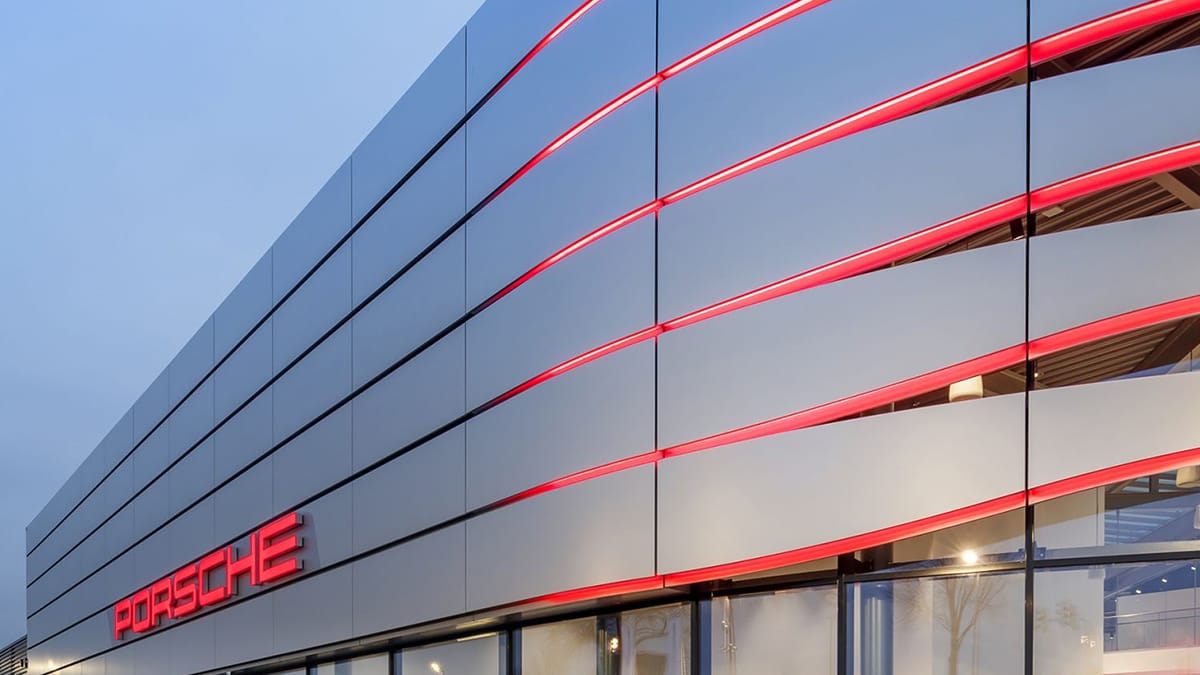 Weather Resistance
You want your building to handle bad weather. Composite cladding helps with this. It keeps out rain, snow, and wind. The panels do not bend or crack easily. They also do not fade in the sun. Your walls stay strong, even during storms. The panels stop water from getting in. This means no mold or rot, which is good in wet places. Here is a table that shows how composite panels work:
Property | How Composite Cladding Helps |
|---|---|
Stability under Humidity | Panels stay flat, even in lots of rain. |
UV Resistance | Special colors stop fading and breaking. |
Impact Strength | Thick boards help stop cracks. |
Freeze Cycle Durability | Tough tops stop freeze damage in cold places. |
Durability
If you want something that lasts a long time, pick composite cladding. These panels can last up to 50 years. That is much longer than wood or vinyl. You save money because you do not need to paint or fix them often. Here is a table that shows how long each type lasts:
Cladding Type | Average Lifespan |
|---|---|
Composite Cladding | 25 to 50 years |
Vinyl Siding | 20 to 40 years |
Wood Siding | 20 to 30 years |
You only need to wash the panels and look for damage sometimes. Cut tree branches so they do not scratch the panels. If your panels do not have UV protection, you can add it later.
Visual Appeal
Composite cladding makes your building look new and cool. You can pick from many colors and styles. Want your building to stand out? Try mixing colors or materials. You can put the panels up and down or side to side. Some brands, like Trex, let you match your walls and deck. You can even make one wall special so your home pops.
Many composite panels use recycled stuff, which helps the planet. You get style, strength, and help the earth at the same time.
Pros and Cons
Pros: Lasts long, easy to care for, looks nice, good for the earth, can raise home value.
Cons: Costs more at first, hard to fix if broken.
Types of Composite Cladding
Material Options
You have a lot of choices when it comes to composite cladding. Each material has its own strengths. Here are some of the most common options:
Fiber cement: This type gives you great strength and flexibility. It lasts for years and stands up to tough weather. It also resists fire better than wood, brick, or glass.
Wood: Wood looks nice but does not last as long. It can get damaged by rain or bugs.
Brick: Brick is strong but heavy. It does not bend or flex much.
Glass: Glass looks modern but can break in storms.
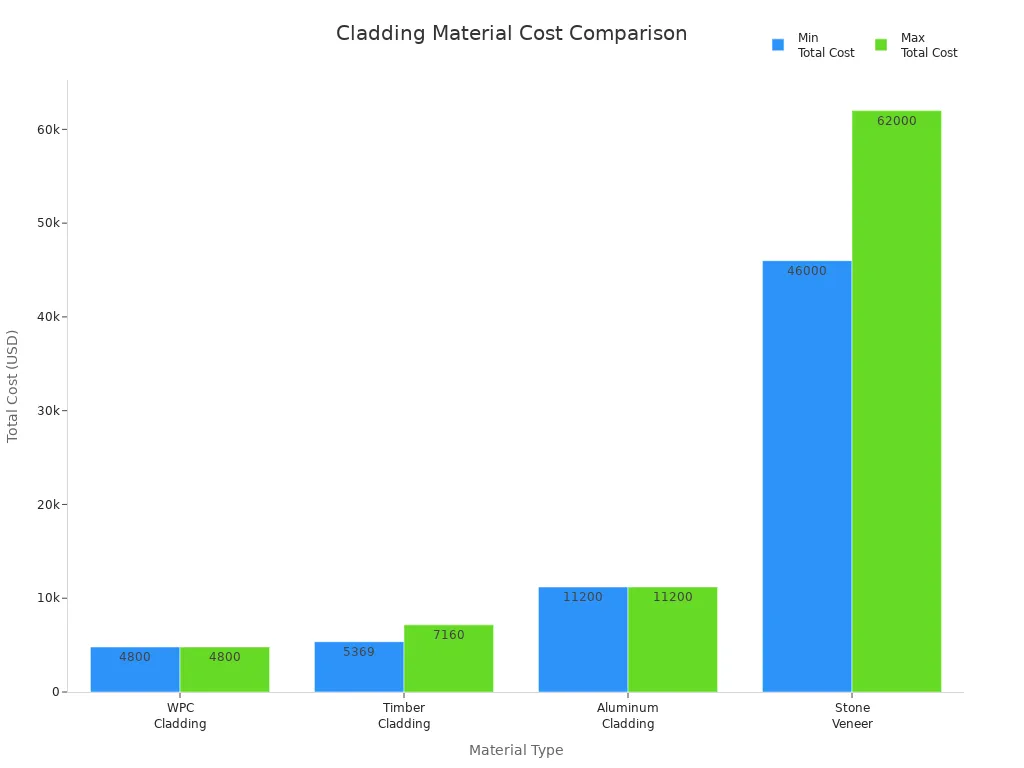
When you look at costs, wood siding might seem cheaper at first. Over time, though, you spend more on repairs and painting. Composite cladding costs more upfront, but you save money because you do not need to fix it as often. Check out this chart to see how the total costs compare:
Styles and Finishes
You can pick from many styles and finishes to match your taste. Some popular choices include:
Modern designs with bold colors
Finishes that look like wood or stone
Black panels for a sleek, modern look
Natural grey for a classic style
Slatted cladding for a clean, straight-line effect
Wood grain for a real timber feel
Sanded or polished finishes for a smooth touch
You can mix and match these styles to make your building stand out.
Aluminium Composite Panels
Aluminium composite panels are a top pick for many projects. You get a lightweight panel that is easy to install. These panels come in many colors and finishes, so you can create cool shapes and modern designs. Here is a quick look at what makes aluminium composite panels special:
Unique Property | Description |
|---|---|
Versatility in Design | Many colors and finishes, fits curves and shapes. |
Durability | Stands up to sun, rain, and corrosion. |
Insulation Properties | Helps keep heat and noise out. |
Aesthetics | Makes buildings look modern and sharp. |
Ease of Installation | Lightweight, so you can put them up fast. |
Cost-Benefit | Cheaper than solid aluminium, but still high quality. |
Low Maintenance | Easy to clean and needs little care. |
Sustainability Considerations | Made with recycled aluminium and can be recycled again. |
You might wonder about fire safety and cost. Solid aluminium cladding does not burn, but aluminium composite panels can vary. If you want better fire resistance, pick panels with a mineral core. Aluminium composite panels usually cost less than solid sheets and are easier to work with.
Tip: If you want a modern look, low upkeep, and a smart investment, aluminium composite panels are a great choice.
How to Fit Composite Cladding
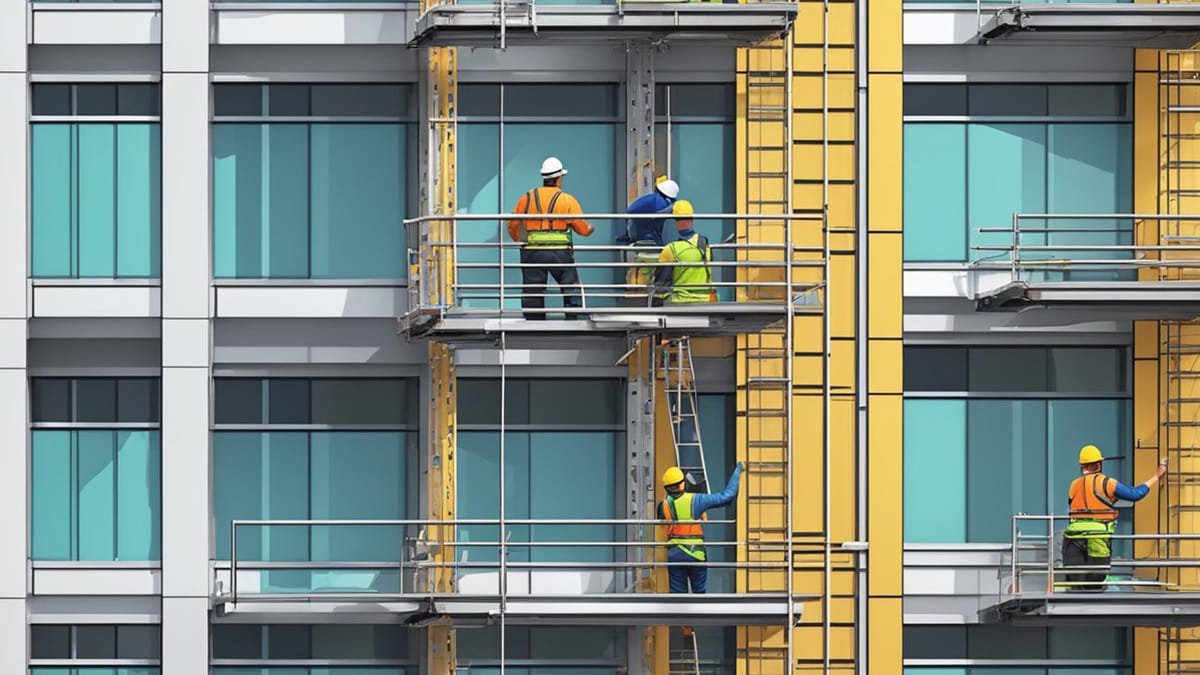 If you want to learn how to fit composite cladding, this guide will help you. It shows each step, from planning to finishing. You will see the best tips for a good project and learn how to avoid mistakes. Let’s begin!
Planning and Preparation
You need to plan before you start installing cladding. Good planning makes everything easier and stops problems later. Here is a simple guide to help you:
Clean the spot where you will put composite cladding. Take away dust, dirt, and grease.
Make sure the wall is dry and clean. Fix any cracks or weak spots first.
Get the wall ready. Put on a waterproof membrane to keep water out. This step is very important for outside composite cladding.
Put up cladding support battens. These hold the panels and let air move behind them.
Plan where each panel will go. Mark windows, doors, and corners. Think about how panels will meet at the edges.
Think about the weather in your area. If you live where fires happen, pick fire-resistant materials. Match the cladding to your building and the area around it.
Pick the color, texture, and type of composite cladding. Aluminium panels come in many colors and finishes. Choose what fits your style and weather.
Buy extra material. This helps if you make mistakes or need to replace panels later.
Tip: Let your panels stay outside for 48–72 hours before you install them. This helps them get used to the local temperature and humidity.
Tools and Materials
You need the right tools and materials to install cladding well. Here is a table to help you get ready:
Tool | Purpose |
|---|---|
Tape Measure | Helps you measure panels before cutting. |
Set Square | Checks angles for fitting panels. |
String Line | Keeps things straight over long spaces. |
Spirit Level | Makes sure panels are level over short spaces. |
Panel Cutter | Cuts sandwich panels easily, works for many materials. |
Metal Cladding Tools | Includes shears and nibblers for cutting metal sheets. |
You also need a waterproof membrane, battens, screws, spacers, and your composite cladding panels. If you use aluminium panels, get the right metal cutting tools.
Step-by-Step Installation
Now you can start installing. Follow these steps for a smooth project:
Prepare the Wall
Clean the wall and fix damage. Make sure it is dry and strong.Apply the Waterproof Membrane
Cover the wall with a waterproof membrane. This keeps water out. Overlap the edges so everything is covered.Install Support Battens
Attach battens to the wall. Keep them level and use packers if needed. Leave a gap behind battens for airflow—at least 38mm. This stops mold and rot.Plan Your Panel Layout
Mark where panels will go. Watch for windows, doors, and corners. Use a string line and spirit level to keep things straight.Cut and Acclimatize Panels
Cut panels to the right size. Let them sit outside for a few days to get used to the weather.Fix the Panels
Start at the bottom and go up. Use A2/A4 Pan Head 8 gauge 38mm screws. Drill holes 2mm wider than the screw for expansion. Do not make screws too tight.Finish the Edges
Use double battens at butt joints. Add trim around windows and corners for a neat look. Make sure all joints are waterproof.Check for Gaps and Ventilation
Leave at least a 2mm gap between panels for expansion. Make a rainscreen system with a 25mm air gap for ventilation.Inspect Your Work
Look over everything. Make sure it is level, secure, and waterproof.
Note: Always follow the manufacturer’s rules for your composite cladding panels.
Safety Tips
Safety is important when you install cladding. Here are some tips to keep you safe and help you do a good job:
Safety Precaution | Description |
|---|---|
Airflow | Keep at least 38mm airflow by using a breathable vapor barrier behind battens. |
Level Battens | Make sure battens are level with the wall. Use packers if needed. |
Double Batten | Use double battens at the ends of cladding boards. |
Pre-drilling | Drill screw holes 2mm wider than the screw to let panels expand and stop splitting. |
Screw Fixing | Use A2/A4 Pan Head 8 gauge 38mm screws. Do not make screws too tight. |
Pilot Holes | Drill the right size pilot holes to stop splitting of composite products. |
🚧 Always wear gloves and safety glasses when cutting aluminium or composite panels. Follow all local building codes and manufacturer rules.
Common Mistakes to Avoid
Not leaving gaps for expansion can make panels bend or fall off.
Skipping the waterproof membrane lets water in and causes damage.
Not letting air move can cause mold and rot.
Ignoring local codes or manufacturer rules can lead to expensive repairs.
Using the wrong material for your weather can make cladding last less time.
If you follow this guide and stick to the rules, you will know how to fit composite cladding on your building. Take your time, check your work, and enjoy your building’s new look!
Design and Application
 Popular Styles
 Popular Styles
There are many ways to make your building look special with composite cladding. Today, you can mix colors, styles, and textures for a cool look. Some people want their building to look natural. Others like bold designs. You can choose finishes that look like wood, stone, or concrete. Some panels are big, so you see fewer lines and get a smooth wall. If you want a modern style, pick bright colors or shiny metallic panels. Some new panels can even change color using smart technology!
Here is a table showing what is popular in composite panel design:
Trend | Key Features |
|---|---|
Sustainable and Eco-Friendly Solutions | Uses recycled materials, makes less pollution, keeps heat in better |
Textured Finishes for a Natural Look | Looks like wood, stone, or concrete |
Vibrant and Customizable Colours | Has two colors, bright shades, and metallic looks |
High-Performance for Extreme Weather | Stops bad weather, does not rust, and is tough |
Seamless Integration with Smart Technology | Shows data, changes color, and works with smart systems |
Large Panel Sizes for Minimal Joints | Goes up fast, looks smooth, and keeps water out |
Aluminium panels can be used for almost any design. They bend into curves, cover large areas, and have many finishes. This makes aluminium great for creative ideas.
Residential vs. Commercial Use
You may wonder how design and installation are different for homes and businesses. For homes, people want good prices and lots of style choices. You can pick many colors and textures to match what you like. For businesses, cladding needs to last long and follow strict rules. These projects use aluminium panels because they stand up to tough weather and lots of use.
Homes focus on price and style options.
Businesses need strong materials and must follow rules.
Business cladding faces more bad weather and heavy use.
Aluminium panels work well for both homes and businesses. They are easy to put up and give homes a modern look. In offices or stores, aluminium gives safety, quick setup, and a sharp style. No matter what you need, you can find composite cladding that works for you.
Maintenance and Troubleshooting
Routine Care
It is simple to care for composite cladding. You want your walls to look nice and last long. Here are some easy steps:
Clean panels every six months or once a year. Use warm water with soap and a soft brush or sponge. This helps get rid of dust and dirt.
For hard stains, use a composite cladding cleaner. Try to clean stains in the first week for best results.
If you need a deeper clean, use a power washer under 3100 PSI. Keep the nozzle at least 250 mm away from the panels.
Always clean along the length of each panel. This stops water from staying in the wrong places.
Check your cladding for damage or wear when you clean. Look at sealants and coatings for cracks.
Do not use harsh chemicals, solvents, or sandpaper. Use mild soap and gentle cleaning tools.
Never use high-pressure cleaners too close to the panels. This can hurt the surface.
Tip: Regular cleaning keeps aluminium panels looking good. It also helps stop bigger problems later.
Common Issues
Even if you clean well, problems can happen. Here is a quick guide to common issues with composite and aluminium cladding. You will see what causes them and how to fix them:
Issue | Causes | Solutions |
|---|---|---|
Water Intrusion | Bad installation, damaged surface, failed barriers | Reseal joints, replace panels, install flashing, clear gutters |
Fading or Discoloration | Sun, moisture, poor maintenance | Put on new stain, use color-restoring products, replace panels, add UV coating |
Cracking or Warping | Bad installation, extreme heat, impact | Fill cracks, secure or replace panels |
Mould and Algae Growth | Damp spots, poor airflow, dirt | Clean area, improve ventilation, trim plants |
Loose or Detached Panels | Bad installation, strong winds | Secure panels, replace fasteners, add support |
If you see any of these problems, fix them fast. Regular checks and quick fixes help aluminium cladding stay strong and look nice for years.
Choosing composite cladding gives you lots of good things. Here are some main reasons people use composite panels: They are simple to take care of and put up. You can pick from many colors and textures. This means you can match any style you want. Composite panels keep heat in and water out. They help your building stay warm and dry.
Check out these guides for more help:
Resource Type | Link |
|---|---|
Installation Guide | |
FAQ
How do you clean composite cladding?
You can wash panels with warm water and mild soap. Use a soft brush. Avoid harsh chemicals. Clean once or twice a year for best results.
Can you install composite cladding by yourself?
Yes, you can install cladding if you follow the steps. Use the right tools. Always check the manufacturer’s guide before you start.
Is composite cladding good for rainy areas?
Composite cladding keeps water out. It does not rot or mold easily. You get strong walls that last in wet weather.