

20 Aug ACP Warranties: Coverage, Exclusions and Buyer Checks
An ACP warranty is a written commercial promise covering defined products, conditions, defects, time periods, and remedies. It is not a blanket guarantee against every change in appearance or every problem in a finished wall, sign, ceiling, or display. Buyers should review the actual warranty wording for the exact panel construction, coating, application, project location, and responsible parties before placing the order.
A warranty comparison is useful only when the documents cover the same scope. One offer may address the factory panel, another the coating, and another the fabricated or installed system. The stated duration alone does not reveal who issues the promise, what performance is measured, when the period begins, which exclusions apply, or what remedy is available.
What Should an ACP Warranty Clearly State?
The warranty should identify the warrantor, buyer or beneficiary, product, project, location, application, issue date, start date, duration, covered condition, exclusions, maintenance obligations, claim procedure, and remedy. Product codes should match the quotation, approved sample, order, labels, and technical submittal.
Avoid accepting a generic marketing statement as the final warranty. Phrases such as “long-lasting,” “weather resistant,” or “warranty available” do not define a measurable obligation. Ask for the written form that will apply to the order and record any project-specific approval requirements before production.
| Warranty Field | Question to Answer | Why It Matters |
|---|---|---|
| Warrantor and beneficiary | Who gives the promise, and who may submit a claim? | Manufacturer, coating supplier, fabricator, distributor, and installer are not interchangeable |
| Covered product | Which panel model, thickness, skins, core, coating, finish, and batch are included? | A family brochure may describe products outside the ordered configuration |
| Covered application | Is the use interior, exterior, signage, cladding, ceiling, or another defined application? | Exposure and installation conditions change the risk being accepted |
| Start date and duration | Does the period begin at manufacture, shipment, installation, completion, or registration? | The same stated term can create different effective coverage |
| Covered condition | Which defect or performance change is defined, and how is it assessed? | Subjective expectations are difficult to investigate consistently |
| Exclusions and obligations | Which design, fabrication, installation, storage, cleaning, and exposure conditions must be followed? | A valid product may fall outside the warranty if required conditions are not met |
| Claim and remedy | What evidence, notice period, inspection process, and remedy apply? | Replacement material, repair contribution, labor, access, and consequential costs may be treated differently |
Separate Panel, Coating, Fabrication, and Installation Scope
An ACP project combines several scopes. The factory panel contains coated aluminum skins, bonding layers, and a core. A fabricator may cut, groove, fold, punch, reinforce, label, and pack the material. A contractor or installer then combines panels with rails, brackets, fasteners, sealants, insulation, membranes, joints, and site workmanship.
A panel warranty normally should not be read as a warranty for the complete façade or sign system unless the written document expressly says so. Likewise, an installer’s workmanship warranty does not automatically cover a panel manufacturing issue. The contract should show which party is responsible for each layer and how claims involving more than one scope will be investigated.
Use the project’s ACP technical submittal to connect the warranty to one approved panel specification. The document register should identify the proposed product, finish sample, relevant reports, drawings, deviations, and current revisions.
Coating and Finish Warranty Questions
Finish coverage may address defined changes such as color, gloss, chalking, adhesion, peeling, cracking, or another stated coating condition. Do not assume every visible difference is a covered defect. Review the document’s definitions, measurement method, reference sample, exposure assumptions, inspection area, and permitted variation.
Color appearance can change with viewing angle, daylight, surrounding materials, panel direction, dirt, wetness, and batch. A warranty review should therefore begin with a signed physical sample and a documented batch-control plan. The guide to ACP color variation and approval explains how buyers can control samples, directional finishes, batches, and replacement risk.
Ask whether the proposed coating and finish are intended for the project environment. Interior decorative finishes and exterior finishes face different exposure. Coastal salt, industrial pollution, persistent moisture, high ultraviolet exposure, incompatible chemicals, or unusual temperatures may require project-specific review. Do not infer suitability only from a color card.
Panel Integrity and Delamination Coverage
Some warranty wording may address loss of bond or separation within the panel. The buyer should check the exact definition, affected area, inspection method, and excluded causes. Impact, excessive heat, water entering exposed edges, incompatible fabrication, unsuitable fixing, substrate movement, or other external conditions may require separate investigation rather than an automatic product conclusion.
If a panel appears to delaminate, preserve the evidence. Record panel labels, project location, date, photographs, environmental conditions, fabrication details, fixing method, edge condition, and adjacent materials. Do not remove or destroy every affected sample before the responsible parties have an opportunity to inspect it.
The article on why ACP panels delaminate separates possible material, processing, storage, installation, and exposure causes. A warranty claim should follow the same evidence-based approach rather than assuming the cause from appearance alone.
Common Exclusions Buyers Should Read Carefully
Exclusions vary by document, so the following points are a review checklist rather than a statement of any specific Alcadex warranty. Ask how each issue is treated in the actual written terms:
- Panel use outside the approved application or environment.
- Incorrect storage, handling, lifting, transport, or prolonged exposure before installation.
- Protective film removed too late, too early, or under unsuitable conditions.
- Fabrication that damages skins, coating, bond lines, edges, or folds.
- Incompatible cleaners, sealants, adhesives, tapes, coatings, or contact materials.
- Incorrect fasteners, support spacing, joint design, drainage, ventilation, or installation.
- Mechanical impact, abrasion, vandalism, movement, or loading outside the design basis.
- Abnormal chemical, marine, industrial, heat, moisture, or ultraviolet exposure not disclosed before order.
- Natural color differences that remain within the written acceptance criteria.
- Failure to inspect, maintain, clean, document, or notify within the required process.
An exclusion should be visible before purchase, not discovered after a claim. If an obligation depends on a separate installation manual, cleaning instruction, approved-product list, registration form, or maintenance record, include that document in the contract package.
Compare Remedies, Not Only Warranty Years
Warranty duration is easy to compare but often receives too much attention. The remedy may have a greater commercial effect. One document may offer replacement panel material, while another may limit the remedy to coating repair or a defined contribution. Labor, scaffolding, removal, reinstallation, freight, taxes, project delay, adjacent materials, and consequential loss may be excluded or handled separately.
Ask whether the remedy changes over time and whether depreciation applies. Determine who selects the remedy, who pays inspection costs, and whether replacement material must match aged panels. Exact color matching can become difficult when an older installation is repaired, so the project should keep spare material and records where practical.
| Remedy Question | Record Before Ordering | Potential Gap |
|---|---|---|
| What is supplied? | Repair, recoating, replacement material, credit, or another defined remedy | The remedy may not include a complete installed system replacement |
| Which costs are included? | Material, freight, access, labor, removal, installation, taxes, and disposal | High access or replacement costs may remain with another party |
| Who decides the remedy? | Warrantor, buyer, independent expert, or agreement between parties | The buyer may not be entitled to choose replacement |
| Does coverage change? | Any prorating, depreciation, caps, or declining obligations | A long term may provide a smaller late-period remedy |
| How is appearance handled? | Acceptance of reasonable matching, replacement area, and retained spare panels | New panels may not visually match weathered adjacent panels |
Traceability Supports a Defensible Claim
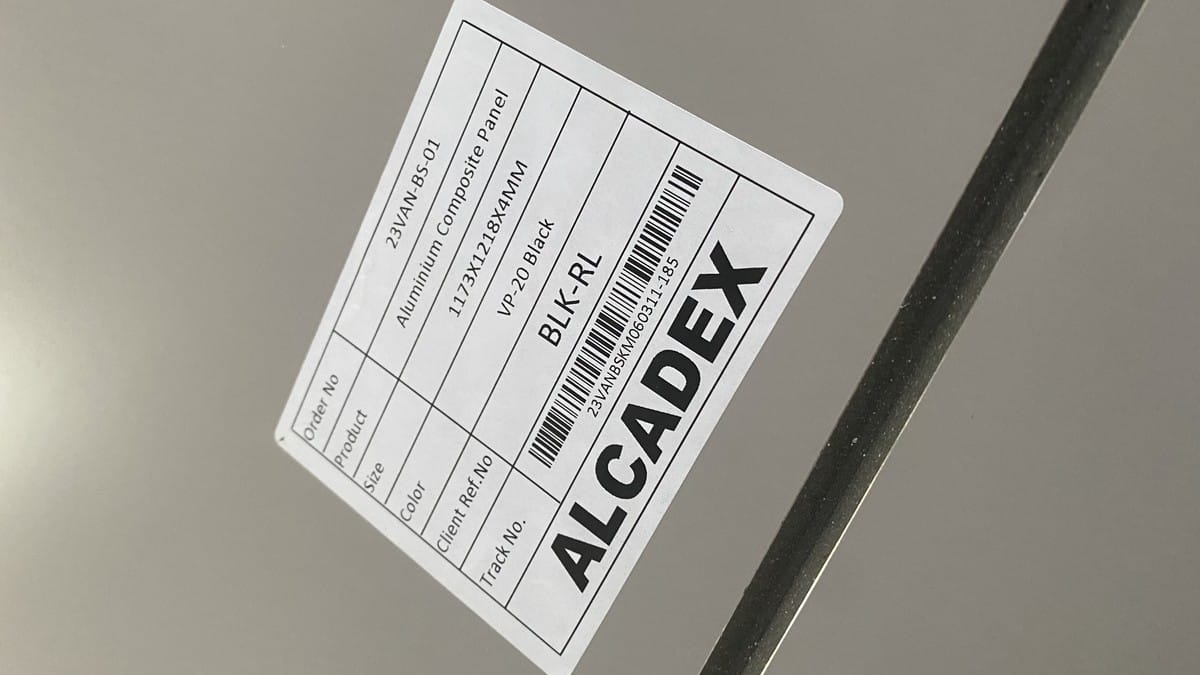
A warranty cannot be applied reliably if the product cannot be identified. Keep the order confirmation, invoice, packing list, panel or bundle labels, approved sample, production or batch references where provided, delivery records, drawings, installation dates, and maintenance history.
Labels should connect the physical panel or package to the order. If labels must be removed during fabrication or installation, transfer the reference into the fabrication schedule or panel register. For multi-phase projects, record which batches were installed in each elevation, floor, sign, room, or zone.
Documents to Keep from Purchase to Handover
The warranty file should be created before shipment, not after a problem appears. Assign responsibility for keeping each record and make sure the final owner or operator receives the package at handover.
| Project Stage | Records to Retain | Reason |
|---|---|---|
| Quotation and approval | Specification, quotation, deviations, sample, technical submittal, and proposed warranty | Defines the product and commercial basis accepted before order |
| Production and delivery | Order, labels, packing list, package photographs, delivery receipt, and receiving inspection | Connects received material to the approved order and identifies transport concerns |
| Fabrication and installation | Drawings, panel codes, fabrication settings, installers, dates, photographs, and approved accessories | Separates product, processing, design, and workmanship scope |
| Handover and maintenance | Issued warranty, registration, cleaning instructions, inspection schedule, and maintenance records | Shows that required post-installation conditions were followed |
| Claim | Notice, location map, dates, labels, photographs, samples, correspondence, and inspection findings | Allows the parties to investigate the actual condition and cause |
How to Submit an ACP Warranty Claim
Follow the written notice method and time limit in the warranty. Identify the project, product, order, affected locations, first observation date, and contact person. Provide clear photographs at overview and close range, label references, installation dates, maintenance history, and any immediate safety or water-ingress concerns.
Do not repair, repaint, remove, or discard the affected material before inspection unless urgent action is necessary to protect people or property. If emergency work is required, document the condition and work in detail. Preserve representative samples and avoid language that assumes a cause before the investigation is complete.
The warrantor may need access to inspect the panel and surrounding system. Coordinate with the property owner, consultant, installer, and other responsible parties. A finding that the panel is not the cause may redirect the issue to design, fabrication, installation, maintenance, impact, or another scope.
ACP Warranty Questions for an RFQ
- Which written warranty form applies to this exact panel, finish, application, and project location?
- Who issues the warranty, and who is the named beneficiary?
- What starts the warranty period, and is registration required?
- Which coating, appearance, bond, or panel conditions are specifically covered?
- How are color, gloss, chalking, adhesion, delamination, or other stated conditions assessed?
- Which environmental, storage, fabrication, installation, cleaning, and maintenance conditions apply?
- Which documents, accessories, sealants, adhesives, and fixing methods require approval?
- What remedy is offered, who chooses it, and which costs are excluded?
- What notice period, evidence, inspection access, and sample retention are required?
- Can the final warranty wording be reviewed before the purchase order is released?
Review the Warranty Before You Compare the Price
An ACP warranty is useful when it is specific, coordinated, and practical to administer. Buyers should compare the warrantor, covered product, application, start date, definitions, exclusions, obligations, claim process, and remedy—not just the number of years in a headline.
Review the available Alcadex aluminum composite panel options, then send the proposed panel construction, finish, application, project location, quantity, and requested warranty terms through the Alcadex contact page. Ask for the available written terms for the exact quotation and have the responsible project team confirm suitability before ordering.